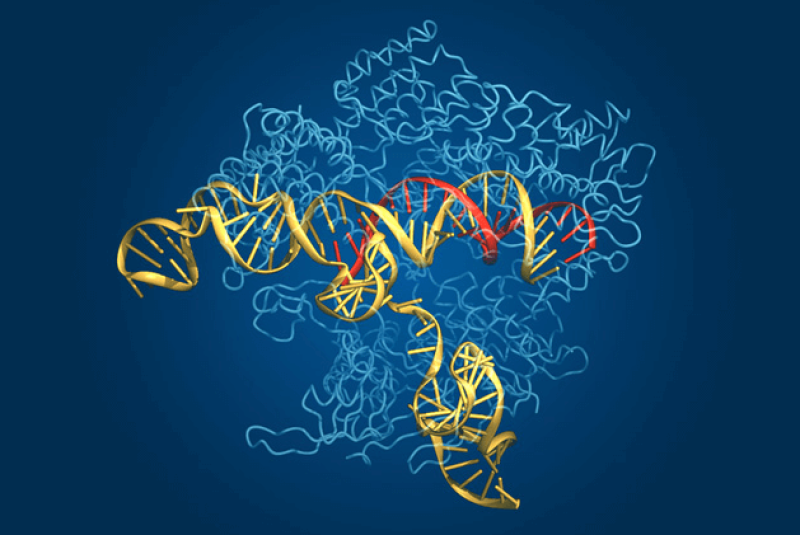
CRISPR named Science’s 2015 Breakthrough of the Year

CRISPR coplex

The GLP aggregated and excerpted this blog/article to reflect the diversity of news, opinion and analysis.

It was conceived after a yogurt company in 2007 identified an unexpected defense mechanism that its bacteria use to fight off viruses. A birth announcement came in 2012, followed by crucial first steps in 2013 and a massive growth spurt last year. Now, it has matured into a molecular marvel, and much of the world — not just biologists — is taking notice of the genome-editing method CRISPR, Science’s 2015 Breakthrough of the Year.

CRISPR has appeared in Breakthrough sections twice before, in 2012 and 2013, each time as a runner-up in combination with other genome-editing techniques. But this is the year it broke away from the pack, revealing its true power in a series of spectacular achievements. Two striking examples — the creation of a long-sought “gene drive” that could eliminate pests or the diseases they carry, and the first deliberate editing of the DNA of human embryos — debuted to headlines and concern. Each announcement roiled the science policy world. The embryo work (done in China with nonviable embryos from a fertility clinic) even prompted an international summit to discuss human gene editing.
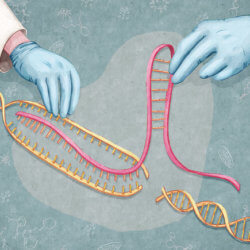
What sets CRISPR apart? Its competitors — designer proteins called zinc finger nucleases and TALENs — also precisely alter chosen DNA sequences, and several companies are already exploiting them for therapeutic purposes in clinical trials. But CRISPR has proven so easy and inexpensive that Dana Carroll of the University of Utah, Salt Lake City, who spearheaded the development of zinc finger nucleases, says it has brought about the “democratization of gene targeting.”

Read full, original post: And Science’s Breakthrough of the Year is…

Related Articles

Infographic: Global regulatory and health research agencies on whether glyphosate causes cancer

Infographic: Global regulatory and health research agencies on whether glyphosate causes cancer

Does glyphosate—the world's most heavily-used herbicide—pose serious harm to humans? Is it carcinogenic? Those issues are of both legal and ...

Most Popular

ChatGPT-Image-Mar-10-2026-01_39_01-PM
Viewpoint—“Miracle molecule” debunked: Why acemannan supplements don’t work
Screenshot-2026-09-17-at-1.07.08-PM
'We are dangerously addicted to antidepressants': Should we heed RFK Jr.’s sobering warning?
Screenshot-2026-09-28-at-2.41.21-PM
Viewpoint: 7-OH controversy: An opioid is available over-the-counter–even at gas stations. Should we be concerned?
Screenshot-2026-09-24-at-3.25.18-PM
No, organic eggs are not more nutritious or necessarily healthier than regular eggs. They are far more expensive.
ChatGPT-Image-Sep-2-2026-02_03_32-PM
How much of a problem is AI’s water use?
ChatGPT-Image-Sep-25-2026-11_36_56-AM
Now AI almost started a war with China
ChatGPT-Image-Sep-22-2026-11_17_31-AM
The exploding controversy over AI’s built-in survival drive
ChatGPT-Image-Sep-25-2026-10_36_43-AM
New federal autism committee head has financial ties to leucovorin
ChatGPT-Image-Sep-25-2026-11_57_15-AM
RFK, Jr. likely violated federal ethics guidelines in accepting more than $4,275,000 in gifts and book advances from MAHA allies
Screenshot-2026-09-16-at-10.27.33-AM
Viewpoint: SCOTUS poised to address First Amendment tension between mandatory vaccines, children’s health and religious freedom 
Woman_Vaping_Electronic_Cigarette_50687233623
Trump administration clears the way for speedy approvals of once-restricted tobacco vapes and pouches
ChatGPT-Image-Sep-27-2026-10_00_17-AM
Current and future RFK Jr. aides criticize his science-rejectionist vaccine views
glp menu logo outlined

Get news on human & agricultural genetics and biotechnology delivered to your inbox.