Opposition to GMOs is about corporations, not technology

gmocornglobe

The GLP aggregated and excerpted this blog/article to reflect the diversity of news, opinion and analysis.

The positions of major NGOs on GMOs and climate change are quite consistent if one considers that the real issue is not opposition to GM technology, but rather to large petro/chemical companies. Large petro/oil companies commonly profit from fossil fuel usage; therefore policies which mean reduced fossil fuel usage are applauded. Large chemical/bio companies benefit from GMO crop technology; therefore, GMO crops are opposed.

Opposition to these corporations is the common element. . .

The explanation lies not in the technology, but in the technologists. . . If the first large-scale transgenic crops had been produced and marketed by public breeders, likely no major NGO would have paid any attention. Who would have heard of GMO-papaya, created by a University of Hawaii plant breeder to address a local disease problem, if not for reaction to large scale Bt and HT corn, soybeans, cotton and canola developed and introduced by Monsanto at about the same time?

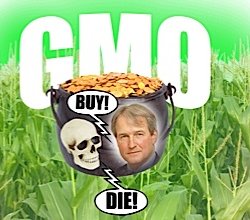
It’s true that Monsanto contributed significantly to its own fate. I remember how Robert Shapiro, CEO of Monsanto at the time, bragged widely about the new world of agriculture and food to be dominated by his company. Monsanto was aggressive in buying up seed companies.

I recall asking a contact in Greenpeace Canada in the late 1990s whether they couldn’t distinguish between Monsanto (whose swagger also annoyed farmers) and biotechnology (the products of which many farmers loved). His response was that Greenpeace liked things to be simple – good versus evil, not shades of grey – and the combination of an American chemical company, corporate arrogance and new unknown technology was a perfect target.

Read full, original post: Agricultural Anti-GMO Activism is Probably Not About the Technology At All

Related Articles

Infographic: Global regulatory and health research agencies on whether glyphosate causes cancer

Infographic: Global regulatory and health research agencies on whether glyphosate causes cancer

Does glyphosate—the world's most heavily-used herbicide—pose serious harm to humans? Is it carcinogenic? Those issues are of both legal and ...

Most Popular

Screenshot-2026-11-17-at-12.18.09-PM
Challenging glyphosate fear-mongering: Statewide Nebraska study finds no link between weedkiller use and non-Hodgkin lymphoma
Wholewheat Bread and Yogurt Ingredients
Viewpoint: RFK Jr.’s reckless good intentions: Do we really want to ban whole-wheat bread and yogurt?
Screenshot-2026-11-18-at-12.42.18-PM
Viewpoint: MAHA/MAGA/RFK Jr. health disinformation crackup is coming. Beware as Bhattacharya, Makary, Prasad, and Oz seek lucrative second acts
Soybean Harvest in Cupped Hands
30 years of GMO farming: Defying cynics, we’ve had larger harvests, lower costs, and $385 billion in added global farmer income
Grayscale Collage of Protest and Choice
Viewpoint: Medical Freedom movement? A sobering look at RFK Jr.’s disastrous two years as our health and food czar 
Screenshot-2026-11-16-at-2.37.32-PM
30 years of GMO farming: Is the boom in glyphosate and glufosinate use harming the environment? Data show they’re the most sustainable choice
Neon-AI-Globe-Network
Viewpoint: The three biggest threats posed by AI hyper-intelligence
Screenshot-2026-11-17-at-10.41.13-AM
Viewpoint: The cost of resurgence: Let’s not forget how difficult it was to wipe out measles in the U.S.
ChatGPT-Image-Mar-10-2026-01_39_01-PM
Viewpoint—“Miracle molecule” debunked: Why acemannan supplements don’t work
Screenshot-2026-11-19-at-7.54.57-PM
European General Court sides with scientists, dismisses activist claims that glyphosate is toxically dangerous
Screenshot-2026-11-19-at-11.15.27-AM
'It's easier to open a surrogacy agency than a nail salon in most states'
Screenshot 2026-07-29 at 10.40
The COVID vaccine turbo cancer scare is back. Science still proves it’s wrong.
glp menu logo outlined

Get news on human & agricultural genetics and biotechnology delivered to your inbox.