
USRTK anti-GMO activist calls for open access to all scientist emails

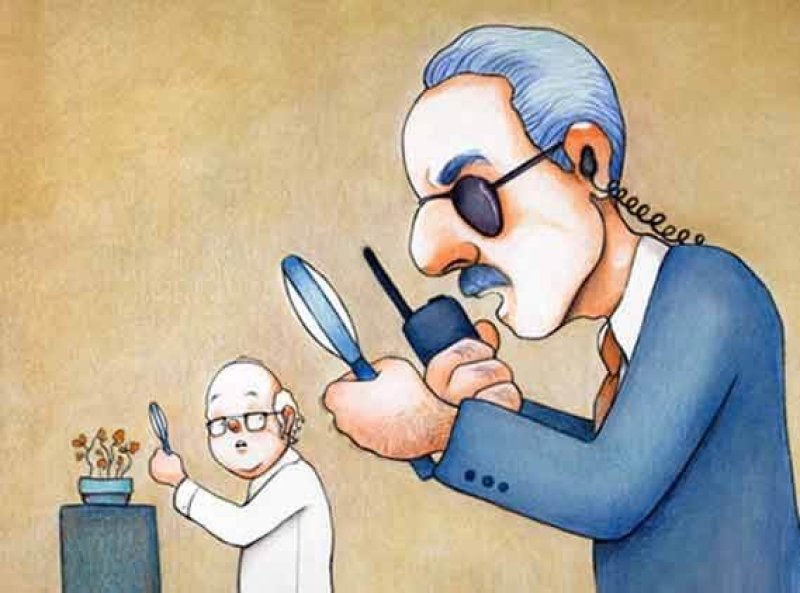
cartoon

The GLP aggregated and excerpted this blog/article to reflect the diversity of news, opinion and analysis.

. . .If you think of all scientists at universities as pure at heart, think again.

As federal funding has fallen, some university scientists have allied themselves with corporate interests. . .  Separate investigations by the Senate caught scientists allowing companies to edit their journal articles, prepare their testimony before the F.D.A. and secretly pay them to testify before the Senate. These investigations, based in part on a review of emails, helped catalyze reforms requiring the government and universities to become more transparent in their research practices. . .

But don’t try to explain this to many scientists. The scientific community loves to toss around the term “transparency,” but it mostly remains a buzzword. . .

As interest groups on both the left and right increasingly try to politicize the scientific process, there’s little question that there will be misuse of the Freedom of Information laws that some journalists and watchdog organizations have used to uncover wrongdoing.


Scientists have been harassed in the past and no doubt will continue to be harassed in the future, just like other public servants. . . In turn, scientists are free to fight these information requests or seek to narrow the scope of the inquiries to protect against what they believe threatens the integrity of the scientific process or chills research.

But the harassment argument should not be used as an excuse to bar access to scientific research that the public is paying for and has a legitimate interest in seeing.

Whenever scientists argue against transparency, they inevitably tie themselves up in contradictions.

Read full, original post: Scientists, Give Up Your Emails

Related Articles

Infographic: Global regulatory and health research agencies on whether glyphosate causes cancer

Infographic: Global regulatory and health research agencies on whether glyphosate causes cancer

Does glyphosate—the world's most heavily-used herbicide—pose serious harm to humans? Is it carcinogenic? Those issues are of both legal and ...

Most Popular

Nurturing Care Beneath the Crunchy Moms Logo
Crunchy Moms disinformation flood: Zuckerberg's Facebook has opened floodgates on measles and vaccines
Screenshot-2026-11-19-at-7.54.57-PM
European General Court sides with scientists, dismisses activist claims that glyphosate is toxically dangerous
Screenshot-2026-11-16-at-2.37.32-PM
30 years of GMO farming: Is the boom in glyphosate and glufosinate use harming the environment? Data show they’re the most sustainable choice
Soybean Harvest in Cupped Hands
30 years of GMO farming: Defying cynics, we’ve had larger harvests, lower costs, and $385 billion in added global farmer income
Stormlit Portrait Over Golden Mountains
Searching for life where no one thought to look: A renowned astrophysicist’s seemingly quixotic quest to explore Venus’s clouds
gut health
Health vs. hype on gut health: We are flooded by misinformation
Screenshot-2026-11-19-at-7.23.23-PM
Viewpoint: After a yearlong hiatus, the U.S. Preventive Services Task Force is back in business—gutted by RFK Jr. and promoting junk science
Screenshot-2026-11-18-at-2.44.24-PM
Why should thousands of Americans die every year waiting for a kidney transplant? There’s an easy fix to this morbid reality
Screenshot-2026-11-17-at-12.18.09-PM
Challenging glyphosate fear-mongering: Statewide Nebraska study finds no link between weedkiller use and non-Hodgkin lymphoma
ChatGPT-Image-Mar-10-2026-01_39_01-PM
Viewpoint—“Miracle molecule” debunked: Why acemannan supplements don’t work
glp menu logo outlined

Get news on human & agricultural genetics and biotechnology delivered to your inbox.











