


The GLP aggregated and excerpted this blog/article to reflect the diversity of news, opinion and analysis.
Over the past few years, we’ve seen 3D printing prove itself an invaluable resource for engineers. It’s helped us build prosthetics, instruments, drones – hell, we’ve even printed a mini jet enginethat can blast at 33,000 RPM. But in the hands of creatives, the hackable tech has done something else entirely: allowed them to make unbelievable art. For University of Chicago assistant professor Dr. Allan Drummond, that art comes in the form of resurrecting ancient beasts.
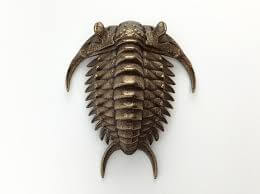
A biochemistry and human genetics researcher, Drummond studies everything from how cells adapt, to the multi-million-year evolution of the species we share our planet with. It’s no surprise then, that he took a particular interest in trilobites. The extinct arthropods cruised the world’s oceans for some 270 million years – with over 17,000 known species, they are the most diverse group of animals preserved in the fossil record.



“We find their shells fossilized everywhere,” explains Drummond. “They’re museum staples – but we rarely see what they really looked like, with all of their soft tissues (legs, antennae, gills) intact.”
Determined to print a trilobite in all its glory, Drummond turned to the literature and online forums for guidance. “The first step was to look at as many trilobites as possible and choose one,” he recalls. “I’ve always loved these fossils, but the moment they turned from fossils, into living organisms for me, was when I saw the new generation of preparations displayed at Chicago’s Field Museum. I couldn’t believe what I was seeing. In my mind, trilobites were flat, if beautiful, primitive creatures. Seeing those preparations made it clear how not-flat and not-primitive they were.”
Read full, original post: Scientist resurrects ancient creatures by 3D-printing them into metal






















