

The GLP aggregated and excerpted this blog/article to reflect the diversity of news, opinion and analysis.
On February 1, scientists from the United Kingdom’s Francis Crick Institute got the okay to start research on human embryos using a new genome editing technology called CRISPR. Their work, which will mark only the second time CRISPR has been applied to humans, will use embryos to try to understand the very early stages of human development and pinpoint the genes causing miscarriages and fetal defects.
Not surprisingly, the Crick project has reignited a firestorm of debate over the ethics of human gene editing. “This is the first step in a well mapped-out process heading to genetically modified babies, and a future of consumer eugenics,” said Dr. David King, director of Human Genetics Alert, in response to the news.

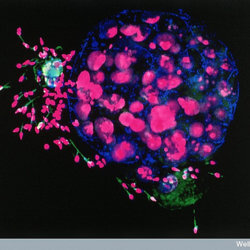



Even though the Crick Institute’s research is limited to 14 days and the cells they edit won’t be implanted, critics still say this type of research might soon lead to something less benign—that one day we’ll be creating “designer babies,” whose genetic makeup will be determined in a lab. Many scientists, bioethicists, and politicians are calling for a moratorium on human embryo editing, which is already banned from receiving public funds in the United States. One of those skeptics is Marcy Darnovsky, executive director of the Berkeley-based Center for Genetics and Society, whose research focuses on biotechnology and reproduction.
Read full, original post: We Are This Close to “Designer Babies”