
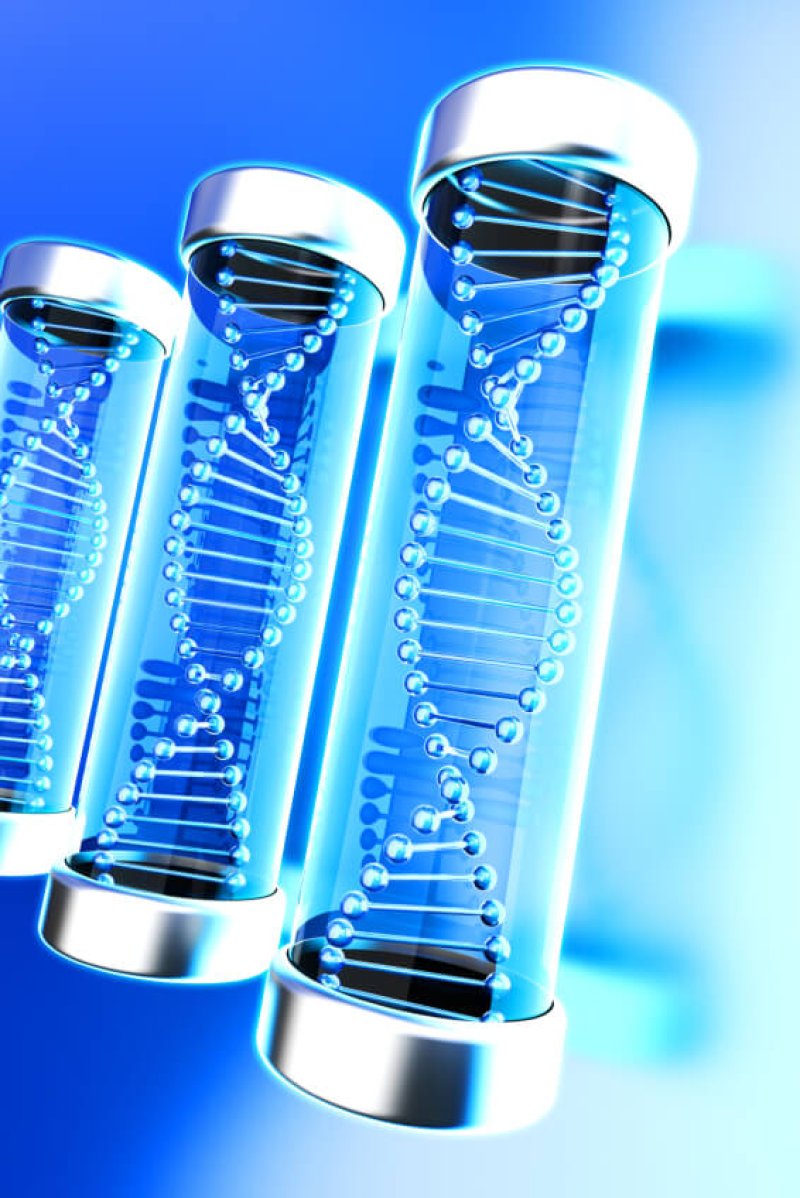
How did scientists succeed in creating ‘minimal’ genome?

iStock Small DNA

The GLP aggregated and excerpted this blog/article to reflect the diversity of news, opinion and analysis.

Genomics entrepreneur Craig Venter has created a synthetic cell that contains the smallest genome of any known, independent organism. Functioning with 473 genes, the cell is a milestone in his team’s 20-year quest to reduce life to its bare essentials and, by extension, to design life from scratch.

Venter, who has co-founded a company that seeks to harness synthetic cells for making industrial products, says that the feat heralds the creation of customized cells to make drugs, fuels and other products.

Microbiologists were just starting to characterize the bacterial immune system that scientists would eventually co-opt and name CRISPR when Venter’s team began its effort to whittle life down to its bare essentials. In a 1995 Science paper, Venter’s team sequenced the genome of Mycoplasma genitalium, a sexually transmitted microbe with the smallest genome of any known free-living organism, and mapped its 470 genes. By inactivating genes one by one and testing to see whether the bacterium could still function, the group slimmed this list down to 375 genes that seemed essential.
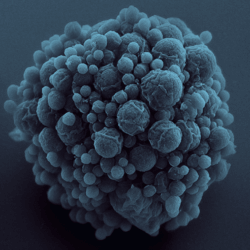
One way to test this hypothesis is to make an organism that contains just those genes. So Venter, together with his close colleagues Clyde Hutchison and Hamilton Smith and their team, set out to build a minimal genome from scratch, by joining together chemically synthesized DNA segments. The effort required the development of new technologies, but by 2008, they had used this method to make what was essentially an exact copy of the M. genitalium genome that also included dozens of non-functional snippets of DNA ‘watermarks’.

Read full, original post: ‘Minimal’ cell raises stakes in race to harness synthetic life

Related Articles

Infographic: Global regulatory and health research agencies on whether glyphosate causes cancer

Infographic: Global regulatory and health research agencies on whether glyphosate causes cancer

Does glyphosate—the world's most heavily-used herbicide—pose serious harm to humans? Is it carcinogenic? Those issues are of both legal and ...

Most Popular

Nurturing Care Beneath the Crunchy Moms Logo
Crunchy Moms disinformation flood: Zuckerberg's Facebook has opened floodgates on measles and vaccines
Screenshot-2026-11-19-at-7.54.57-PM
European General Court sides with scientists, dismisses activist claims that glyphosate is toxically dangerous
Screenshot-2026-11-16-at-2.37.32-PM
30 years of GMO farming: Is the boom in glyphosate and glufosinate use harming the environment? Data show they’re the most sustainable choice
Stormlit Portrait Over Golden Mountains
Searching for life where no one thought to look: A renowned astrophysicist’s seemingly quixotic quest to explore Venus’s clouds
gut health
Health vs. hype on gut health: We are flooded by misinformation
Soybean Harvest in Cupped Hands
30 years of GMO farming: Defying cynics, we’ve had larger harvests, lower costs, and $385 billion in added global farmer income
Screenshot-2026-11-19-at-7.23.23-PM
Viewpoint: After a yearlong hiatus, the U.S. Preventive Services Task Force is back in business—gutted by RFK Jr. and promoting junk science
Screenshot-2026-11-18-at-2.44.24-PM
Why should thousands of Americans die every year waiting for a kidney transplant? There’s an easy fix to this morbid reality
ChatGPT-Image-Mar-10-2026-01_39_01-PM
Viewpoint—“Miracle molecule” debunked: Why acemannan supplements don’t work
Screenshot-2026-11-17-at-12.18.09-PM
Challenging glyphosate fear-mongering: Statewide Nebraska study finds no link between weedkiller use and non-Hodgkin lymphoma
glp menu logo outlined

Get news on human & agricultural genetics and biotechnology delivered to your inbox.











