Chinese researchers produce genetically modified human embryos for second time

The GLP aggregated and excerpted this blog/article to reflect the diversity of news, opinion and analysis.

Scientists in China have reported genetically modifying human embryos in what is only the second published experiment of its kind. In 2015, a different team of Chinese researchers edited human embryos in an attempt to remove genes responsible for a dangerous blood disorder. In this new research, scientists from Guangzhou Medical University tried to add a mutation to embryos instead, attempting to make them HIV-resistant. In both cases, the experiments were only partially successful, and were carried out using non-viable human embryos that were incapable of growing into adults.

In this latest research published in the Journal of Assisted Reproduction and Genetics, the scientists collected 213 fertilized human eggs from 87 patients in a fertility clinic. The eggs were all unsuitable for in vitro fertilization because they contained an extra set of chromosomes, and had been donated for research purposes. Using the gene-editing tool CRISPR, the scientists were able to introduce a naturally-occurring genetic mutation into the embryos. This mutation, which modifies an immune-cell gene called CCR5, makes humans that carry it resistant to the HIV virus.
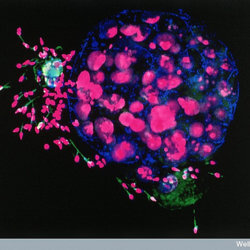
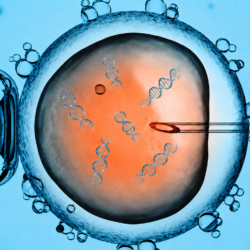
“The results are both comforting and disturbing,” said Dr. Peter Donovan, a professor of biological chemistry and development cell biology at the University of California. “The good news is that the technique worked for this group in the same way that it did for the first group. This indicates the reproducibility of the science […] However, this group of researchers also reproduced another finding described by the first group, namely that this type of gene editing also causes off-target effects.”

Read full, original post: Chinese scientists genetically modify human embryos for the second time

Related Articles

Infographic: Global regulatory and health research agencies on whether glyphosate causes cancer

Infographic: Global regulatory and health research agencies on whether glyphosate causes cancer

Does glyphosate—the world's most heavily-used herbicide—pose serious harm to humans? Is it carcinogenic? Those issues are of both legal and ...

Most Popular

Weed Killer, Gavel, and Cash on Wood Table
Who were the biggest winners in Bayer’s $7.25 billion glyphosate settlement? The tort lawyers, natch
Donkey Symbol Meets Speaking Politician
Democrats’ bid to win over MAHA voters faces a hard limit: Their loyalty to RFK Jr.
ChatGPT-Image-Mar-10-2026-01_39_01-PM
Viewpoint—“Miracle molecule” debunked: Why acemannan supplements don’t work
Screenshot-2026-11-24-at-11.07.44-AM
Here's a sure way to increase testosterone levels and jack up your sex drive
Screenshot 2026-11-23 at 11.51
Calley Means’ demonization of glyphosate is ‘just craziness’. Farmers are responding with science.
Glassy Molecules Above Floral Pads
Viewpoint: ‘Forever' PFAS chemicals in panty liners? The only ‘forever’ truth is endless lawsuits that do not protect women’s health 
Florida Varicella Vaccine Syringe Scene
Chickenpox, Hib, Pneumococcus, Hepatitis B: Florida poised to drop requirements for 4 life-protecting vaccines
Screenshot 2026-11-24 at 1.51
Viewpoint: Embrace aging and reject the longevity industry’s eternal-life delusion
Screenshot-2026-11-16-at-2.37.32-PM
30 years of GMO farming: Is the boom in glyphosate and glufosinate use harming the environment? Data show they’re the most sustainable choice
PFAS Molecules and Hazard Icons
Viewpoint: $$$ Billions of reasons why environmental activists are trying to slap a ‘killer PFAS’ label on many safe and essential ‘forever chemicals’
Pastel Breakfast Pedestals with Yogurt Bowl
RFK Jr. is about to issue an edict defining ultra-processed foods. What could go wrong?
Neon-AI-Globe-Network
Viewpoint: The three biggest threats posed by AI hyper-intelligence
glp menu logo outlined

Get news on human & agricultural genetics and biotechnology delivered to your inbox.