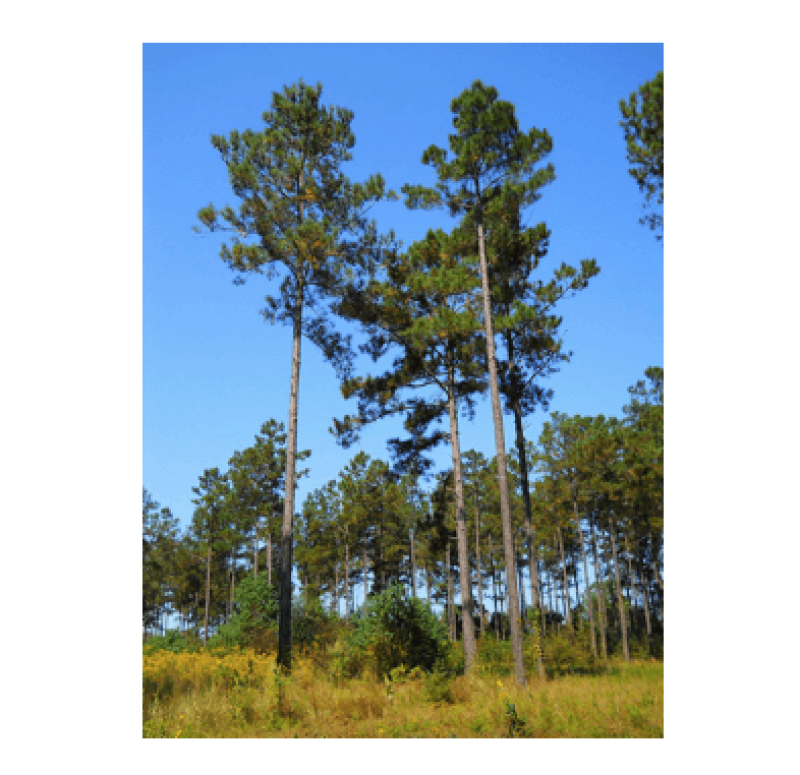
Scientists document natural transfer of DNA between insects and trees

Screen Shot at AM
Loblolly Pines

The GLP aggregated and excerpted this blog/article to reflect the diversity of news, opinion and analysis.

Very few cases of natural DNA transfers between animals and plants are documented, according to a Texas A&M AgriLife Research scientist, but recently his team did just that.

The research team found a group of DNA sequences in pine trees, spruces and other conifers had been transferred to an ancestor of those trees from insects about 340 million years ago, said Dr. Claudio Casola, an AgriLife Research forest genomics assistant professor in the Texas A&M University ecosystem science and management department in College Station.

. . . .

Their work, “An Ancient Trans-Kingdom Horizontal Transfer of Penelope-like Retroelements from Arthropods to Conifers,” was published recently in the Genome Biology and Evolution journal.

“We called these conifer DNA sequences ‘Dryads’ after the Greek mythological nymphs that inhabit trees,” Casola said. “Dryads are one of the many groups of DNA sequences known as DNA repeats.”
He said DNA repeats, also known as transposable elements, are particularly good at making new copies of themselves. . . .

“We know from studies in other plants that transposable elements affect both the activity and the structure of genes, and ultimately have a role in shaping certain traits, from the color of some grape varieties to the oval shape of some tomatoes.”

. . . .

“You can think of transposable elements as ‘genomic parasites,'” Casola explained. “They spread into new genomes kind of like viruses spread between people. Unlike flu and other viral disease, these ‘genomic infections’ occur rarely, but once established, they can persist for millions of years.”

Read full, original post: Scientists document rare DNA transfer between animals and plants

Related Articles

Infographic: Global regulatory and health research agencies on whether glyphosate causes cancer

Infographic: Global regulatory and health research agencies on whether glyphosate causes cancer

Does glyphosate—the world's most heavily-used herbicide—pose serious harm to humans? Is it carcinogenic? Those issues are of both legal and ...

Most Popular

ChatGPT-Image-Mar-10-2026-01_39_01-PM
Viewpoint—“Miracle molecule” debunked: Why acemannan supplements don’t work
Screenshot-2026-09-24-at-3.25.18-PM
No, organic eggs are not more nutritious or necessarily healthier than regular eggs. They are far more expensive.
Screenshot-2026-09-28-at-2.41.21-PM
Viewpoint: 7-OH controversy: An opioid is available over-the-counter–even at gas stations. Should we be concerned?
Screenshot-2026-09-17-at-1.07.08-PM
'We are dangerously addicted to antidepressants': Should we heed RFK Jr.’s sobering warning?
ChatGPT-Image-Sep-25-2026-10_36_43-AM
New federal autism committee head has financial ties to leucovorin
ChatGPT-Image-Sep-25-2026-11_36_56-AM
Now AI almost started a war with China
ChatGPT-Image-Sep-22-2026-11_17_31-AM
The exploding controversy over AI’s built-in survival drive
ChatGPT-Image-Sep-25-2026-11_57_15-AM
RFK, Jr. likely violated federal ethics guidelines in accepting more than $4,275,000 in gifts and book advances from MAHA allies
ChatGPT-Image-Sep-2-2026-02_03_32-PM
How much of a problem is AI’s water use?
Screenshot-2026-09-16-at-10.27.33-AM
Viewpoint: SCOTUS poised to address First Amendment tension between mandatory vaccines, children’s health and religious freedom 
Woman_Vaping_Electronic_Cigarette_50687233623
Trump administration clears the way for speedy approvals of once-restricted tobacco vapes and pouches
glp menu logo outlined

Get news on human & agricultural genetics and biotechnology delivered to your inbox.