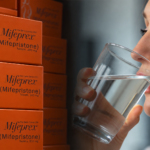
Did you know that ‘sham’ surgeries occur? These are surgical procedures that are designed to fool the patient into thinking that he or she has actually undergone a real surgery—‘under the knife’ as it were—but typically all that is done is a small incision is made in the skin at the surgical site and then the opening is closed.
It’s a placebo surgery – the next realm of understanding more about the effect of expectation on healing. The existence of a persistent placebo effect in the human condition is one that has a strong neuroscientific component, a sociological element, and physiopsychological (how the brain is influenced by, and influences the body) and neurovisceral aspects (these are interconnections between the brain and the body).
For a drug treatment to be approved by the FDA (or any other international regulatory agencies), that treatment must be superior in efficacy to placebo. But as I’ve described before, the placebo effect is powerful and directional—showing improvements out of the placebo groups that directionally match the actual drug treatment group. And this is the case in virtually every drug trial.
Taking the idea of the placebo beyond just drug treatments (do I ‘feel’ better after taking this pill?), sham surgeries have been performed as proxies for placebo. These are just what their name suggests—fake surgeries, which have recoveries and outcomes which have in some cases been no different from the actual surgical interventions. Sham knee surgeries have been as effective as ‘real’ knee surgeries, and even some real surgeries have, when in competition with placebo, caused worse outcomes.
An example of this is renal denervation, a surgical ablation procedure that targets renal arteries. It was initially considered by many of the experts in the field to be a treatment that would transform hypertension for millions of patients. And much of the anecdotal data seemed positive in favor of the surgery. Then a trial (called SYMPLICITY HTN-3) where renal ablation was challenged against placebo showed that it was no better.
There are questions arising now about the effect of ablation on atrial fibrillation, and whether the surgical procedure actually improves outcomes better than placebo or better than no treatment (not doing it). There is more than one way to approach this ablation, and a recent review of cryo-balloon ablation for atrial fibrillation against radiofrequency ablation (an existing technique) led the authors to conclude (emphasis added):



“Two years’ results after pulmonary vein isolation using the second-generation CB in patients with persistent AF are promising. The clinical success rate appears to be similar to the reported success rates of radiofrequency ablation for the treatment of persistent AF.”
What does this actually mean? This procedure failed in 22 out of 50 patients. This is 44%. The Agency for Healthcare Research and Quality (AHRQ) reviewed 3,471 citations and didn’t find enough evidence regarding the safety or efficacy of cryoablation, and so determined:
- It was not possible to draw conclusions in the Medicare population.
- Moderate level evidence that RF ablation was superior to medical therapy for enhancing freedom from recurrence of atrial arrhythmia in the general population, but reablation [needing to have the surgery repeated] was common.
- No impact on all-cause mortality [no fewer people died].
- No firm conclusions regarding health-related quality of life due to heterogeneity across studies [still an open question if quality of life was improved at all because of ablation surgery for atrial fibrilliation].
John Mandrola, MD, Clinical Electrophysiologist at Baptist Medical Associates in Louisville, Kentucky observed that while a Canadian research study showed changes in the ratio of asymptomatic versus symptomatic atrial fibrillation after ablation, “We are doing something with this procedure. The question is, would it be more effective than a sham procedure—especially if those judging its success were not ablation doctors?” So in this case, placebo surgeries may have the same outcomes as a procedure practiced hundreds of thousands of times in patients—all of whom were presumably expecting more of the treatment than what the placebo effect could offer them.
How can sham surgeries work? Bigness. In the same way that placebo pills and other modalities make people get better, the clinical evaluation, workup, stress and travel of surgery day, surgical prep, etc. all make for an almost unbeatable set of placebo-instituting conditions. And with some of the data which exist, sham surgeries perform better in the patients’ minds than a drug treatment that’s a comparator for the same condition. Again, the magnitude of the expectation.
A version of this article originally appeared on the GLP on Aug. 31, 2016.
Ben Locwin is a behavioral neuroscientist and astrophysicist with a masters in business, and a researcher on the genetics of human disease. BIO. Follow him on Twitter @BenLocwin