How GMO crops can help feed world’s growing population in time of climate change

climatechange
Drought land

Editor’s Note: This article was written by Stuart Thompson, a senior lecturer in Plant Biochemistry at the University of Westminster.

The United Nations forecasts global population to rise to more than 9 billion people by 2050. Climate change may mean that the crops we depend on now may no longer be suited to the areas where they are currently cultivated and may increasingly be threatened by droughts, floods and the spread of plant diseases due to altered weather patterns. So feeding everyone in the coming decades will be a challenge – can genetically modified crops help us achieve this?

Two groups of genetically modified crops are widely grown. The first are altered so that they are not affected by the herbicide glyphosate, which means that farmers can eliminate weeds without harming their crop …. The second type produce a natural insecticide inside the parts of the plant that pests eat.

…

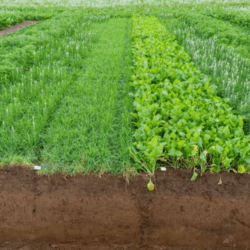
Genetic modification can certainly be used in the fight to make crops more disease resistant…It is also becoming possible to rewrite the genes for these gatekeeper proteins so that they work for different diseases. A powerful and rapid method for editing genes called CRISPR-Cas9 has recently been developed and it is already being harnessed to produce genetically modified crops.

…

Fundamentally, agriculture uses photosynthesis to convert light energy, water and carbon dioxide into food – so improving this process would increase how much food we produce. An obvious target is the step that captures carbon dioxide as it sometimes mistakes oxygen for carbon dioxide in a wasteful set of reactions called photorespiration.

The GLP aggregated and excerpted this blog/article to reflect the diversity of news, opinion, and analysis. Read full, original post: How GM crops can help us feed a fast-growing world


Related Articles

Infographic: Global regulatory and health research agencies on whether glyphosate causes cancer

Infographic: Global regulatory and health research agencies on whether glyphosate causes cancer

Does glyphosate—the world's most heavily-used herbicide—pose serious harm to humans? Is it carcinogenic? Those issues are of both legal and ...

Most Popular

Weed Killer, Gavel, and Cash on Wood Table
Who were the biggest winners in Bayer’s $7.25 billion glyphosate settlement? The tort lawyers, natch
Glassy Molecules Above Floral Pads
Viewpoint: ‘Forever' PFAS chemicals in panty liners? The only ‘forever’ truth is endless lawsuits that do not protect women’s health 
ChatGPT-Image-Mar-10-2026-01_39_01-PM
Viewpoint—“Miracle molecule” debunked: Why acemannan supplements don’t work
Screenshot 2026-11-23 at 11.51
Calley Means’ demonization of glyphosate is ‘just craziness’. Farmers are responding with science.
Screenshot 2026-11-24 at 1.51
Viewpoint: Embrace aging and reject the longevity industry’s eternal-life delusion
Donkey Symbol Meets Speaking Politician
Democrats’ bid to win over MAHA voters faces a hard limit: Their loyalty to RFK Jr.
Florida Varicella Vaccine Syringe Scene
Chickenpox, Hib, Pneumococcus, Hepatitis B: Florida poised to drop requirements for 4 life-protecting vaccines
Screenshot-2026-11-24-at-11.07.44-AM
Here's a sure way to increase testosterone levels and jack up your sex drive
PFAS Molecules and Hazard Icons
Viewpoint: $$$ Billions of reasons why environmental activists are trying to slap a ‘killer PFAS’ label on many safe and essential ‘forever chemicals’
Screenshot-2026-11-16-at-2.37.32-PM
30 years of GMO farming: Is the boom in glyphosate and glufosinate use harming the environment? Data show they’re the most sustainable choice
Pastel Breakfast Pedestals with Yogurt Bowl
RFK Jr. is about to issue an edict defining ultra-processed foods. What could go wrong?
Screenshot-2026-11-09-at-3.01.19-PM
Are Texas data centers killing calves? Debunking viral AI claims
glp menu logo outlined

Get news on human & agricultural genetics and biotechnology delivered to your inbox.