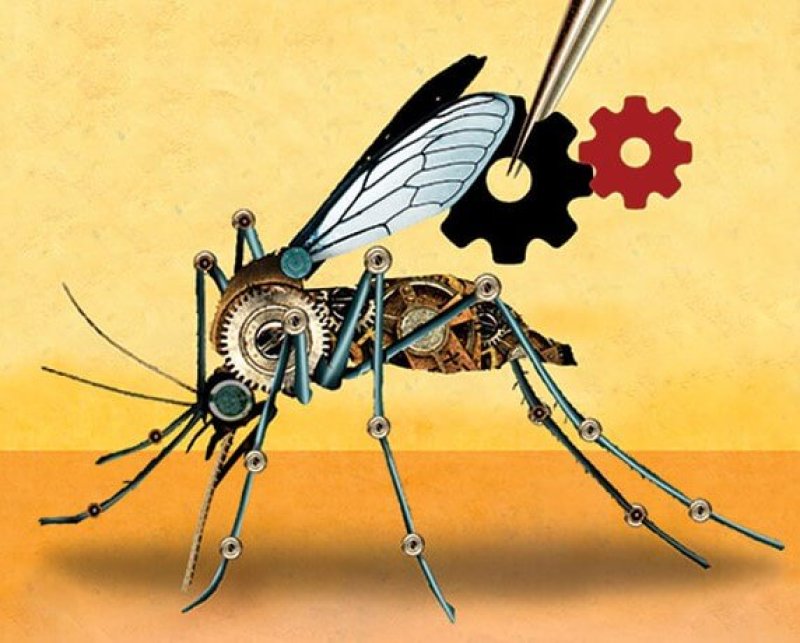

Organisms altered by gene drives, including mosquitoes, have shown promise in proof-of-concept laboratory experiments. But wild populations will almost certainly develop resistance to the modifications. Researchers have begun identifying how this occurs so that they can address the problem.
…
Just as antibiotics enable the rise of drug-resistant bacteria, population-suppressing gene drives create the ideal conditions for resistant organisms to flourish.


One source of this resistance is the CRISPR system itself, which uses an enzyme to cut a specific DNA sequence and insert whatever genetic code a researcher wants. Occasionally, however, cells sew the incision back together after adding or deleting random DNA letters. This can result in a sequence that the CRISPR gene-drive system no longer recognizes, halting the spread of the modified code.
The researchers building the mosquito cage in Italy, part of a multimillion-dollar project called Target Malaria, found this form of resistance in some mosquitoes.
The GLP aggregated and excerpted this blog/article to reflect the diversity of news, opinion, and analysis. Read full, original post: Gene drives thwarted by emergence of resistant organisms