Harvard School of Public Health accused of scare mongering about conventional food, promoting organics

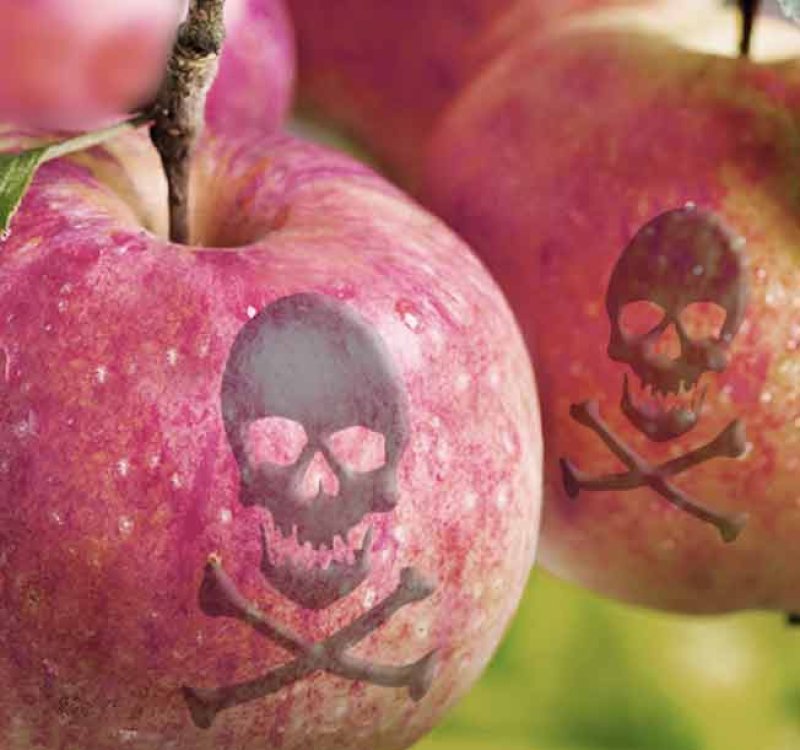
apples deadly pesticides

[Editor’s note: Kevin Folta is a molecular geneticist and chair of the horticultural sciences department at the University of Florida.]

Apparently an Adjunct Professor in Denmark associated with the Harvard School of Public Health is exploiting the reputation and name of this prestigious institution to promote an agenda, and using a EU Parliament document as the vehicle.

This is the familiar vilification of conventional agriculture.
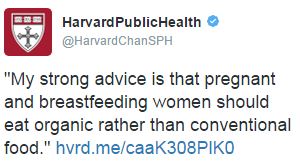
harvard pseudo

As always, I’m fine with organic production methods and am very happy that farmers can make a buck using them. I’m excited to see people thinking about minimizing inputs and producing using alternative methods. That’s awesome. But don’t tell me that the food is more nutritious or safer. The data do not support that conclusion. Minor differences are seen for different nutrients in either direction, under different conditions, and with different plant lines.

The main claim is that “Three long-term birth cohort studies in the U.S. suggest that pesticides are harming children’s brains.”

The associated report is from the EU Parliament. I breezed through it, mostly focusing on major syntheses. The conclusions are rather telling.

and
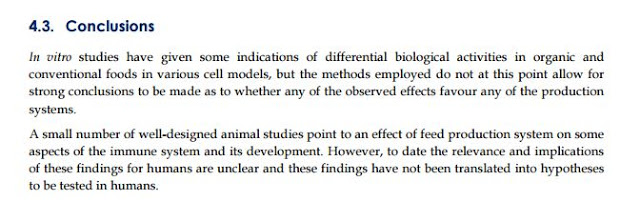
So apparently this was evidence enough to satisfy Harvard Public Health of the glaring dangers of conventional agriculture. I’m crossing them off of my liver transplant list.

The Harvard School of Public Health would be well guided to vet the claims made in such articles on their behalf. These soft-science claims end up affecting a reputation. Ask [the] Cleveland Clinic.

The GLP aggregated and excerpted this blog/article to reflect the diversity of news, opinion, and analysis. Read full, original post: Harvard Public Health-The Sadly Vilifying Conventional Ag?

{{ reviewsTotal }}{{ options.labels.singularReviewCountLabel }}
{{ reviewsTotal }}{{ options.labels.pluralReviewCountLabel }}
{{ options.labels.newReviewButton }}
{{ userData.canReview.message }}

Related Articles

Infographic: Global regulatory and health research agencies on whether glyphosate causes cancer

Infographic: Global regulatory and health research agencies on whether glyphosate causes cancer

Does glyphosate—the world's most heavily-used herbicide—pose serious harm to humans? Is it carcinogenic? Those issues are of both legal and ...

Most Popular

ChatGPT-Image-Jun-11-2026-01_15_03-PM
Selective Pressure, Selective Silence
ChatGPT Image Jun 3, 2026, 03_54_37 PM
Viewpoint: “Turn on, tune in, drop out”—Kennedy embraces the Timothy Leary psychedelic revolution
Screenshot-2026-06-11-at-3.40.06-PM
'Toxin' detox: A gastroenterologist weighs in on $71 billion health trend
Screenshot-2026-06-05-at-2.12.30-PM
Some plants can poison you. So how did humans figure out what is safe to eat?
Screenshot-2026-06-11-at-4.00.17-PM
Gen Z burned by sunscreen misinformation and tanning myths
Screenshot-2026-06-05-at-1.44.09-PM
Viewpoint: Scientists have scrapped the worst-case climate scenario. Is that proof that climate change is a hoax, as Trump claims?
Screenshot 2026-05-26 at 10.15
Viewpoint: Double standard—Why does the wellness industry get a free pass while Big Healthcare is treated as morally suspect?
ChatGPT-Image-Jun-11-2026-10_34_44-AM-2
Will hi-tech genetic fortune-telling really help parents make healthier children?
Screenshot-2026-06-03-at-3.33.44-PM
Viewpoint: Vaccine deniers are attacking a life-saving Vitamin K shot for newborns that isn’t even a vaccine
Screenshot-2026-06-08-at-1.35.30-PM
Viewpoint: Social media and fake natural health propaganda fuel surge in use of mostly useless supplements
ChatGPT Image Jun 3, 2026, 03_14_43 PM
Viewpoint: How Earthjustice became the poster child for the abuse of special interest activist funding

Sorry. No data so far.

glp menu logo outlined

Get news on human & agricultural genetics and biotechnology delivered to your inbox.