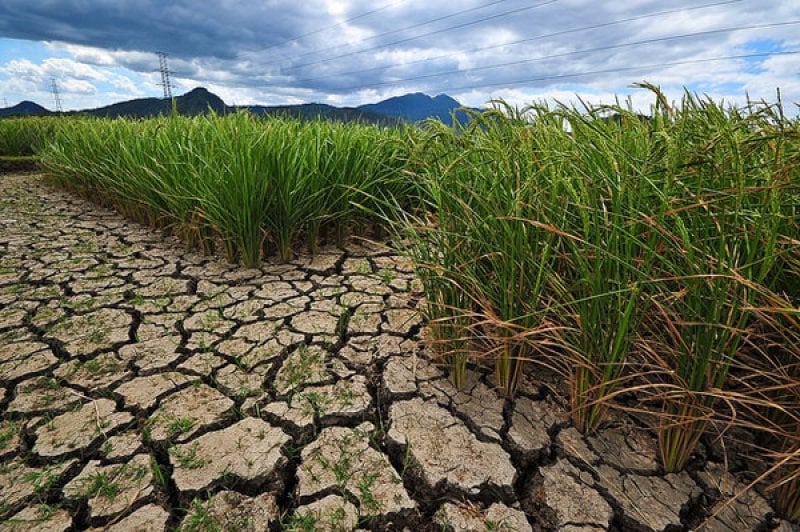
Drought resistant, higher-yielding GM rice developed by Japanese researchers

despite the parch the impact

Scientists at the RIKEN Center for Sustainable Resource Science have developed strains of rice that are resistant to drought in real-world situations. Published in Plant Biotechnology Journal, the study reports that transgenic rice modified with a gene from the Arabidopsis plant yield more rice than unmodified rice when subjected to stress brought by natural drought.

In previous work, RIKEN scientists showed that Arabidopsis plants express the AtGolS2 gene in response to drought and salinity stress.

For this study, they created several lines of transgenic Brazilian and African rice that over-express this gene, and with their … collaborators, tested how well the rice grew in different conditions in different years.

When might we see this useful rice on the market? According to [RIKEN scientist Fuminori] Takahashi, the greatest barrier to commercial availability is that they used genetically modified (GM) technology to generate the GolS2 transgenic rice. โ€œNow, we have begun our next collaborative project, in which we will generate useful rice without GM technology. It might take 5-10 years to reach our goal, but we must keep pressing forward because droughts and climate change might get worse in the future.โ€

[Read the full study here.]

The GLP aggregated and excerpted this blog/article to reflect the diversity of news, opinion, and analysis. Read full, original post:ย New rice fights off drought

For more background on the Genetic Literacy Project, read GLP on Wikipedia

{{ reviewsTotal }}{{ options.labels.singularReviewCountLabel }}
{{ reviewsTotal }}{{ options.labels.pluralReviewCountLabel }}
{{ options.labels.newReviewButton }}
{{ userData.canReview.message }}

Related Articles

Infographic: Global regulatory and health research agencies on whether glyphosate causes cancer

Infographic: Global regulatory and health research agencies on whether glyphosate causes cancer

Does glyphosateโ€”the world's most heavily-used herbicideโ€”pose serious harm to humans? Is it carcinogenic? Those issues are of both legal and ...

Most Popular

ChatGPT-Image-Jun-11-2026-01_15_03-PM
Selective Pressure, Selective Silence
ChatGPT Image Jun 3, 2026, 03_14_43 PM
Viewpoint: How Earthjustice became the poster child for the abuse of special interest activist funding
ChatGPT Image Jun 3, 2026, 03_54_37 PM
Viewpoint: โ€œTurn on, tune in, drop outโ€โ€”Kennedy embraces the Timothy Leary psychedelic revolution
ChatGPT-Image-Mar-10-2026-01_39_01-PM
Viewpointโ€”โ€œMiracle moleculeโ€ debunked: Why acemannan supplements donโ€™t work
Screenshot-2026-06-05-at-2.12.30-PM
Some plants can poison you. So how did humans figure out what is safe to eat?
Screenshot 2026-05-26 at 10.15
Viewpoint: Double standardโ€”Why does the wellness industry get a free pass while Big Healthcare is treated as morally suspect?
drug look like ozempic
Six key health insights from taking weight-loss drugs
ChatGPT-Image-Jun-13-2026-11_51_39-AM
Viewpoint: COVID lab leak? Misguided backers of the lab leak theory refused to give up
ChatGPT-Image-May-26-2026-07_51_21-AM-2
Viewpoint: There are more than 1,000 chemicals in a cup of coffeeโ€”including many substances that can cause cancer. Why isnโ€™t it banned?
Screenshot-2026-06-14-at-9.53.54-AM
Is the World Cup a perfect storm for the spread of infectious diseases?
ChatGPT Image May 26, 2026, 08_42_17 AM (1)
Viewpoint: Greenpeace and poison: How environmental advocacy groups rely on compliant (and often ignorant) journalists to spread disinformation and spark litigation
glp menu logo outlined

Get news on human & agricultural genetics and biotechnology delivered to your inbox.