


Ancestry & Evolution
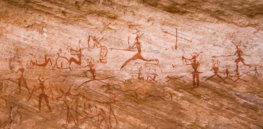
What caused anatomically modern Homo sapiens to evolve into behaviorally modern people?
At some point, from around 40,000 years ago in Europe, we see evidence of these behaviourally modern humans in a ...
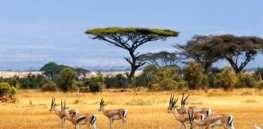
Ancient African savanna was like a ‘chess board’, broadening the minds of early humans as they hunted for prey
Northwestern University researchers recently discovered that complex landscapes—dotted with trees, bushes, boulders and knolls—might have helped land-dwelling animals evolve higher ...

Extraterrestrial neighbors? Our galaxy contains over 30 intelligent civilizations, new calculations suggest
In 1961 the astronomer Frank Drake proposed what became known as the Drake equation, setting out seven factors that would ...
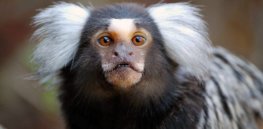
Recreating evolution: Human gene triggers bigger brains in monkeys
Researchers in Germany and Japan introduced a human-specific gene to the fetuses of common marmosets, Callithrix jacchus. In turn, that ...
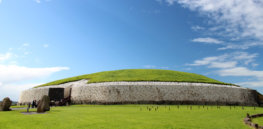
DNA analysis of 5,000-year-old Irish remains reveals an incestuous elite social class
[Researchers found] an adult male buried at the 5,000-year-old Newgrange monument; his DNA revealed that his parents were first-degree relatives, ...

Estrogen slows down adult bone growth, leading to generally taller men and shorter women
Human sexual size dimorphism, the difference in height between males and females, is often touted as a classic example of ...

Dead or alive? The cosmology of viruses
Viruses are an inescapable part of life, especially in a global viral pandemic. Yet ask a roomful of scientists if ...
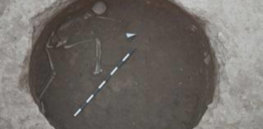
What the ‘lady in the well’ tells us about ancient population movement in the Middle East
The bones of a woman of Central Asian descent found at the bottom of a deep well after a violent ...

Asteroid that wiped out the dinosaurs created perfect conditions for microbial life to thrive
The massive Chicxulub crater on Mexico’s Yucatán peninsula is the fingerprint of a killer, probably responsible for the destruction of ...

It started with rocks: How we developed belief, our ‘most creative and destructive’ ability
About 20 years ago, the residents of Padangtegal village in Bali, Indonesia, had a problem. The famous, monkey-filled forest surrounding ...
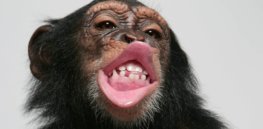
‘Speech-like signature’: Chimpanzees’ lip-smacks rhythm may offer clues about how we learned to talk
The evolution of speech is one of the longest-standing puzzles of evolution. However, inklings of a possible solution started emerging ...
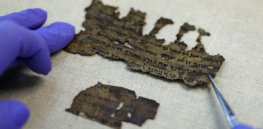
Piecing together ‘jigsaw puzzle’ of Dead Sea Scroll fragments with the help of DNA sequencing
Ever since the Dead Sea Scrolls were discovered, scholars have tried to piece together the fragments as though they were ...
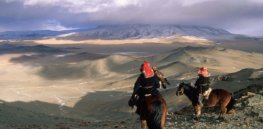
DNA from 14,000-year-old tooth offers oldest known link between Native Americans and southern Siberia
A 14,000-year-old genome scraped from a prehistoric tooth found in southern Siberia is now the oldest known connection linking living ...

Podcast: Out standing in the field – the highs and lows of fieldwork
We talk to the researchers studying genetics and evolution in action, from chasing butterflies up mountains to artificially inseminating kakapos ...
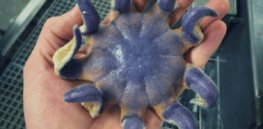
How weird can life on earth get? Check out these creatures found in deep arctic waters
How should we get our children, our parents and anyone else excited about biodiversity of tiny Arctic microalgae or Arctic ...
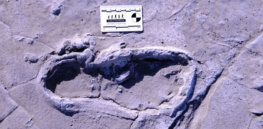
Prehistoric footprints offer snapshot of how our ancestors divided labor between men and women
Prehistoric footprints are a remarkable and precious source of evidence for the behavior and biology of ancient organisms, capturing a ...
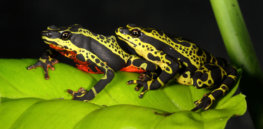
Outside of ‘occasional surges’, biodiversity evolution has been largely stagnant for millions of years, studies suggest
The traditional view is that species have increased in diversity continuously over the past 200 million years, particularly in the last ...

Recreation of Earth’s ancient hydrothermal vents suggests life could emerge even on ‘hellish worlds’
One theory for how life emerged suggests that it originated in the sea, at alkaline hydrothermal vents. It’s impossible to ...

What’s ‘race’ got to do with it? Sub-Saharan Africa emerges as coronavirus ‘cold spot’, offering clues to develop COVID-19 vaccines
Do diseases discriminate on the basis of 'race'—or their genetic population, using more precise terminology? On the surface, this may ...
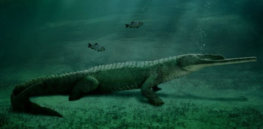
Rise of the dinosaur may have been fueled by earlier mass extinction event
When it was alive, this large, crocodile-like reptile lurked in the swamps and rivers of the Triassic — a time ...
Tracking down the evolution of an essential human skill: self-control
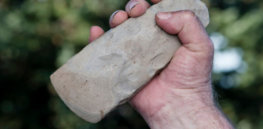
Human self-control evolved in our early ancestors, becoming particularly evident around 500,000 years ago when they developed the skills to ...

Viewpoint: Did this philosopher disprove evolutionary psychology? ‘No—certainly not’
Subrena Smith, an assistant professor of philosophy at The University of New Hampshire, has made a bold claim in the ...

Humans may have driven weeds to evolve to resemble crop plants—And they even became edible
Nikolai Vavilov’s story has stuck with Longjiang Fan ever since he learned about the Soviet plant biologist during his undergraduate ...

Genetic analysis unravels East Asia’s history, highlighting migration of early farmers
Ancient genomics is starting to unravel the history of East Asia. The first large-scale studies of ancient human genomes from ...

Challenging evolutionary psychology: Philosopher attacks the field’s underlying scientific foundation
It’s not often that a paper attempts to take down an entire field. Yet, this past January, that’s precisely what ...

‘AI in archeology’ pinpointing new excavation sites at an ‘unimaginable’ pace
Archaeologists have uncovered scores of long-abandoned settlements along coastal Madagascar that reveal environmental connections to modern-day communities. They have detected ...

Feeling a bit stir crazy during the pandemic lockdown? Blame it on human evolution
Humans are intensely social creatures. We all need company and social contact. But for many of us, being at home ...
