


Ancestry & Evolution
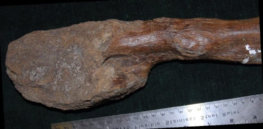
Dinosaur cancer? We suffer from malignancies that afflicted our distant biological relatives
[S]cientists say they have, for the first time, found that dinosaurs suffered from osteosarcoma -- an aggressive malignant cancer that ...

Why do humans mate in private? Instinct or morality?
A debate has emerged as to why humans mate in private while every other animal – except the Arabian babbler ...
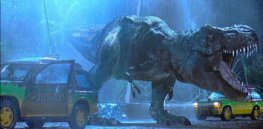
Real life Jurassic Park? Recovered prehistoric DNA raises prospect of resurrecting species
Even before Jurassic Park became a staple of pop culture in the early 1990s, geneticists have been on the hunt ...

How humans might play a role in our own extinction
[W]hat if human extinction was less a cinematic scenario, and instead, a looming reality? That might seem like a sensational ...
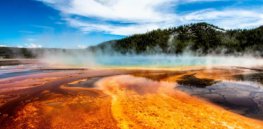
Origins of life: We are getting closer to recreating the bubbling primordial soup
At 158 degrees Fahrenheit (70 degrees Celsius), the vents are a bit hot for a bubble bath but, it turns ...
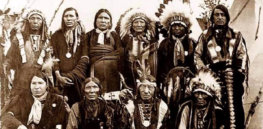
Indigenous people remained in southeastern US for nearly 150 years, study shows
While [expeditions by Spanish explorers] unquestionably resulted in the deaths of countless Indigenous people and the relocation of remaining tribes, ...

How the Hobbit films illustrate the way human brains evolved
For Northwestern University neuroscientist and engineer Malcolm MacIver, [a scene from the Hobbit: An Unexpected Journey where Gandalf and Bilbo ...

Podcast: How male sex drive evolved
For decades, scientists suggested that fatherhood fulfilled a primarily evolutionary function: protecting and providing for offspring in return for sex ...
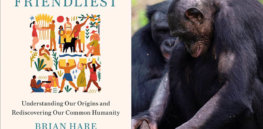
Maybe Darwin got it wrong: ‘Survival of the Friendliest’
Most people assume that Darwin was talking about physical strength when referring to “survival of the fittest,” meaning that a ...

Evolutionary puzzle: Why do fraternal twins exist?
The chances of having fraternal twins changes with maternal age and is heritable ...
Number instinct: Numerical ability is deeply rooted in our shared animal evolution
Considering the multitude of situations in which we humans use numerical information, life without numbers is inconceivable. But what was ...
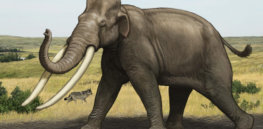
Greta could be the first wooly mammoth-elephant hybrid—and the loneliest animal in the world
The room is bright and her bath is warm. A clamp slides over her sides. She squeals as it hoists ...

Infographic: Power of evolution? How oak trees came to dominate North American forests
Over the course of some 56 million years, oaks, which all belong to the genus Quercus, evolved from a single undifferentiated ...

Facing taboos: Conversation with GLP’s Jon Entine on sustainable agriculture, race and sports, ‘Jewish genetics’ and social investing
Jon Entine is an American science writer. He is the founder and executive director of the Genetic Literacy Project, a ...
Evolution heresies: Revisiting Lamarckian and collective evolution
In his most famous work, Charles Darwin proposed that this amazing process is governed by a simple rule: selection of ...

What are ‘supergenes’ and how do they impact evolution
Biologists identified 37… so-called 'supergenes' in wild sunflower populations, and found they govern the modular transfer of a large range ...
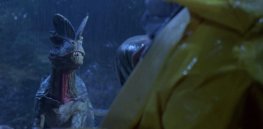
Less lizard, more bird? What Jurassic Park got wrong about this dinosaur
The dinosaur [from Jurrasic Park] is mostly imagination, but a new comprehensive analysis of Dilophosaurus fossils is helping to set ...

Where did strawberries comes from? Genomics, art history help trace evolution of fruits and vegetables
Plant geneticists seeking to understand the history of the plants we eat can decode the genomes of ancient crops from ...

Viewpoint: Activist opposition to GMOs fueled by an ‘extremist’ vision of nature
We would like to take the opportunity on #Worldenvironmentday to come back to a problem we have been thinking about ...
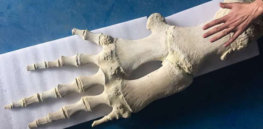
How ancient fish fins gave rise to modern human hands
In 1859 Charles Darwin remarked… in On the Origin of Species: “What can be more curious than that the hand ...
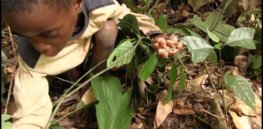
Humans vs. apes: Women are the secret factor explaining how we evolved to populate the world
The populations of the great apes were once nearly equal. Now, one great ape species—Homo sapiens—outnumbers the rest by almost ...
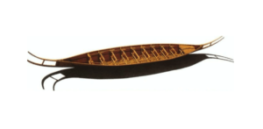
Vikings were not the first global voyagers. Bronze age Norwegians likely sailed the seas 2,000 years before
[A]rchaeologists who study Norway during the Bronze Age have discovered a great deal of new information. ... People who lived ...

Why did fatherhood evolve?
We might take the doting modern dad for granted, but if you take a look at the rest of the ...
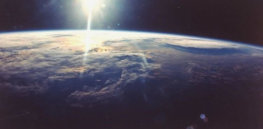
350 million years ago, a thinning atmosphere sparked a mass extinction. We’re headed in the same direction
Scientists noticed that around the time of the Hangenberg Crisis, [fern] spores began to look strange. Some were much darker ...
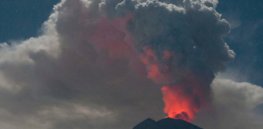
How an event in what is now the United States may have contributed to the fall of the Roman Empire
With a new analysis of particles found in ice cores, researchers determined that [Alaskan volcano] Okmok's eruption coincided with Rome's ...
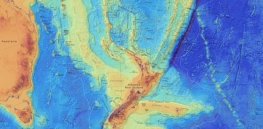
Zealandia revealed: Maps and interactive tools uncover backstory of Earth’s ‘lost’ eighth continent
Earth's eighth continent is 94% underwater.... ... Zealandia — or Te Riu-a-Māui, as it's referred to in the indigenous Māori ...

Why did menopause evolve?
To explain menopause, any hypothesis needs a plausible evolutionary scenario. It is reasonable to assume that the chimp/human common ancestor ...
