In the latest episode of Genetics Unzipped, stay-at-home roving reporter Georgia Mills talks to four researchers who’ve been out in the field studying genetics and evolution in action, all supported by Heredity Fieldwork grants from The Genetics Society.
From chasing butterflies up mountains to artificially inseminating kakapos with the help of drones and putting angry birds in paper bags until they poop, all these scientists have tales to tell about their time in the field – and some of them have the scars to prove it!
Melissa Minter, a PhD student at the University of York, is studying how the UK’s most elusive butterfly species – the mountain ringlet – is coping with climate change, and whether there is any hope that they might be saved. If there’s enough genetic diversity in the butterfly populations that still remain, they might be able to adapt and survive in the future. But before Melissa could answer that question, she first had to find them. And that meant putting on her hiking boots and going on a Great British Butterfly Hunt.
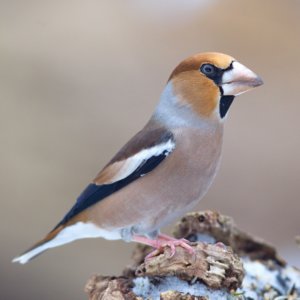
Although Ewan Stenhouse didn’t have to physically exert himself to find his chosen study species, his fieldwork came with a different kind of challenge. Based at Cardiff University, Stenhouse is investigating whether differences in diet between UK and European hawfinch populations might be behind their decline in the British Isles, putting them on the red list for threatened species while their continental cousins in Europe are thriving.
As he explains, hawfinches look a lot like a character from the game Angry Birds, with powerful beaks and a grumpy temperament. And while he could watch the birds from the comfort of a garden window, catching them for faecal samples to investigate their food was a lot more difficult, not to mention painful.
Claudia Martin, who’s doing her PhD at the University of East Anglia, ended up in a slightly more glamorous location for her field trip: the Canary Islands, off the coast of west Africa. But she wasn’t studying the eponymous canaries.
Instead, she had her sights fixed on Berthelot’s pipit – a small brown bird that can be tricky to spot and even harder to catch with non-harming spring-loaded traps. Of course, as Martin explains, it helps if you’re actually catching the right species to start with.
“Sometimes if we put the traps too close to a pile of rocks, a little lizard would climb out and get the worm instead of a bird,” she says. “This gave us quite a disappointment when from far away, you can see the trap is sprung. You run up to the trap and what you’ve got in there is a small lizard which looks rather startled.”



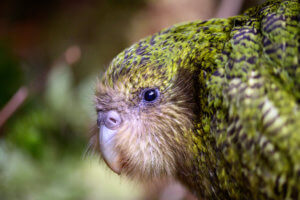
The last intrepid genetic explorer is Lara Urban, who’s now a conservation researcher at the University of Otago in New Zealand. She used her fieldwork grant to go in search of some of New Zealand’s most iconic birds: kakapos and takahes.
Kakapos have a place in science history as the only species to have had all its living members genetically sequenced, and are part of an intensive conservation programme.
Urban was lucky enough to spend time on the island of Whenua Hou, assisting the conservation team through a busy breeding season as they artificially inseminated the island’s kakapo’s with the help of a small vibrator and a drone to fly the precious samples across the rocky terrain.
Full transcript, links and references available online at GeneticsUnzipped.com
Genetics Unzipped is the podcast from the UK Genetics Society, presented by award-winning science communicator and biologist Kat Arney and produced by First Create the Media. Follow Kat on Twitter @Kat_Arney, Genetics Unzipped @geneticsunzip, and the Genetics Society at @GenSocUK
Listen to Genetics Unzipped on Apple Podcasts (iTunes) Google Play, Spotify, or wherever you get your podcasts