


Chemical Controversies

Viewpoint: Understanding risk—Why does trace pesticide residue spark intense fear?
At speaking engagements, I would often remind audiences of Bruce Ames’ quote on coffee and pesticides. In an attempt to ...

‘Banning pesticides would upend the US food system’: Farmers alarmed that the Trump-RFK, Jr. alliance could cripple US agriculture
Donald Trump’s embrace of Robert F. Kennedy Jr. and his fringe health theories is triggering a flurry of outreach in ...

Mexico’s ban on GM corn ‘could disproportionately affect the nation’s lower-income consumers’
A fully implemented ban on genetically modified corn in Mexico could disproportionately affect the nation's lower-income consumers, according to a ...

Podcast: Glyphosate doesn’t cause Celiac disease or alter gluten structure
Disinformation clouds the public understanding of science, especially technology in agriculture and medicine. So when a leading journal publishes false ...

Glyphosate free farming is not in any country’s near future
Glyphosate, the world’s most widely used herbicide, is the subject of widespread controversy in scientific literature, media, policy, and society ...

Video—Viewpoint: Nutritionist Dr. Sarah Ballantyne: Environmental Working Group’s Dirty Dozen vegetables and fruits is ‘fear-mongering’ and “not scientifically credible’
The Environmental Working Group’s Dirty Dozen list is based on the number of pesticide residue detections found on foods, but ...

GLP podcast: Fighting cancer with vaccines; ‘Regulator-activist-legal complex’ undermines innovation
Therapeutic vaccines for some cancers have entered clinical trials. Do they represent the future of cancer treatment? Regulations, fearmongering campaigns ...

Mexico’s president proposes extending the ban of genetically modified crops “for both health and the protection of biodiversity in the country.”
President Claudia Sheinbaum reaffirmed the importance of the decree banning the planting of transgenic white corn in Mexico, highlighting that ...

Insect-resistant, genetically modified Bt cotton revolutionized farming in India. Now it faces challenges. Here’s why
[Insect resistant] Bt cotton has played a transformative role in India’s agricultural landscape, especially in the cotton farming sector. Introduced ...

Video: Viewpoint—The opportunism of anti-chemical crusaders
Unless you think plants are little people, so you don't understand any science, it is impossible to believe a weedkiller ...

Viewpoint: What happens when health officials spread misinformation?
The American Academy of Pediatrics is legitimizing pseudoscience that is undermining food safety, genetic technologies, and critical agricultural practices ...
GLP podcast: Red state ‘bullies’ trying to ban fake meat; Alt-health activists in a second Trump Admin? Psilocybin might be superior to some antidepressants
Why are some states trying to ban lab-grown meat? Conspiracy thinking prevails in the alternative health movement, and some of ...

A natural biological approach to weed control
Weeds have been a major challenge since the earliest days of farming. Tillage - the mechanical means of weed control ...
GLP podcast: Rachel Carson launched chemophobia? ‘Big Ag’ helps solve environmental problems; Placebos as medicine
Did revered environmentalist Rachel Carson gives rise to the modern anti-chemical crusade scientists are now struggling to control? Maybe so ...
Viewpoint: Why are politicians letting the tort lawyer and organic industry funded anti-science Environmental Working Group influence public policy?
We are in an era where rejection of science occurs across all ideologies and communities. Anti-science misinformation spreads as a ...

Viewpoint: Organic agriculture grain crisis?—What might be the impact if farming goes fully chemical-free organic?
[A] number of papers on going totally chemical-free suggest a significant impact. For instance, a meta-analysis from Nature concluded that ...
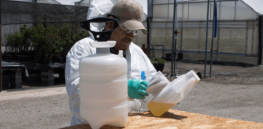
Viewpoint: Faulty science undergirds attacks on paraquat herbicide
The Paraquat-Parkinson’s tort extortion process is a perfect example of the Predatort Playbook in action. Tort law firms contact activist ...
GLP podcast: Egg myths, debunked; You might hate veggies because of your genes; Chemicals causing early puberty? Probably not
The public believes a lot of myths about eggs. Let's debunk some of the most popular misconceptions. If you don't ...

Will the Supreme Court block further glyphosate suits against Bayer?
Recent surprise decisions have upended plaintiffs’ expectations on the toxic tort front. In Delaware, the top court is rehearing the ...

How Rachel Carson’s “Silent Spring” inspired today’s misplaced chemophobia and endangers public health
[C]hemophobia has roots in the heart of the modern environmental movement. [In] 1962, biologist Rachel Carson published Silent Spring, a book ...

Viewpoint: Chemophobic demonizing of DEET — Boston Museum of Science’s fact-free endorsement of ’non chemical’ insect repellent alternatives
I'm sure you know by now that I often speak about the harms of the appeal to nature fallacy and ...

Viewpoint: Mass litigation targeting glyphosate could put beet farmers out of business
Glyphosate is used on 98% of Idaho's sugar beet acres, allowing those farmers to contribute over $385 million to our ...
GLP podcast: Should scientists endorse political candidates? Debate erupts over Scientific American’s support for Kamala Harris
"Vote for Kamala Harris to Support Science, Health and the Environment," Scientific American wrote in an incendiary September 16 editorial ...

The Spanish Flu killed 50 million people. It’s frightening that terrorists can create a synthetic version of the pathogen
“The Terrorism Warning Lights Are Blinking Red Again,” according to former CIA Deputy Director Mike Morell, who delivered that message ...

Can household products induce early puberty? Study raises questions
Girls exposed to certain chemicals that are common ingredients in household products may be starting puberty comparatively early, a new ...

Canadian researchers in the early stages of developing effective and comparably inexpensive alternatives to glyphosate
Fifty-nine weed species around the world have developed some resistance to glyphosate, according to data from the International Survey of ...

Viewpoint: Marriage made in heaven? What would happen to science and farming if Trump wins and RFK, Jr. is rewarded with EPA cabinet post?
Could [Robert F. Kennedy Jr.] serve inside a potential second Trump administration? ... Trump voters and disaffected Democrats don’t care ...
