


Chemical Controversies

EPA weighs in on sulfoxaflor: Genetic Literacy Project Q&A on controversial decision to lift restrictions on alleged ‘bee-killing’ pesticide
The FDA replied to our questions with a detailed defense of its decision to lift restrictions on sulfoxaflor ...

Bayer trial: Judge may cut $2 billion glyphosate-cancer damages to $250 million
A California judge will slash a $2 billion judgment against Bayer AG, which had been awarded to a couple who ...

Organic produce consumption lowers pregnant women’s exposure to some pesticides, small study suggests
Organic versus conventional foods: are they really better for people’s health? Are all organic foods created equal, and if not, ...
New test accurately estimates bee exposure to neonicotinoid insecticides, study claims
Bee populations are declining, and neonicotinoid pesticides continue to be investigated — and in some cases banned — because of ...

Farming without pesticides could double crop losses, boost global food prices, UK economist warns
The average UK family grocery bill could increase by more than [$977] over the course of a year without the ...
Podcast: Bt eggplant in Bangladesh—the GMO crop that boosted farmer profits 6-fold
Subsistence farmers in Bangladesh make a living by growing, harvesting and selling brinjal, or the fruit westerners know as eggplant ...

Vermont: First US state to mandate its own GMO crop regulations
On June 17, 2019, Vermont Governor Phil Scott signed a new law, which creates a committee to review new genetically-engineered ...

Bayer lawsuit: Judge cuts punitive damages in glyphosate-cancer case from $75 million to $20 million
A federal judge on [July 15] slashed a damages award Bayer AG owed a California man who blamed Roundup weed ...
Environmental media, advocacy groups in uproar after EPA grants long-term approval for alleged ‘bee-killing’ pesticide sulfoxaflor. Here’s what the science says
This discussion needs to shift from politics to science and the law ...
EU ‘probably won’t’ re-approve Bayer’s glyphosate weed killer after 2022, German agriculture minister says
German Agriculture Minister Julia Kloeckner said glyphosate herbicide probably won’t have enough support to gain re-authorization for use in the ...

If Bayer settles glyphosate-cancer lawsuits, final costs could range from $2.5-$20 billion
There’s a $2.5 billion question hanging over Bayer AG. Or perhaps a $20 billion question, depending on who you ask ...

Brazilian farmers sue Bayer to reclaim $151 million in royalties on GMO cotton
Brazilian cotton producers in the state of Mato Grosso on [July 11] sued Bayer AG, seeking to cancel the chemical ...

Everything you should know about India’s pro-GMO farmers defying ban on biotech crops
With a few Haryana farmers symbolically defying a government restriction against sowing banned [GMO] Cotton in Hisar, and the government ...

Glyphosate manufacturers reject alleged weed killer-cancer link in response to federal Roundup report
Glyphosate registrants defended their products as safe to use in comments submitted .... to the Department of Health and Human ...

Sydney, Australia may end glyphosate use as public opposition to Bayer’s weed killer grows
Sydney’s city council said on [July 5] it was reviewing .... the use of Bayer AG’s Roundup, after other councils ...

India’s crackdown on GMO cotton in Maharashtra state boosts illegal planting nearly 25%
Nearly 25 per cent of the cotton crop being sown by farmers in Maharashtra this season is from the banned ...

Juror in glyphosate-cancer trial urges judge to uphold $80 million verdict appealed by Bayer
A juror who was part of a panel that delivered an $80 million award against Bayer AG after finding that ...

Twist upon twist in glyphosate battle: Next generation safer biopesticides on the way thanks in part to anti-chemical activists—who may yet oppose them
Will growers be forced to turn to less effective, more harmful solutions? ...

‘Smart’ fertilizers help feed booming global population while cutting pollution, slowing climate change
To feed the world’s growing population, farmers need to increase crop yields. Applying more fertilizer could help. But standard versions ...

India says it will take “appropriate action” to stop farmers from planting unapproved GMO insect resistant and herbicide tolerant crops
[India's] agriculture minister Narendra Singh Tomar reiterated that all genetically modified (GM) crops other than Bt. cotton [have] been banned ...

Austria could be first EU state to prohibit glyphosate use as weed killer ban advances through parliament
Austria’s lower house of parliament passed a bill on [July 2] banning all uses of the weedkiller glyphosate, the first ...

Viewpoint: Don’t ignore organic industry’s conflict of interest in stoking fears about glyphosate dangers
A California jury recently awarded a $289 million judgment against Bayer, the maker of the herbicide. Lawyers somehow convinced the ...

Pesticide exposure boosts cancer risk in farmers? Busting one of social media’s favorite agriculture myths
Did you hear? Farmers have less cancer overall than the general population .... Nearly 10 years ago .... U.S. Agricultural ...

Price floor for Bayer shares may not exist as Monsanto glyphosate-cancer litigation costs mount
On June 7th, 2018, Bayer .... consummated its $63 billion acquisition of Monsanto, the largest GMO and agricultural chemical distributor ...

Maharashtra state in India contemplates lifting GMO herbicide-tolerant cotton ban amid farmer protests
Demands to lift [the] ban on the use of herbicide-tolerant Bt (HTBT) cotton in the state are growing stronger. Several ...
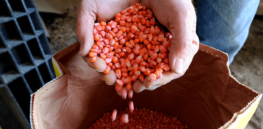
If US banned neonicotinoid insecticides, pesticide use could increase, posing threat to humans and pollinators, study suggests
New research from Gian Carlo Moschini at the Center for Agricultural and Rural Development at Iowa State University and Ed ...

Under shareholder pressure, Bayer hires law firm to initiate ‘radical overhaul’ of glyphosate litigation strategy
Chemicals giant Bayer, under pressure from activist shareholders, said on [June 26] it has hired an external lawyer to advise ...
