


Sustainability & Climate Change

Viewpoint: Almond growers driving bees to ‘extinction’? Challenging the latest pollinator decline scare story
The policies of greens are a greater threat to wildlife than high-yield agriculture ...
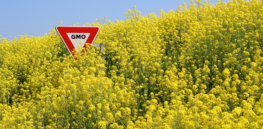
GMO herbicide-tolerant canola increased Canadian farm profits $233 million, saved consumers $26 million
Many think that the developers of new technologies are the ones who gain virtually all of the benefits, with consumers ...

Bees may fare better in flower-rich cities than countrysides, research shows
Cities all over the world are expanding. A number of studies have already shown that the conversion of natural areas ...

The real sustainability revolution in farming rests with CRISPR and other New Breeding Techniques. Why are organic farmers blocked from using them?
New breeding techniques allow increased precision and much shorter time periods than conventional breeding ...

Genetically engineered bacteria could inoculate honeybees against deadly varroa mites, deformed wing virus
Scientists from The University of Texas at Austin report in the journal Science that they have developed a new strategy ...

Lab-grown dairy proteins could make vegan cheese as good as the real thing
Vegan cheese isn’t what it used to be. The products of yesteryear had a reputation for being plastic-y slices with ...

Starbucks to launch plant-based breakfast sandwich as part of ‘environmentally friendly’ menu
Starbucks announced it will become the latest food chain to introduce a plant-based breakfast patty for its customers in the ...

A Rwandan farmer’s son: Why I advocate for GMO crops in Africa
Being raised in a family where all income came from my mother’s farm is something hard to forget. My mother ...
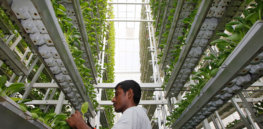
Gene editing could help make vertical farming a viable tool in the battle against global hunger
Dr. Huw Jones of Aberystwyth University stressed the importance of genetic engineering in the future of agriculture, saying that while ...

GMO diamondback moth shows promise as sustainable pest control tool in first ever open-field release
A newly published study reports a successful, first-ever open-field release of a self-limiting, genetically engineered diamondback moth, stating that it ...
Malthusian inversion: Slowing population growth could mean cheaper food and a cleaner environment
I’ve noticed several articles in the past few weeks talking about slowing or even falling population growth .... The richer ...
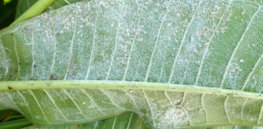
CRISPR gene editing knocks out viruses responsible for billions of dollars in crop losses
Viruses cause billions of dollars in losses for many food, feed, and fiber crops, including staples like wheat, rice, potatoes, ...

Video: Biotech firm Syngenta defends GMO crops, Impossible Burger as climate change mitigation tools
Syngenta Chief Executive Officer Erik Fyrwald discusses the need to help farmers adapt to climate change, genetically-modified food and the ...

Plant-based meat critics say it’s not as healthy or sustainable as proponents claim. Let’s look at the nutrition and ecological science.
Education is not enough. Taste, cost, and convenience play dominant roles in shaping food choices ...

GMO crops with enhanced carbon-storing ability could help slow climate change
More than 10 percent of the Earth’s land-surface is cropped, about 3.7 billion acres of carbon sequestration Farmers’ toolkits for ...

Drones detect plant pests, dispatch natural predators to kill them
In Santa Monica, Calif., researchers flew drones with light-sensitive cameras over a strawberry field to locate pest-damaged plants. Armed with ...

GMO sustainability advantage? Glyphosate spurs no-till farming, preserving soil carbon
Skeptics of GMOs decry the growing practice of no-till farming and its connection to herbicide-tolerant crops. Yet, agronomists say good ...
Growing diverse crops may not slow climate change as much as previously thought
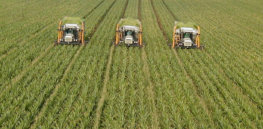
Integrating perennial crops into corn and soybean rotations doesn't consistently increase the ability of soils to store carbon, according to ...

Plant biologist explains how disease-resistant crops could help prevent global famine
Each month, those working at the pioneering heart of Norwich Research Park [in the UK] tell us how their work ...

CRISPR immunizes chickens against deadly virus, potentially boosting global egg and meat production
CRISPR genome editing has been used to make chickens resistant to a common virus. The approach could boost egg and ...

Have regulators failed to address agriculture’s fertilizer pollution problem?
Everywhere Randy Souder looked, he saw mud. On his soggy fields. In the mechanized crannies of his planter. Along the ...

Reforestation: Climate change solution or ‘ecosystem disservice’? Depends where you plant the trees
Reforestation is an important part of tackling climate change, but it seems we need to think carefully about where we ...
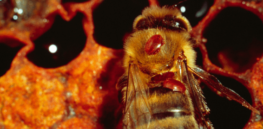
The Varroa destructor mite is the greatest threat to US honeybees, and why things could get worse.
Researchers are looking at a long-term solution: develop bees that can fend off Varroa themselves ...
We can sustainably feed 3.4 billion people. Study shows 4 eco-friendly farming practices will help produce food for 10 billion
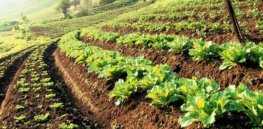
Global agriculture puts heavy pressure on planetary boundaries, posing the challenge to achieve future food security without compromising Earth system ...

Vertical farms, lab-grown meat: The sustainable future of food, or ‘wishful thinking’?
Farmers have grown food in roughly the same way for thousands of years .... Now, entrepreneurs say they have a ...

Saving seafood: Lab-grown microalgae could help sustain the world’s overfished oceans
Oceans once teeming with life are being whittled away. Larger, predatory fish – salmon and tuna included – are now ...

Afraid of glyphosate and other synthetic pesticides? You eat 10,000 times more of the natural ones made by plants
Fruits and vegetables have evolved thousands of built-in pesticides chemically similar to the ones created in labs ...
