


Sustainability & Climate Change
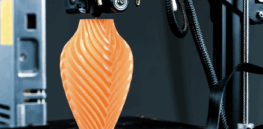
3D printer turns rotting food scraps into household items
Researchers at the Massachusetts Institute of Technology (MIT) have unveiled a groundbreaking innovation: a 3D printer that transforms food scraps ...

Confronting the growing challenge of increased plastic pollution in agriculture
Over the past decades, plastic has become an integral part of agriculture and this use is increasing with the intensity ...

Can gene editing dramatically reduce global hunger?
In 2015, the United Nations (UN) adopted 17 Sustainable Development Goals with Goal 2 (SDG 2): Zero Hunger, aiming to ...

Viewpoint: As Earth’s temperatures reach record and accelerating highs, EPA rejects the science
“There is unequivocal evidence that Earth is warming at an unprecedented rate. Human activity is the principal cause.” Those two ...

Agroecological farming is not financially sustainable and will need substantial government subsidies
A new study by the UK Centre for Ecology & Hydrology (UKCEH) has suggested that while nature-friendly farming methods improve ...

The confluence of AI and biotechnology will drive the development of unprecedented sustainable crops
A major review published in the prestigious journal Nature today outlines how artificial intelligence and biotechnology could transform global crop production — ...

How climate change is helping drive food price inflation
Florida is one of the country’s top producers of fruits and vegetables. ... But climate change has already altered Florida’s ...

How gene editing could transform the humble potato into a sustainability powerhouse
In Peru, [gene editing] is already beginning to emerge as an ally in facing the challenges posed by climate change, ...

Climate change is pushing more and more species towards extinction. Gene editing may be a savior
Gene editing technologies, such as those used in agriculture and de-extinction efforts, can be repurposed to provide what an international ...

7 technologically futuristic foods are already rolling out
As the global population accelerates towards nearly 10 billion by mid-century, the imperative to transform food production systems has never ...
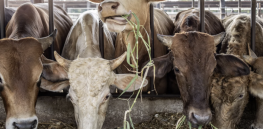
6% of global carbon emissions are linked to beef. Here’s how American exports can sharply reduce that
Trump’s global trade shake-up has prompted nearly every nation around the globe to reexamine their own trade policies, asking what ...
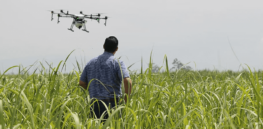
AI, drones and robots: Future farming
Many modern farms already use GPS-guided tractors and digital technology such as farm-management software systems. Now, advances in artificial intelligence ...
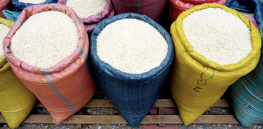
Fungus free rice? Dream CRISPR gene edited breakthrough could significantly address global hunger
In a groundbreaking advancement, researchers from the University of California, Davis, along with an international team, have harnessed the power ...

Why are so many unapproved chemicals found in European-grown organic food?
The European Food Safety Authority (EFSA) has published a report that investigates the occurrence of 21 active substances frequently present in organic ...

Viewpoint: How Greta Thunberg’s doomsday degrowth messaging dangerously fanned hopelessness in younger generations
After a movie at her school about garbage in the oceans left her in tears as a teenager, Greta Thunberg ...
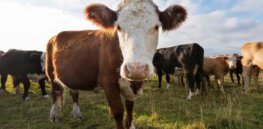
Fighting climate change with gene editing: Can we slash cows’ methane production?
Preventing ruminant methane from being produced in the first place seems a sensible way to limit its damaging effects ...

Chef Aiman: New Dubai restaurant helmed by AI chef
Dubai is known for pushing the boundaries of what is possible, and it is once again making headlines—this time with ...

No flora or flamingos: How the green business movement is destroying the environment while claiming to save it
As the world transitions to more renewable energy sources, the demand for it has soared. In 2021, about 95,000 tonnes ...

Viewpoint: Activist hypocrisy — It makes no sense to use genetic engineering to treat disease but limit it to grow food sustainably
As a biomedical scientist working in cancer and infectious disease immunology, I’ve spent decades working with genetic tools and genetic ...

Gene-edited tweaks of produce opens the door to improve tomatoes and rice without using transgenics
In a study published in Nature Communications titled “Construction of multi-targeted CRISPR libraries in tomato to overcome functional redundancy at genome-scale level,” ...
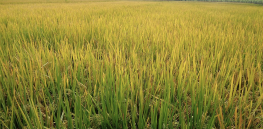
India developing climate-adaptive gene edited varieties to supplement already-approved GMO rice
In a significant stride towards bolstering food security amid escalating climate challenges, researchers at the Indian Agricultural Research Institute (IARI) ...
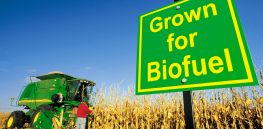
Viewpoint: Why two sacred cows of organic farming, grass-fed beef and biofuels, are hurting the planet
Anne Kim: [M]ost of us aren’t farmers, we’re eaters. Can you drill down a little bit about the specific practices ...

Video: Nuclear energy will destroy us? Global warming is an existential threat? Chemicals are massacring bees? Donate to the Green Industrial Complex!
In an eye-opening exchange, John Stossel sits down with Jon Entine, an award-winning journalist and Executive Director of the Genetic ...

Fossil fuels are embedded in our food chain. What can be changed to reduce the environmental trade-offs
A new report from renowned international thinktank IPES-Food, Fuel To Fork, documents how fossil fuels are the lifeblood of the food industry ...
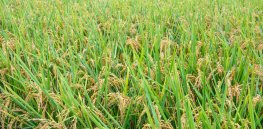
Malaysia scientists hopeful government will reform laws to open the way for sustainable gene-edited rice
Since 2021, several scientists have been developing new genetically edited rice varieties with targeted traits, such as resistance to disease ...

Viewpoint: How the Washington Post became a megaphone for Green Billionaires peddling environmental misinformation
There was a time when environmental journalists at least made an effort to present their coverage in a balanced manner ...

Viewpoint: A world without glyphosate would mean more weeds, soil erosion and carbon emissions, and smaller crop yields
Too much rain can devastate a crop. That was especially true when cultivators were the primary weed technology. It was ...
