


Sustainability & Climate Change
The never-ending GMO debate: Pros and cons
According to the Genetic Literacy Project, “The most recent data from the International Service for the Acquisition of Agri-biotech Applications (ISAAA) ...
Viewpoint: What impact will Trump’s budget cuts have on U.S. ability to track and adapt to climate change
Over the last few months, … there’s been an explosion of news about proposed budget cuts to science in the ...

Organic farming acreage in the U.S. is in steep decline
[A]merica’s certified organic acreage fell almost 11% between 2019 and 2021. Numerous farmers who implement sustainable practices told The Associated ...
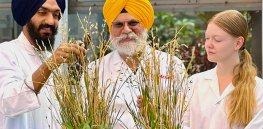
The latest gene edited crop: Oats with higher yields, more fiber and climate change resilient
For the first time, scientists have successfully edited oat DNA, a breakthrough that could accelerate the development of oats with ...

Global food production has increased 390 percent since 1960. Here’s how farmers have done it
The use of modern seed genetics (which includes genetically modified (GM) crops, chemical and fertilizer use) greatly contributes to improved ...

When European politicians and ‘experts’ debate the future of farming, they listen to everyone but farmers
Georges Clemenceau once said war was too important to be left to the generals. Today, in Brussels, agriculture is too ...

Viewpoint: Sustainable agriculture—Why gene editing should be welcomed by organic farmers
Gene editing should be allowed in organic crop cultivation to boost yields and promote more sustainable farming practices, according to ...

Electric respiration: Bacteria that ‘breathe’ electricity could revolutionize wastewater treatment and biomanufacturing
A team led by Rice University bioscientist Caroline Ajo-Franklin has discovered how certain bacteria breathe by generating electricity, using a natural ...
Viewpoint: How media coverage has undermined support for cultivated ‘clean’ meat
Is cultivated meat ‘real meat’? Does it pose any benefits? Is it an inevitable, necessary marker of change to the ...

Climate change challenge: How to ‘future proof’ crops
In a review in The Philosophical Transactions of the Royal Society B, Stephen Long, a professor of crop sciences and of plant biology at ...

AI can read plant DNA. That could transform agriculture and help feed the world
Plant DNA has become a frontier for artificial intelligence, with large language models turning genetic sequences into interpretable content for ...

How worried should you be about the health effects of microplastics?
Animal studies indicate that microplastics may harm reproduction, particularly sperm quality. They can also affect lung and gut functioning and ...

Viewpoint: What would be the consequences if we moved from conventional, tech-advanced farming to organic?
Close your eyes and imagine grocery stores where produce costs triple, with a sparse selection and visible insect damage. This ...
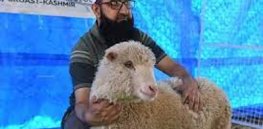
India’s new gene-edited sheep increases muscle mass by 30%
The Sher-e-Kashmir University of Agricultural Sciences and Technology (SKUAST-Kashmir) has successfully produced a gene-edited sheep, setting a new benchmark in ...

Viewpoint: Is Trump’s embrace of nuclear energy a game changer?
President Trump [recently] signed four executive orders aimed at moving the United States’ nuclear industry forward. The executive orders (EOs) ...

60% of imported bananas go bad. How non-browning gene edited varieties will help reduce waste
It is estimated that a third of the produce that is harvested worldwide is never consumed and goes to waste ...

‘We’re talking about enough food for hundreds of millions of people’: Why are crops suddenly failing in different parts of the world?
In fields across the globe, crops that once thrived under predictable seasons are now struggling to survive. Hotter days and ...

Organic yields significantly lag conventional farming output. That gap will increase as gene editing accelerates in the U.S.
A lack of sufficient nutrient application and the limited ability to control weeds, insects, and plant diseases, results in organic ...
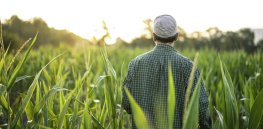
There is no agreed upon definition of regenerative agriculture. Canadian farmers want to change that
With producer and policy interest in regenerative agriculture growing across Canada, policymakers and industry leaders are debating how to standardize ...
Can Africa’s indigenous ‘orphan crops’ play a meaningful role in improving the continent’s food security?
In 2021, the small village of Kanaani in eastern Kenya faced a devastating drought. For months, rain was scarce, leaving ...

Video: John Stossel and GLP’s Jon Entine on the faux bee-apocalypse—How environmental groups and the media manufacture chemical scares
Have you heard? The honey bees are dying! At least, that’s what the media and big money- hungry environmental groups ...
Viewpoint: Is the cultivated meat movement a way to reduce ‘nonhuman suffering’ or is it animal exploitation greenwashing
There’s a criticism which I see with some frequency in the animal-rights movement which argues those who view cultivated meat ...
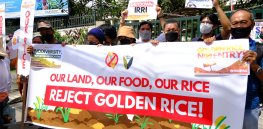
Viewpoint: Vitamin-rich Golden Rice mired in the ideological infighting
White rice is the staple crop in many low- and middle-income countries (LMICs). It must be polished for storage and ...

Seeds of influence: As U.S. and other Western countries hesitate to back biotech in Africa, China is redefining global standards around agricultural innovation
In the heart of Mozambique’s Gaza Province, rice fields stretch across the landscape, a testament to a quiet but powerful ...
Empowering small farmholders and indigenous cultures is central to preserving at risk plants and forests
Empowering farmers, Indigenous Peoples, local communities and scientists to conserve and use genetic resources is key to resilient agrifood systems ...
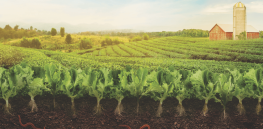
Global regenerative farming market is booming. Here’s why
As global concerns about climate change, soil degradation, and food security intensify, regenerative agriculture has emerged as a beacon of ...
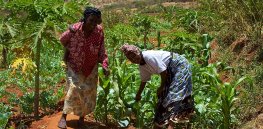
Empowering small farmholders and indigenous cultures is central to preserving at risk plants and forests
Empowering farmers, Indigenous Peoples, local communities and scientists to conserve and use genetic resources is key to resilient agrifood systems ...
