Viewpoint: What would be the consequences if we moved from conventional, tech-advanced farming to organic?

9baa8b86-8af6-4830-8294-0db465bc1116

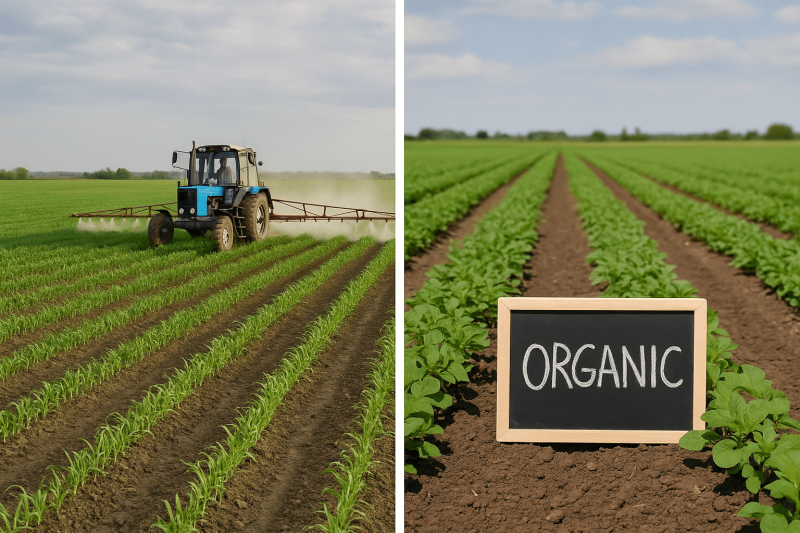
Close your eyes and imagine grocery stores where produce costs triple, with a sparse selection and visible insect damage. This isn’t dystopian fiction—it’s a likely future if we turn away from the technologies that misinformation campaigns routinely demonize. While people readily fear ingredients in conventional foods after seeing alarming social media posts, they rarely visualize what abandoning modern agricultural practices would actually mean. The consequences would hit lower-income populations hardest, forcing even more difficult choices between malnutrition and unaffordable food.

Follow the latest news and policy debates on sustainable agriculture, biomedicine, and other ‘disruptive’ innovations. Subscribe to our newsletter.

[W]ithout modern pesticides, global crop losses would be staggering: an estimated 78 percent for fruits, 54 percent for vegetables, and 32 percent for cereals. These figures represent millions who can currently afford healthy food—thanks to technologies we risk abandoning.

The binary of natural equals good and processed equals bad oversimplifies a complex food landscape. As my research on risk perception shows, people gravitate toward simple narratives—but food safety, sustainability, and nutrition require nuance.

This is an excerpt. Read the original post here

{{ reviewsTotal }}{{ options.labels.singularReviewCountLabel }}
{{ reviewsTotal }}{{ options.labels.pluralReviewCountLabel }}
{{ options.labels.noReviewsLabel }}
{{ options.labels.newReviewButton }}
{{ userData.canReview.message }}

Related Articles

Infographic: Global regulatory and health research agencies on whether glyphosate causes cancer

Infographic: Global regulatory and health research agencies on whether glyphosate causes cancer

Does glyphosate—the world's most heavily-used herbicide—pose serious harm to humans? Is it carcinogenic? Those issues are of both legal and ...

Most Popular

ChatGPT-Image-Jul-26-2026-05_58_17-PM
Louisiana and Texas bring RFK,Jr.- MAHA-backed restrictions on dyes and other ‘controversial’ ingredients to eight states
ChatGPT-Image-Jul-26-2026-05_35_53-PM
FDA takes up peptide therapies as hype outpaces science
ChatGPT-Image-Mar-10-2026-01_39_01-PM
Viewpoint—“Miracle molecule” debunked: Why acemannan supplements don’t work
ChatGPT-Image-Jul-9-2026-11_33_49-AM
Viewpoint: High-dose resveratrol supplements to extend health and life? Don’t waste your money.
ChatGPT-Image-Jul-10-2026-09_42_12-AM-1
Peptides, patient autonomy, and the limits of medical freedom
ChatGPT-Image-Jul-22-2026-09_13_07-AM
Viewpoint—The Strategic Litigation boom: Understanding the tightening coalition among NGOs, foundations, journalists, and tort lawyers
Screenshot-2026-07-23-at-11.58.47-AM
Viewpoint: ‘Thought police in the UK?’ Conservatives lash out at government report calling anti-LGBQT+ narratives ‘false and misleading’
organic scaled
Facts & Fallacies podcast: Organic food cuts pesticide exposure? A response to Dr. Rhonda Patrick
How to Include More Strawberries in Your Diet
Strawberries are berries—and 35 other surprising food and drink myths
IVF Rex
Poll: Younger people more open to using genetics to increase fertility and reduce chances of inherited diseases 
Screenshot-2026-07-07-at-12.55.44-PM
Viewpoint: Yes, we can adapt to a changing climate without devastating the environment and the economy
ChatGPT-Image-May-22-2026-10_26_09-AM
Trump-RFK, Jr. National Science Board firings: Accountability vs. partisan meddling
ChatGPT-Image-Jun-25-2026-12_23_17-PM
No, Bill Gates did not secretly engineer ticks to promote veganism
glp menu logo outlined

Get news on human & agricultural genetics and biotechnology delivered to your inbox.