


Health & Medicine

Genetics of mental health yield surprising connections but no cures
Scientists are slowly uncovering the genes and mechanisms that cause mental health disorders, but we are a long way from ...

Genetics can’t determine your indigenous heritage
Collectively, genetics studies have shown us that the indigenous inhabitants of the Americas are descended from a group that diverged ...

Golden Potatoes: Vitamin-A fortified GMO variety could help tackle childhood blindness in Africa
We've been praising the development of Golden Rice, genetically engineered to contain the vitamin A precursor beta-carotene, for years. Since vitamin ...

Despite the hype, there was no ‘successful’ human head transplant
In February 2015, Sergio Canavero appeared in this very publication claiming a live human head will be successfully transplanted onto ...

Fighting Zika: Gene edited, 3-eyed flightless mosquitoes
[I]n an effort to demonstrate how gene editing could be used to eradicate the mosquito species Aedes aegypti —a major carrier of ...
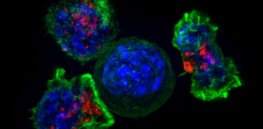
New T-cell treatment shows promise for treating leukemia
A new way of genetically altering a patient’s cells to fight cancer has helped desperately ill people with leukemia when ...

Fighting aging: Mutation found in Amish population adds 10 years to lifespan
New research now shows that some humans possess a genetic equivalent to [an anti-aging] drug. A small number of Amish people in ...

Viewpoint: FDA should crack down on food safety misinformation
[Editor's note: Val Giddings is a senior fellow at the Information Technology and Innovation Foundation. The following is part of a letter ...

EU reauthorizes glyphosate herbicide-resistant GMO sugar beets for import, but not cultivation
European Food Safety Authority (EFSA) scientists have cleared a genetically modified sugar beet developed by Monsanto and KWS for reauthorisation ...

GMO supporters and critics weigh in on FDA’s biotech education initiative
[Editor's note: Karl Haro von Mogel is a geneticist with a PhD in Plant Breeding and Plant Genetics from UW-Madison with ...

Ex-NFL player first living person diagnosed with CTE
Researchers published, what they say is the first case of a living person identified with the degenerative brain disease, chronic traumatic ...

Glyphosate, other herbicides may contribute to antibiotic resistance, study finds
New Zealand researchers have found the active ingredients in commonly-used weed killers can cause bacteria to be less susceptible to ...

Why does testicular cancer respond better to chemotherapy? Stem cells
It’s because of the stem cells. Cornell University researchers determined that for testicular cancer, those cells are more capable of responding ...

Uganda approves open field trials for disease-resistant GMO bananas, paving way for 2021 release
Researchers at the National Agricultural Research Laboratories (NARL) in Kawanda [Uganda] have said they are ready to go for open- ...

‘Fault-free obesity’: How much are fat-storing genes causing expanding waistlines?
Obesity is often attributed to a simple equation: People are eating too much and exercising too little. But evidence is ...

Sheep can identify faces in photos—and that may help us understand Huntington’s disease
Researchers trained eight sheep to identify celebrity faces from photographs. The investigators also found that the sheep could identify a ...

What makes a female? How XX embryos destroy male reproductive tissue
A protein called COUP-TFII is necessary to eliminate male reproductive tissue from female mouse embryos, researchers report in the Aug. 18 Science. For ...

Viewpoint: Ethical arguments against gene-edited embryos will crumble as technology advances
[Editor's note: Michael White is a genetics professor at Washington University in St. Louis.] [S]cientists have developed an easy way to ...

Our brains grow and shrink when we learn—which is how we continue to absorb knowledge
Our past understanding of the brain would suggest that new knowledge requires new brain cells, and as a result our ...

Can gene tweaking lower our cholesterol? Using CRISPR and nanotechnology in mice
U.S. researchers have used nanotechnology plus the powerful CRISPR-Cas9 gene editing tool to turn off a key cholesterol-related gene in ...

Viewpoint: FDA regulations ‘a disaster’ for genetically modified animal research
The Trump Administration and Congress should rein in the FDA's regulatory overreach on genetically engineered animals, which is stifling important ...

Viewpoint: Genetic engineering’s benefits extend far beyond GMO crops and controversy
In discussing biotechnology, too much controversy is focused on the crops developed by Monsanto and its competitors. Genetic engineering is ...

Would switching to 100% organic farming help the environment? ‘Absolutely not’
Should the world’s farms go 100 percent organic to protect the environment? Absolutely not. One huge problem is that organic ...

Podcast: Gene editing could make farm animals happier and healthier
Just one genetically modified animal has been approved for human consumption anywhere in the world. A fast growing species of ...

Wheat gene discovery could fend off deadly stem rust pathogen threatening global food security
University of California, Davis, researchers have identified a gene that enables resistance to a new devastating strain of stem rust, ...

Designer fruit is the future: Genetic engineering adds ‘tangible benefits’ for consumers
Consumers have shown a great deal of resistance to GMO food over the years, but the Golden Arctic apple, which ...

Are ‘gene drive’ trials too risky for field studies?
In 2013, scientists discovered a new way to precisely edit genes — technology called Crispr... One of the more intriguing ...
