


Daily Food & Ag Digest

Viewpoint: ‘China’s principal objective is to exploit Africa’s fertile plains in order to feed its massive population’
Ever since its maturing economy stopped producing the explosive GDP growth numbers that dazzled the world, China has been on the ...

Genetically-modified crops poised to revolutionize sustainable farming in Nigeria
One of Nigeria’s standout accomplishments is the commercialisation of genetically modified (GM) crops, a significant milestone that has garnered attention ...
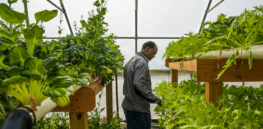
Growing crops without bees? Mini greenhouse pollination drones might do the trick
Miniature drones are being used to pollinate indoor crops as part of research looking at alternatives to honey bee pollination. ...

How gene editing can keep melons fresher for longer
The gaseous plant hormone ethylene has been long known to promote fruit ripening and play a certain role in shelf-life ...

Lab-grown meat: This may be the only way to sustainably boost global meat production
Some may baulk at the idea of meat originating in a lab, but the United Nations' Intergovernmental Panel on Climate ...
Aspartame panic illustrates how scare-narratives can take root
“Trust is one of the most important metrics that any business and food ingredient makers should be looking at, explained,” ...

Could beanless brews redefine the coffee industry and sharply reduce its carbon footprint?
The link between coffee and climate change is well-documented. The industry has been hit with low harvests, uneven yields and uncertainty ...

Viewpoint: Collapse of Sri Lankan organic-only farming experiment remains warning about putting ideology ahead of science and common sense
Having put an end to a bloody guerrilla war that had been dragging on for three decades, Sri Lanka had ...
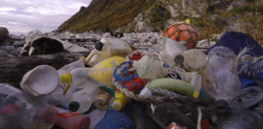
By 2050, there will be more plastic than fish in the ocean. Here’s a ‘natural’ solution — genetically-modified plastic-eating microbes
“Recycling is basically a myth. Nothing really gets recycled—it ends up in the landfills and oceans and leads to toxic ...

Reconstructing the ‘perfect’ watermelon: Returning ‘lost genes’ from wild relatives to modern fruit
Could farmers soon be growing and harvesting the perfect watermelon? It is no secret — delivering juicy, delicious “summer smiles” is no ...

Viewpoint: ‘Sugar is a far more dangerous enemy’ — Dentist explains why banning aspartame in foods and drinks is a reckless idea
I am a dentist and a mother of three. I know that even the most responsible parents will not be ...

Tiny pollinating drones come to rescue of overworked bees
About two-thirds of the crops that feed the world rely on pollination by bees and other insects. Without them, we’d ...

Potential glyphosate ban: Calculating economic consequences if Europe’s most widely used pesticide is banned
Glyphosate is the most widely used pesticide in Europe. However, due to its potential effects on human health, its renewal ...

Cutting-edge fashion: From bacteria-dyed fabric to algae-based textiles, green fashion is experiencing a technological boom
A crop of scientists and fashion tech pioneers are increasingly looking to nature for clues as to how to develop ...

Climate-smart genetically-engineered seeds may be Nigeria’s only viable way to confront farming disruptions brought on by climate change
Climate change has been a major menace in agricultural production especially for Nigeria that is fighting hard to produce enough ...
Ultra-processed food panic: Are protein bars and white bread to blame for America’s obesity problem?
It’s understandable if you’re tempted to throw out your protein bars and pouches of baby food and commit to a ...
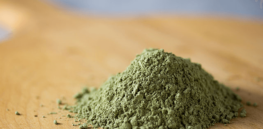
Healthy junk food? Here’s how nutrient-dense plant powders can take the guilt out of guilty pleasures
“The reality is that most families, especially now with the cost of food skyrocketing, can’t afford to eat fresh food ...
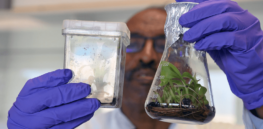
AI horticulture: Optimizing climate change resistant crops of the future with the help of machine learning
In the quest for sustainable agriculture and food security, AI-driven plant breeding has been heralded as a game-changing solution. The adoption ...

Viewpoint: ‘USDA successfully brought Big Ag aboard in the fight against climate change. Now they have to prove it will work’
The strategy of paying large incentives to farmers so they adopt climate-friendly farming methods won over large swaths of big ...

Closing gap between potential and acheivable productivity: India needs to be open to genetic tinkering and other enhancement technologies
Though India has achieved food security with the production of food grains reaching 330 MT, the demand for coarse cereals, ...
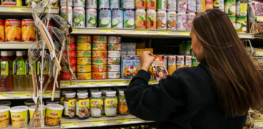
Are ‘healthy’ substitutes worth the extra cost? Here’s why you shouldn’t fall for low-carb, whole-wheat, all-natural labels at the grocery store
A new survey says lots of people opt for 'healthier' substitutes like chicken instead of beef and vanilla-flavored plant juice instead ...
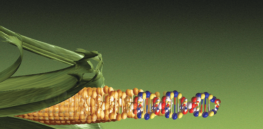
Kenyan scientists dismiss claims by anti-biotechnology activists that GMOs can make men grow breasts
Veteran journalist Macharia Gaitho, who spoke on behalf of the media fraternity, observed that a constant narrative blames the Kenyan ...

You can’t label it feta: Europe ignites food war with US, demanding that only cheeses produced in their origin region can use ‘historically trademarked’ names
The U.S. cheese industry in particular has chafed against the EU regulations, which protect almost 300 cheeses. To be called ...
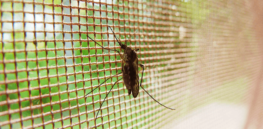
Record heat waves wreak havoc on attempts to wipe-out disease-carrying mosquitoes
Scientists have warned that some mosquito-borne diseases, like malaria and dengue fever, may spread into new territories as the world ...

Rwanda inches towards embracing GMO crops as part of long-term modernization plan
The Rwandan Parliament approved the relevance of a draft law governing biosafety, which aims to address the potential risks associated ...

Seed espionage and intellectual copyright: Is China covertly stealing US-developed genetically-engineered seeds?
Farmers in Iowa are accusing the Chinese state of stealing valuable seed samples from America, that have been genetically modified ...
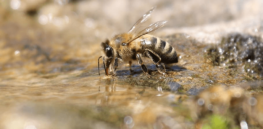
Yes, more honeybees die now than 40 years ago — but reasons why are not as clear-cut as politicians and activists claim
“Save the bees,” you will hear, at ice cream shops and farmers markets. A study touting the latest death rates ...
