


Daily Human Digest
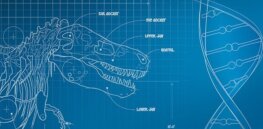
Skepticism grows over dinosaur DNA discovery claims
A team has extracted what could be DNA molecules from a 125-million-year-old fossil dinosaur, according to a study published [September ...

Viewpoint: ‘Fashionable nonsense’ — The deadly impact of ‘kowtowing to academia’s political zeitgeist’ in biomedicine
In August 2018, The Lancet published a curious paper, reminiscent of America’s long-forgotten Prohibition Era. The research came to a ...

Video: Carbon capture is key to reducing greenhouse gases. Iceland’s new CO2-fixing facility is a tiny step toward that goal
As the world prepares for another UN Climate Change Conference, scientists are still searching for a cheap and easy way ...

Breastfeeding protects against maternal cognitive decline later in life
A new study led by researchers at UCLA Health has found that women over the age of 50 who had ...
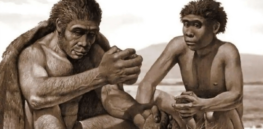
Homo bodoensis: New ancient human species might have been identified — but not all experts agree
A new species of extinct human has been named: Homo bodoensis. The species hasn’t been identified based on new fossils, ...
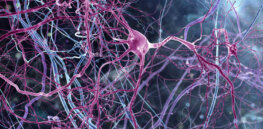
Atlas of cognition: Comprehensive inventory of brain cells in development
Looking for brain parts is driven by more than curiosity. Before the generations-long endeavor of deciphering the brain can proceed, ...

Infographic: What are medical abortions — and how accessible are they?
Medication abortion, also known as medical abortion or abortion with pills, is an FDA approved pregnancy termination protocol that involves ...

DNA confirms legendary Lakota leader Sitting Bull has a living descendant
A man’s claim to be the great-grandson of legendary Native American leader Sitting Bull has been confirmed using DNA extracted ...

3,000 years ago, human brains shrunk — but as a species, we got smarter. How did that happen?
It is well documented that human brains have increased in size over the course of our evolutionary history. Less appreciated ...

How early failures dogged gene therapy — and why the future looks so much brighter now
Jesse Gelsinger was 18 years old in 1999, when he joined one of the first clinical trials of gene therapy ...
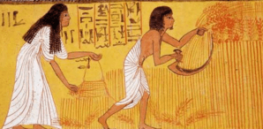
From mixing urine in wine to peeing on barley: A history of pregnancy tests
Trying to figure out if you’re pregnant is probably as old as humanity itself. People had some pretty weird methods, ...
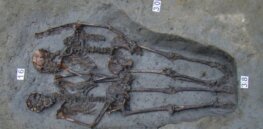
How should scientists handle DNA extracted from ancient sites? Researchers have now crafted guidelines
As ancient DNA research sweeps the globe, ballooning from zero genomes sequenced as of 2009 to more than 6,000 as ...

Can humans hibernate like squirrels while traveling in deep space?
Books and movies have long conveyed the image of people slumbering in transparent pods as they hurtle through space. That ...

Viewpoint: One year ago, the UK moved from treating transgender adolescents with psychological counseling to drug-based interventions
Around a year ago, the UK’s National Health Service (NHS) announced that Dr. Hilary Cass, former President of the Royal ...

Gene therapy evolves to treat blood cancers and numerous other rare disorders
Gene therapy has come a long way since its first human proof-of-concept trials in the 1990s. The approach—which involves fixing ...
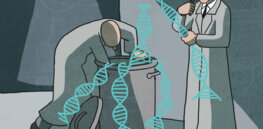
Why ‘junk DNA’ is critical for our survival
Nearly half of our DNA has been written off as junk, the discards of evolution: sidelined or broken genes, viruses ...

Chronic pain relief: Insights into how the brain works fuels dramatic treatment improvements
The view that chronic pain originates in the brain — that it’s fundamentally a psychological phenomenon, and can be eliminated ...

What can our eyes reveal about sexual orientation?
Through our eyes, the world is revealed. But can our eyes also reveal ourselves? In particular, the pupil, the black ...

Why technology alone will not save us from climate change — Book review: The Human Scaffold
Josh Berson, an independent anthropologist, invites readers into a world that turns upside down conventional arguments about how we are ...
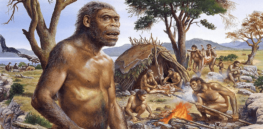
Excavations in Israel have sparked renewed debate over why Homo erectus migrated out of Africa
What exactly pushed—or pulled—H. erectus out of Africa is a matter of fierce debate. Was it some innate adaptability, such ...

What was there before the Big Bang? Here’s a theory that could satisfy both secular and religious viewpoints
There are a variety of conjectures in the scientific literature for our cosmic origins, including the ideas that our universe ...

Living longer: Genes set limits, but diet and exercise can extend lifespans
Death comes for us all. But recent research points to interventions in diet, exercise and mental outlook that could slow ...
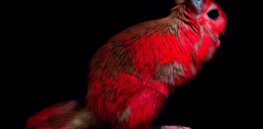
A glow-in-the-dark animal? Meet the springhare
Fluorescence occurs across only a handful of mammals but they span three different continents and inhabit entirely different ecosystems. The ...

Viewpoint: ‘Breakthrough’ malaria vaccine garners mixed reviews
The announcement by the WHO that a vaccine against malaria, more than thirty years in the making, could finally be ...
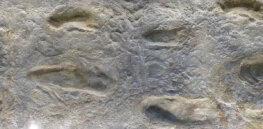
Footprints in the sand: Six-million-year old pre-human prints discovered in Crete are oldest ever found
The oldest known footprints of pre-humans were found on the Mediterranean island of Crete and are at least six million ...

ASMR: Why do some sounds trigger a pleasurable ‘tingly’ feeling in the brain?
What is [Autonomous Sensory Meridian Response, or] ASMR? As any article you read on the subject will tell you, the ...
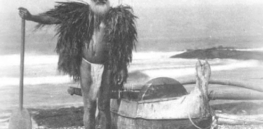
‘The future is in the past’: How genetic studies are illuminating early journeys of indigenous Hawaiians
Through analyzing genomes from present-day peoples, we can do incredible things like determine the approximate number of wa‘a (voyaging canoes) ...
