


Daily Human Digest

Were self awareness and the ability to plan what set us apart from Neanderthals?
We bear a trace of Neandertal legacy in our genome, a bequest from ancestral interbreeding. But some experts argue that, ...
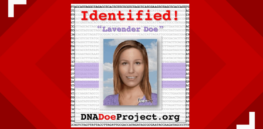
Reviving cold cases: DNA Doe Project uses genetic genealogy to solve long-unsolved crimes
Genetic genealogy debuted more than 20 years ago as a pastime for ancestry enthusiasts. The customer sent a saliva sample ...

200,000-women study concludes that ovarian cancer screening with ultrasounds or blood tests does not reduce early deaths
In the UK, 4,000 women die from ovarian cancer each year. It is not usually diagnosed until it is at ...
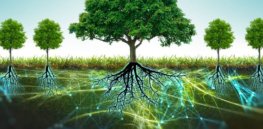
Are trees social beings? They exchange nutrients, help one another, and communicate about pests and other environmental threats
Previous ecologists had focused on what happens aboveground, but [Suzanne] Simard used radioactive isotopes of carbon to trace how trees ...

BMI and anorexia: We can now predict which children are most likely to develop an eating disorder
Could there be a way to tell years in advance which girls are more likely to develop eating disorders? New ...

‘Genetic pain’: Prince Harry’s comments stir controversial debate over whether we can inherit our parents’ traumas
The Duke of Sussex said he had left the UK because he wanted to “break that cycle” of “genetic pain” ...
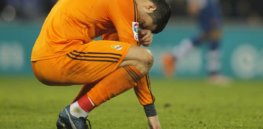
Mapping overthinking: Athletes who ‘choke’ under pressure activate areas of the brain involved in long-term thinking
Are penalty shots a soccer player’s dream or nightmare? Penalties can go either way, which makes them exciting to watch, ...
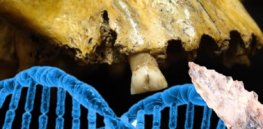
In research breakthrough, ancient human remains can now be preserved and analyzed without destroying genetic material
An Austrian-American research team (University of Vienna, Department Evolutionary Anthropology and Harvard Medical School, Department of Genetics), in collaboration with ...

Plants respond to injuries in fascinating ways. Can they feel pain?
Lacking the brain and nervous system needed to conjure consciousness (not to mention nociceptors, the animalian cells that react to ...
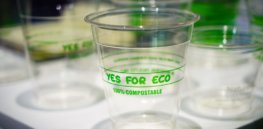
Biofuels, bioplastics and bioremediation: How CRISPR-designed technologies can protect the environment
Nowadays, scientists can use CRISPR design technologies to protect the environment. Remember, the environment is at the mercy of human ...
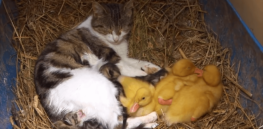
Altruism in animals: Why do animals sometimes adopt other species’ unrelated orphans?
Animals don’t have reason or moral accountability but there is abundant evidence that mammals and birds have feelings. And feelings ...

‘A woman’s blood could signal that birth is approaching’: Test in development uses biomarkers to predict delivery date
At the moment, women are given a due date that is 40 weeks from the first day of their last ...
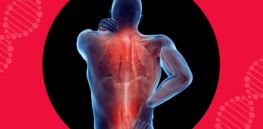
Over the next decade, CRISPR and other forms of gene editing could help people with rare disorders — and millions more with heart disease, diabetes, and chronic pain
In the next decade, Crispr-Cas9 and other new gene-editing techniques may protect the health [of] millions of people with a ...
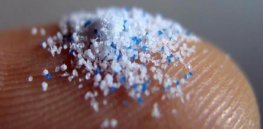
How prevalent are microplastics in our environment? How harmful are they?
From limited surveys of microplastics in the air, water, salt and seafood, children and adults might ingest anywhere from dozens ...
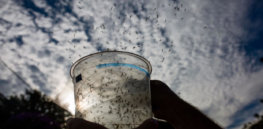
Genetically modified mosquitoes are now hatching in the Florida Keys. Scientists and residents concerned about Zika and other viral diseases couldn’t be more pleased. Here’s why
[M]osquito eggs placed in the Florida Keys are expected to hatch tens of thousands of genetically modified mosquitoes, a result ...

Impact of the pandemic: US birth rate falls to lowest level in almost 50 years
New provisional data released [May 5] by the Centers for Disease Control and Prevention shows the birthrate in 2020 dropped ...

Dunbar’s number: Is the human brain’s capacity for friends really limited to 150?
It's called Dunbar's number: an influential and oft-repeated theory suggesting the average person can only maintain about 150 stable social ...
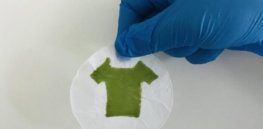
Using 3D printing to create algae-based novel, environmentally-friendly ‘living materials’, from skin to bio-garments
[A] solution that can help save our environment and change the world is 3D printing, which has been used in ...
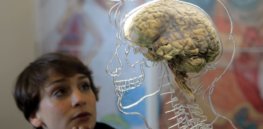
Brain size v body size: ‘There is no single evolutionary path to a bigger brain’
Over nearly 200 million years of mammal evolution… researchers have shown that brain size is actually secondary to body size ...
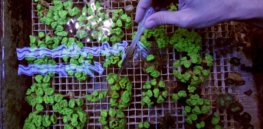
Viewpoint: Here’s one key thing the Biden administration can do to seriously address climate change
President Biden and his administration need to take concerted actions to advance an area of research that could prove decisive ...

60 years monitoring 60 million stars and no trace of alien life
[R]adio signals continue to be the most popular SETI target, as focused radio emissions could signal the presence of an ...

Challenging ‘infodemics’: How AI helped create — and maybe could help contain — the growing boom in disinformation
There’s nothing new about conspiracy theories, disinformation, and untruths in politics. What is new is how quickly malicious actors can ...

Why do some people cheat? The science of infidelity
There are many reasons why people cheat, and the patterns are more complex than common stereotypes suggest. A fascinating new ...

Evolutionary tradeoffs: Here’s why birthing a child is so difficult
To pass through the birth canal, human infants have to perform a series of twists and turns, a process called ...

Sleepy during the day? Struggle with sleep apnea? Both are genetically linked to telomeres, parts of your chromosomes that reflect biological age
A predilection for afternoon naps does not necessarily mean you need to worry about your own mortality, but the scientific ...
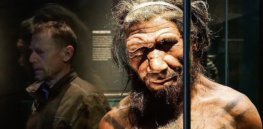
Did Homo sapiens really outcompete Neanderthals? Genetics is rewriting the story of human evolution
Homo sapiens evolved in Africa around 300,000 years ago, and between 177,000 and 194,000 years ago they colonized what is ...
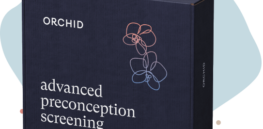
DNA test for couples? Start-up Orchid claims its over-the-counter kit can identify complex inherited disorders. Is it ready for prime time?
A new startup called Orchid is offering the chance for couples planning a pregnancy to learn their odds of passing ...
