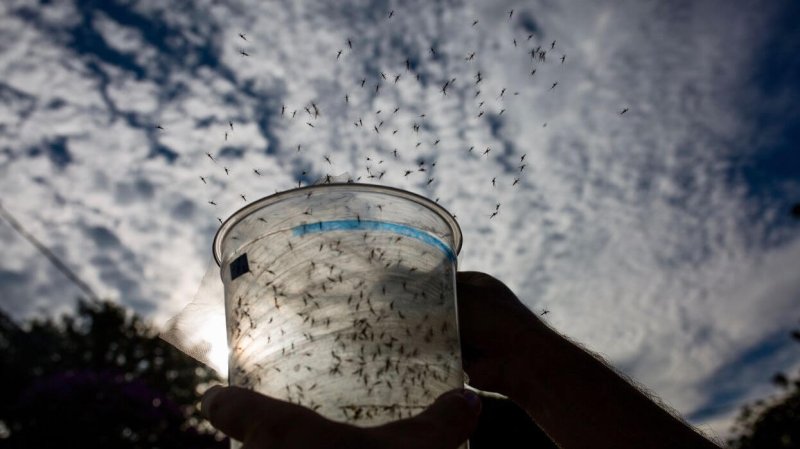
Genetically modified mosquitoes are now hatching in the Florida Keys. Scientists and residents concerned about Zika and other viral diseases couldn’t be more pleased. Here’s why

Credit: Victor Moriyama/Getty Images

[M]osquito eggs placed in the Florida Keys are expected to hatch tens of thousands of genetically modified mosquitoes, a result of the first U.S. release of such insects in the wild. A biotechnology firm called Oxitec delivered the eggs in late April as part of a federally approved experiment to study the use of genetic engineering—rather than insecticides—to control disease-carrying mosquito populations. 

If the current pilot effort is successful, the firm is set to release as many as 20 million more males in the prime of Florida’s mosquito season later this year… To learn more about the risks and rewards of Florida’s foray into bioengineered pest control, Scientific American spoke with Omar Akbari, a molecular biologist whose lab works on genetic control technologies at the University of California, San Diego. 
Follow the latest news and policy debates on sustainable agriculture, biomedicine, and other ‘disruptive’ innovations. Subscribe to our newsletter.

“[The company has] reported reaching A. aegypti population suppression of more than 90 percent in many of their releases, including effective control of the A. aegypti population in Brazil. Given its prior testing, the experiment in the Keys is likely to work and to suppress A. aegypti populations. And hopefully it will directly translate into an epidemiological impact, effectively reducing disease transmission,” [Akbari said.]


Read the original post

{{ reviewsTotal }}{{ options.labels.singularReviewCountLabel }}
{{ reviewsTotal }}{{ options.labels.pluralReviewCountLabel }}
{{ options.labels.newReviewButton }}
{{ userData.canReview.message }}

Related Articles

Infographic: Global regulatory and health research agencies on whether glyphosate causes cancer

Infographic: Global regulatory and health research agencies on whether glyphosate causes cancer

Does glyphosate—the world's most heavily-used herbicide—pose serious harm to humans? Is it carcinogenic? Those issues are of both legal and ...

Most Popular

ChatGPT-Image-Jun-23-2026-03_12_23-PM
Is cellular reprogramming junk science? Nearly 20 patients are getting eye injections in the first FDA-cleared cellular trial
ChatGPT-Image-Jun-24-2026-11_36_47-AM
Why the human genome is less a script than a puzzle
Screenshot-2026-06-15-at-1.55.27-PM
America's trust in Trump-Kennedy's CDC health recommendations is plunging
ChatGPT-Image-Jun-25-2026-12_23_17-PM
No, Bill Gates did not secretly engineer ticks to promote veganism
ChatGPT-Image-Jun-17-2026-10_52_43-AM
Anguished parents, doctors in tears: Utah’s long measles outbreak takes a toll
Screenshot 2026-06-25 at 10.55
Leading OB-GYN group challenges RFK, Jr. gutting of maternal vaccine schedule
ChatGPT-Image-Mar-10-2026-01_39_01-PM
Viewpoint—“Miracle molecule” debunked: Why acemannan supplements don’t work
Screenshot-2026-06-22-at-9.04.46-PM
Kennedy's nutrition prescription for medical schools: Real problem, bad cure
Screenshot-2026-06-24-at-2.57.41-PM
Viewpoint: Trump’s Reflecting Pool algae fiasco points to a bigger culprit: Climate change
Screenshot-2026-06-25-at-1.48.40-PM
Glyphosate affirmed as safe: Supreme Court rejects lawsuit claiming Roundup herbicide causes cancer, upholding EPA determination
Screenshot-2026-06-24-at-2.40.46-PM
Hegseth reversal: As Air Force flu outbreak continues to surge, military reinstitutes mandatory vaccines for recruits

Sorry. No data so far.

glp menu logo outlined

Get news on human & agricultural genetics and biotechnology delivered to your inbox.