


Daily Human Digest

Is the US military in danger of using synthetic biology to ‘weaponize the environment’?
In recent years... the military—mostly under the umbrella of the Defense Advanced Research Projects Agency—has created a new suite of ...
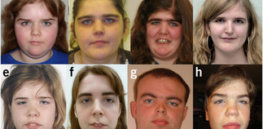
Childhood ‘overgrowth’—often leading to facial distortions—found linked to cancer-causing genes, epigenetics
Researchers have undertaken the world's largest genetic study of childhood overgrowth syndromes - providing new insights into their causes, and ...

Improving ‘worst’ environments in US could prevent 39 in every 100,000 cancer deaths, study claims
That’s according to the first study to address the impact of cumulative exposure to environmental hazards on cancer incidence in ...

Psychiatrists developing model to identify which mentally ill patients likely to become violent
It is certainly true that rates of violent crime are higher among the severely mentally ill than among the general ...

Walked with us: Cave findings show extinct human-like species Homo naledi co-existed with modern humans
Discovered in a South African cave, H. naledi first came to light in 2015, in a paper by University of the Witwatersrand ...
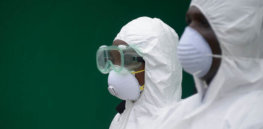
Not Ebola: Mystery Liberian disease identified as virulent meningitis, but no vaccine in sight
When several people died suddenly late last month in Liberia after attending a funeral in the southern county of Sinoe, ...

‘Baby dragon’: Giant bird-like dinosaur preserved in egg resembled an overgrown ostrich
More than 20 years after gracing the cover of National Geographic as “Baby Louie,” a tiny dinosaur found curled inside ...

How nanoparticles may help counteract antibiotic drug resistance
By 2050 more people may die from microbial infection than cancer, according to current estimates. The increasing mortal threat from ...

US life expectancy rose 5 years since 1980, but many poorer Americans dying younger
Your life expectancy can vary by as much as 20 years depending on which county in the U.S. you live ...
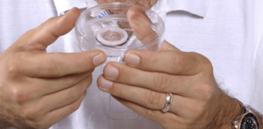
‘Brain in a dish’ gives scientists ‘unprecedented’ ability to study neurodevelopment disorders
Small cultures of human neuronal cells developing in a dish are not quite “brains in a petri dish” as they are ...

Eric Lander and Eric Schmidt: Science’s Miracle Machine — government investment in basic research — in danger
[Editor's note: Eric S. Lander is president and founding director of the Broad Institute of MIT and Harvard University. Eric E ...

Brain damage may spur extreme religious fundamentalism, study finds
Scientists found that damage in a certain part of the brain is linked to an increase in religious fundamentalism. In ...

To save energy, our liver grows by day and shrinks at night
Among all the organs in the human body, the liver is something of a superhero. Not only does it defend our ...
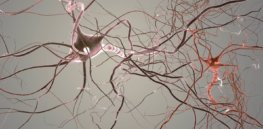
Electroceuticals? Nerve-activated devices may revolutionize arthritis and autoimmune disease treatments
Six times a day, Katrin pauses whatever she's doing, removes a small magnet from her pocket and touches it to ...

What is ‘cell-free biotechnology’ and how could it revolutionize our lives?
The stuff of life comes wrapped in tiny bags called cells. Inside are DNA molecules that carry the instructions for ...

Just-approved ALS drug edaravone shown to significantly slow functional decline
The Food and Drug Administration on Friday [May 5, 2017] approved Mitsubishi Tanabe Pharma Corp's treatment for fatal neurological disorder ...

How ‘chemophobia’ links Food Babe to Rachel Carson’s ‘Silent Spring’
Over fifty-four years since it was first published, Rachel Carson's Silent Spring remains a divisive book. The exposé led to ...

Do we have a human right to the privacy of our brain activity?
Do we have a human right to the privacy of our brain activity? Is “cognitive liberty” the foundation of all ...

Gold mine in our body? Should researchers pay for using our plasma cells?
By donating blood plasma, you can make anywhere from $40 to $100 per week. But that's loose change to Ted ...

Is the Broad Institute exploiting its nonprofit status to corner CRISPR business?
When a federal patent court ruled that the nonprofit Broad Institute of MIT and Harvard could legally license its version ...

Cure for HIV? CRISPR gene editing shows promise
Have researchers taken a step closer to developing an eventual cure for HIV? A Temple University-led team hopes so, by ...

Missing disease: Less-expensive whole-exome sequencing may flub diagnoses
A common DNA test used to find genes linked with disease may miss key genetic risk indicators, new research suggests ...

How 1100 pound woman’s rare genetic disorder helps unravel mystery of obesity
The root causes of the obesity epidemic remain elusive. Studying rare one-gene cases may provide clues to help scientists understand ...

Bubble boy hope: Strimvelis gene therapy revises genetic make-up, offers rare immune deficiency cure
A child in Europe has become the second individual ever to receive a commercial gene therapy, according to GlaxoSmithKline. The ...

Value pricing? Should effectiveness determine what patients pay for cancer drugs?
THE debate in rich countries about the high price of drugs is a furious and frustrating one.... Making a mistake ...
ADHD drug Adderall produces same effects as methamphetamines
Perhaps it has something to do with public "educational" campaigns aimed at discouraging methamphetamine use. These campaigns usually show, in ...
Which is the ‘weaker sex’? New review of genes illustrates male-female survival differences
[Prof. Shmuel Pietrokovski and Dr. Moran Gershoni of the Weizmann Institute’s molecular genetics department]...identified around 6,500 genes with activity that ...
