


Science Literacy Project Daily Digest

Circadian rhythm: How do our sleeping cycles affect how we experience pain?
In a recently published study, scientists led by Claude Gronfier at the Lyon Neuroscience Research Centre in France have finally shed ...
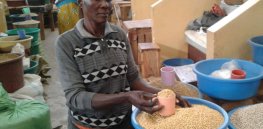
Soybean yields in Africa are 50 per cent less than global average. A new GMO version could make up the difference — if approved
According to a study published in Science [August 18], the researchers genetically modified three genes of soybeans by effectively upgrading photosynthesis – a ...
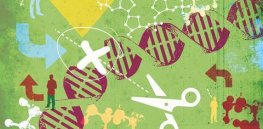
Viewpoint: CRISPR could bring about a sustainability and productivity revolution in food and farming
Technological advances can reach far beyond robotics, automation, sensors, or the predictive and analytical capabilities of artificial intelligence. In a way, ...

Sandblasting weeds out of the ground? A ‘quick, cost-effective and simple’ way to protect crops without spraying chemicals
Weed hunters? No, it's not a joke. It's a real concept that aims to tackle a serious and costly problem ...

New reversible gene-editing technique may be safer and more reliable than standard CRISPR
Chinese researchers say they have developed a new gene-editing tool that is more efficient and safer because it does not ...

Physician responsibility: Why are many terminal cancer patients not told they are dying?
Unrealistic expectations fueled by direct-to-consumer pharmaceutical advertising depicting happy cancer survivors and the pharma industry’s influence on oncologists hang over ...

Patterns in the sand: We can sometimes predict how evolution will unfold
In a new paper published in the journal Nature Ecology & Evolution, an international group of researchers demonstrated that a ...
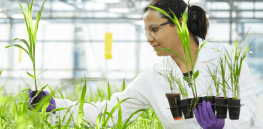
Viewpoint: ‘Crop safety lacks scientific rigor’ — Academic panel argues for modernized regulations in light of technological advances
Advances in genetically engineered (GE) crop breeding have encouraged new measures to be taken when analysing crop safety ...

Activists love to cite Einstein quote that without bees, life on Earth would soon perish. Snopes fact checking finds ideologues made it up
In 2002, Snopes came across a quote about bees’ importance to the global ecosystem that the Nobel Prize-winning theoretical physicist Albert ...

Viewpoint: Agri-bashing — How European Green Party groups have evolved into unscientific propagandists
“The organic lobby exists in Brussels, it has a storefront and is called Ifoam”, admits the environmental activist Martin Pigeon, ...

Moonshot genomics: How CRISPR is opening the door to reshaping life itself
It’s a moonshot idea. If the genome is a book, gene editing is like copy editing—changing a typo here and ...

Fever dreams are part of our shared human experience, but elude scientific explanation
The COVID-19 pandemic had a documented effect on people’s dreams — even in those who didn’t contract the infection. But ...
Are you a mosquito magnet? Science explains why
Mosquitoes are very sensitive to CO2 and can sense a CO2 source that is many meters away. Receptor cells on ...

Who benefits from cell-grown meat? Livestock advocate questions wisdom of Biden’s pro-biotech executive order
While grants and funding continue to be announced for small packing plants and legislation to support small producers is a priority to some congressmen, ...
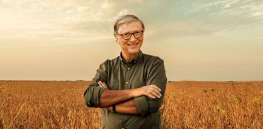
‘Power-hungry meglomaniac’ promoting ‘philanthrocapitalism’: In fundraising pitches, anti-GMO activist groups blast Bill Gates’ renewed commitment to promoting biotechnology to address food shortages and climate change
By spending billions on agriculture projects in African countries, Gates is attempting to launch another Green Revolution — one that prioritizes industrial methods like ...
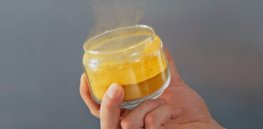
Energy costs might be only real barrier to replacing farm animals and producing nutritious meals in a lab
The industrial biotech startup is working on bringing a novel protein to market — one it says will offer a ...

Ancient DNA: Here’s how a thousand-year-old skeleton was diagnosed with a genetic disorder
The oldest clinical case of Klinefelter Syndrome has been detected in a 1,000-year-old Portuguese skeleton. Klinefelter Syndrome is a super ...
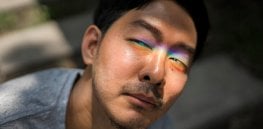
Novel gene therapy study offers hope for definitive colorblindness cure
Researchers from the University College London (UCL) used gene therapy to partly restore the function of the retina's cone receptors ...
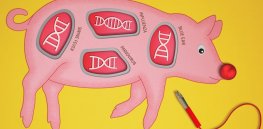
Analysis: ‘We can sequence an animal’s entire genome’ — How advanced biotechnology could dramatically improve meat production
The production of meat, the main protein consumed in the world, needs to grow as consumption increases. To this end, genetic ...

German National Academy of Sciences challenges myths about dangers of agricultural biotechnology
Genetically modified plants may not be cultivated on German fields. Research into them has so far been strictly regulated throughout the ...

‘Fails to protect consumers’: Federal judge rules Trump-designed, Biden-backed GMO labeling needs to include more than just computer codes and text messages; USDA appeal likely
The government’s rules for labeling GMO foods, those produced with genetic engineering, fail to protect consumers adequately because they allow ...
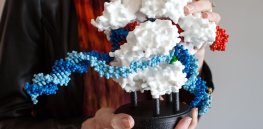
CRISPR is 10: A decade of gene editing refinements presents new ways to address agricultural diseases thought to be incurable
Because CRISPR applications promise so many benefits, we are impatient to see them realized. Indeed, we may complain that the ...

Do sex and romance drive our artistic and athletic abilities?
In his theorizing on the evolution of species, Darwin showed that, in addition to natural selection, animals have “ornaments” used ...

Martian space travel is moving from science fiction to fact. How will humans adjust when they set foot on the red planet?
In the coming decade, in 2033, NASA and China intend to send astronauts to Mars for the first time in ...
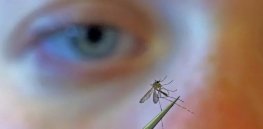
Are you a mosquito magnet? Blame it on the insect’s unique sense of smell — and your unique odor
If you’ve ever sprayed yourself head to toe in bug repellent, yet still felt like a mosquito magnet, it will ...

Beyond brain fog: COVID infection linked to variety of neurological diseases, including epilepsy, dementia, psychosis
People who got COVID have a higher risk of developing brain disorders such as dementia, psychosis, and brain fog two ...

NY Times’ Tom Friedman: US and its Western allies need to stop living in a green fantasy world that says we can go from dirty fossil fuels to clean renewable energy by ‘just flipping a switch’
Putin thinks he’s found a cold war that he can win. He’s going to try to literally freeze the European ...
