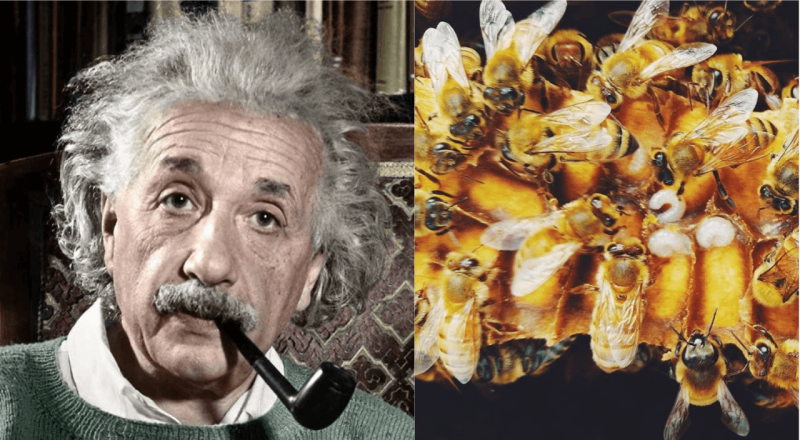
Activists love to cite Einstein quote that without bees, life on Earth would soon perish. Snopes fact checking finds ideologues made it up

image

In 2002, Snopes came across a quote about bees’ importance to the global ecosystem that the Nobel Prize-winning theoretical physicist Albert Einstein supposedly once said or wrote, reading: “If the bee disappeared off the surface of the globe, then man would only have four years of life left.”

One tried-and-true method for getting people to pay attention to words is to put them into the mouth of a well-known, respected figure whom the public perceives as being an expert in the subject at hand.

Follow the latest news and policy debates on sustainable agriculture, biomedicine, and other ‘disruptive’ innovations. Subscribe to our newsletter.

Did Einstein sagely foresee an environmental crisis we’re only just now beginning to notice?

To answer that last question (without denying the importance of the honeybees), we have to consider the related question, “Did Einstein really say this?” First off, searches of Einstein’s writings and speeches and public statements, as well as of (scholarly) compilations of Einstein quotations, reveal nary a reference to the “four years” phrase or any other statement mentioning bees (save for a brief comparison between humans and colony insects such as ants and bees).


The best answer probably lies in examining the context in which the earliest citations of this putative quote (that we’ve found so far) appeared: a January 1994 political protest staged by European beekeepers over the issues of competition from lower-priced honey imports, artificially high prices for sugar (used as winter feed for bees), and a proposed reduction of tariffs that would make imported honey products even cheaper.


This is an excerpt. Read the original post here

{{ reviewsTotal }}{{ options.labels.singularReviewCountLabel }}
{{ reviewsTotal }}{{ options.labels.pluralReviewCountLabel }}
{{ options.labels.newReviewButton }}
{{ userData.canReview.message }}

Related Articles

Infographic: Global regulatory and health research agencies on whether glyphosate causes cancer

Infographic: Global regulatory and health research agencies on whether glyphosate causes cancer

Does glyphosate—the world's most heavily-used herbicide—pose serious harm to humans? Is it carcinogenic? Those issues are of both legal and ...

Most Popular

Screenshot-PM-24
Viewpoint: The herbicide glyphosate isn’t perfect. Banning it would be far worse.
79d03212-2508-45d0-b427-8e9743ff6432
Viewpoint: The Casey Means hustle—Wellness woo opportunism dressed up as medical wisdom
d-b
Blocked arteries, kidney stones, nausea, constipation, fatigue: Long list of health problems caused by too much vitamin D 
ChatGPT-Image-Mar-10-2026-01_39_01-PM
Viewpoint—“Miracle molecule” debunked: Why acemannan supplements don’t work
ChatGPT-Image-Apr-30-2026-05_00_48-PM
Wellness grifter physician turned wellness influencer out as surgeon general nominee
Screenshot-2026-04-30-at-11.33.46-AM
Anti-seed-oil to anti-vax pipeline: MAHA movement spreads to teen influencers
lab grown meat research kelly schultz lehighuniversity main
Profiles of the 10 top global cultured meat companies
ChatGPT-Image-Mar-27-2026-11_27_05-AM
The myths of “process”: What science says about the “dangers’ of synthetic products and ultra-processed foods
Screenshot-2026-04-28-at-1.21.37-PM
How America’s medical system encourages psychiatric overdiagnosis
ChatGPT-Image-Apr-30-2026-12_21_05-PM-2
The tech billionaires behind the immortality movement

Sorry. No data so far.

glp menu logo outlined

Get news on human & agricultural genetics and biotechnology delivered to your inbox.