


Science Literacy Project Daily Digest

Infographic: Trump-voting Republican counties suffered more than twice the death rate from COVID than Democratic ones
Even with widely available vaccines and newly effective treatments, residents of counties that went heavily for Donald Trump in the ...

‘No association between glyphosate and non-Hodgkin’s lymphoma’: Independent scientific panel review challenges activist cancer claims
In an independent critical scientific review of the existing meta-analyses of studies on the potential health hazards of exposure to ...

Agriculture originated in the Middle East’s Fertile Crecent. Who were the world’s first farmers?
The first signs of agriculture and a sedentary lifestyle are found in the so-called ‘Fertile Crescent’, a region in the ...

Viewpoint: ‘Green enlightenment’ ahead? Why Scotland needs to embrace crop genetic engineering
Scotland is a wee country that has always punched above its weight in agricultural innovation. Some of the best crop ...

‘Factory reset’: Binge drinking and other anxiety-related disorders could be treated with gene editing, animal study shows
Gene editing may be a potential treatment for anxiety and alcohol use disorder in adults who were exposed to binge ...

If some dinosaurs developed advanced technology wiped out by asteroids, which species could it have been?
Very little remains from the Neanderthals, who lived just a few tens of thousands of years ago. Even very recent, ...

Viewpoint: Why we should be cautious about injectable weight loss drugs
This headline caught my attention: “Experimental Weight-Loss Drug Shows Surgery-Like Results”. This new med, tirzepatide, a once-weekly injectable, will probably ...

Beyond AI: Why artificial superintelligence is the ‘next big thing’ — and what that means for the future
When it comes to AI, there are three types: artificial narrow intelligence (ANI), artificial general intelligence (AGI), and artificial superintelligence ...

Kernza: The perennial wheat that could inject sustainability into commodity farming
Most of the cereal crops we grow now, like corn, soy, and wheat, are annual crops. They’re planted and harvested ...
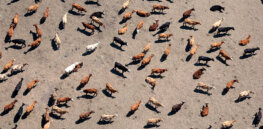
Do climate change threats mean we might have to abandon meat production? These regenerative farmers in Canada say ‘no’
Canadians eat two times more meat than the global average, exacerbating the problem of carbon emissions produced by our food ...

‘These seeds were stored so that future generations could restore them’: Russian invaders destroyed Ukraine’s plant biodiversity gene bank housed in Kharkiv
One of the world’s largest, the National Gene Bank named after V.Ya. Yuriev National Academy of Agrarian Sciences of Ukraine, ...

Audio: This controversial psychologist and author argues that anxiety is good for you
Anxiety is an unpleasant emotion, but can it be useful? NPR's A Martinez talks to clinical psychologist and author Tracy ...

Harvard astronomer makes case that aliens created our universe in a lab
Could our universe have been created in a petri dish? Avi Loeb seems to think so. The Harvard astronomer posits that a higher “class” ...

Brain-recording earbuds? High-tech headphones record neural data — and could unlock the mysteries of the mind
After acting as the scanner-in-chief for the company that invented the eFit, [Konstantin] Borodin is now the lead ear spelunker ...

Oxitec targeting corn crop-devastating fall armyworm moth as GMO test projects to control disease-carrying mosquitoes go smoothly in Brazil, Florida
Forget lions, hippos or venomous spiders. Aedes aegypti mosquitoes may be among the deadliest wildlife in the world. Their bite is relatively ...

Gene editing key to sustainable agriculture in Africa, scientists say
Africa must update its regulations to accommodate the gene-edited crops needed to sustainably intensify agriculture to feed the continent’s growing ...
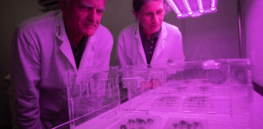
Space farming: Plants grow in soil collected 50 years ago during Apollo lunar missions
In the early days of the space age, the Apollo astronauts took part in a visionary plan: Bring samples of ...
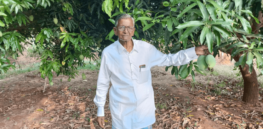
‘Expecting farmers to do cultivation as it was done 100 years back is not something we want’: Why organic farming in India is falling far short of hyped promises
Ever wondered why organic farming hasn't taken off given the stated benefits that are reeled out by the powers that ...

Race-based medical differences: Alzheimer’s blood tests designed for white patients less accurate on blacks
Several blood tests used to diagnose Alzheimer’s disease are less accurate for African Americans than white patients, according to research ...

How different is your real age from what your genes predict?
It can be said we have two ages: a fixed chronological age based on when we were born and a ...

Human brains are a lot smaller than they were 3,000 years ago – and studying ant brains may explain why
Your ancestors had bigger brains than you. Several thousand years ago, humans reached a milestone in their history – the ...

Viewpoint: How much are male-female differences grounded in genetics?
The belief that men are by nature aggressive and belligerent but protectors—like the Roman god of war, Mars—and women are ...

Nigeria begins national trials for GM maize
Nigeria is set to begin national performance trials (NPT) for genetically modified (GM) TELA maize as the West African nation ...

Viewpoint: Seed wars — How Russell Brand gets ‘Green Neo-Colonialism’ wrong
"Why Is Bill Gates Buying Up Stolen Native American Land?" British comedian and actor Russell Brand asked in a recent ...

Sustainability benefits of crop biotechnology innovations begin to shine as investors look to Environmental, Social and Governance (ESG) guidance
The financial industry is undergoing an awakening. It's the revelation that businesses that prioritize people and the planet can be ...

As organic foods go mainstream and prices remain high, survey shows ‘growing skepticism about organic claims’
As organic continues to go mainstream with broader reach outside of the natural channel where it began, it faces increased ...

Precision medicine genomic testing is changing the way we treat leukemia and reducing reliance on chemotherapy
For decades, until the turn of this century, treatment strategies for leukemia changed very little. Patients received chemotherapy, often with ...
