


Science Literacy Project Daily Digest

Neurochemical kindness? The more oxytocin in our aging brains, the nicer and happier we are
People whose brains release more of the neurochemical oxytocin are kinder to others and are more satisfied with their lives ...

Will human biases sink artificial intelligence (AI)?
You’ve probably heard the joke. Two campers see a bear approaching. One starts putting on her sneakers. The other asks: ...

What is life like on other planets? Microorganisms provide possible clues
In Oman, on the Persian Gulf, there is a large slab of ancient seafloor—including ultramafic rocks from Earth’s upper mantle—called ...

Insect-resistant GMO cowpea trials wow Nigerian farmers with jumping yields and lower costs — but other farmers remain hesitant
Last August, the farmers were given cowpea seeds genetically modified (GM) to resist the destructive pod-borer insect pest and improve ...

Renewable bioplastics offer sustainable alternative to petroleum-based products
Most plastics today come from petroleum. About three-quarters of every barrel of oil goes to make gasoline, diesel and jet ...

‘Gene edited crops are necessary to sustainably feed the world’ — German agroecology and organic advocate challenges his own community
Urs Niggli, long-time director of the Research Institute for Organic Farming FibL and now President of the Institute for Agroecology, ...

Vitamin-A enhanced Golden Rice seeds distributed for planting for the first time in the Philippines
Finally, a rice that is infused with vitamin A will soon be served on the tables of Filipino households. After ...

Epidemic of loneliness: Post-COVID update on how emotional isolation damages our health
For two years you didn’t see friends like you used to. You missed your colleagues from work, even the barista ...

‘A real life hyperpolyglot’: The story of a savant who can speak 24 languages (well, more like 33!)
“So, how many languages do you speak?” “Oh, goodness,” [46 year old carpet cleaner Vaughn] Vaughn says. “Eight, fluently.” “Eight?” ...

‘From 12 chemical applications to 2’: Ghanian scientists urge final approval of breakthrough pesticide-reducing GMO cowpea
More than 100 science activists have in a letter to the National Biosafety Authority, urged it to approve Ghana’s first ...

Podcast: A decade after CRISPR’s discovery, medicine and farming are undergoing dramatic revolutions
In 2012, the discovery of the gene-editing tool CRISPR-Cas9 revolutionised scientists’ ability to modify DNA. Ten years on, host Alok ...

‘Almost all crops today have been changed from their original form’: National Academies of Sciences says GMOs just most recent form of food genetic modification
People have been changing plants for thousands of years. Humans started farming more than 10,000 years. Agriculture began in Mesopotamia, ...

Plant microbiome: Key to weaning agriculture off chemical inputs?
All plants interact with bacteria and fungi in the soil. Some plants are especially good at it. Understanding what drives ...

Why apathy is often the first symptom of Alzheimer’s
Compelling new research from the Indiana University School of Medicine has homed in on a degenerative mechanism that could explain ...

Accidents of nature? Climate change is helping us understand how humans came to rule the world
How did Homo sapiens come to rule the planet? It’s a question that many archaeologists have struggled to precisely answer, ...

Move, talk and touch: Brain-reading implants are revolutionizing life for paralyzed people
James Johnson hopes to drive a car again one day. If he does, he will do it using only his ...
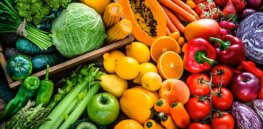
Viewpoint: Environmental Working Group’s scaremongering Dirty Dozen list of ‘pesticide coated’ fruits and veggies loses influence
The Environmental Working Group’s Dirty Dozen and Clean Fifteen shoppers guides to avoiding pesticide residue used to be a huge splash in ...

With animal feed and food prices soaring across Africa, Kenya relaxes GMO import ban
The persistent high cost of animal feeds and supply chain difficulties will continue to make eggs and milk expensive, manufacturers have said ...

‘Honeybees are not endangered and are doing just fine’: Xerces Society says it’s time to end public confusion, refocus on native species
When Colony Collapse Disorder (CCD) occurred around 2006 and entire colonies of honeybees died, experts and the public alike were justifiably alarmed ...

Columbia University finally — but quietly — expunges connections to Trump-endorsed Pennsylvania Senate candidate Dr. Oz, known for ‘quack’ science views and anti-GMO disinformation
After years of criticism, Columbia University Medical Center has finally—quietly—cut public ties with celebrity doctor turned Republican Senate candidate Mehmet Oz ...

Homo floresiensis mystery: Could this ancient hominid species still be alive?
Anthropologist Gregory Forth spent many years living among an ethnic group known as the Lio, an agricultural people who live ...

Aha! The science behind eureka moments
Psychologists call sudden aha! moments “insight.” They occur not only when we are faced with a problem but also when ...

How plant breeding innovations are helping feed a hungry world
As of 2019, nearly 26% of the globe’s population “experienced hunger or did not have regular” access to safe and ...

Growing cell-based meat in space? If humans travel intergallactic distances or colonize planets, this is how we might feed ourselves
Growing meat from cells - particularly at scale - even on Earth isn't easy. Aleph Farms is one of several ...

Pilot GM mosquito tests to control disease in the Florida Keys worked, Oxitec says. Here’s how they did it
Researchers have completed the first open-air study of genetically engineered mosquitoes in the United States. The results, according to the ...

Viewpoint: US farmer organizations offer blueprint to address climate change
As farmers, we’re committed to preserving the natural environment. It’s the foundation — literally and figuratively — of our success ...

Do evolution rejectionists tend to be more bigoted?
A recent psychological study by Stylianos Syropoulos et al. published in the Journal of Personality and Social Psychology suggests that ...
