Accidents of nature? Climate change is helping us understand how humans came to rule the world

Credit: NPR
Credit: NPR

How did Homo sapiens come to rule the planet?

It’s a question that many archaeologists have struggled to precisely answer, but new research offers fresh support to a longstanding theory: Ancient climate shifts may have played a pivotal role in shaping human evolution. The findings were published [April 13] in the journal Nature.

“The study shows an intimate relationship between climate, environments, and human evolution,” Michael Petraglia, director of the Australian Research Center for Human Evolution, tells Inverse. Petraglia also wrote a related article on the new study.

Mis- and disinformation are distorting science and public policy. Subscribe to our Daily and Weekly Digests for incisive coverage of ‘disruptive’ innovations in AI, agricultural biotechnology, food, chemicals, nuclear energy, vaccines, and other disruptive innovations.

There are competing theories of human evolution, but the new research offers significant support for the variability selection hypothesis, which proposes that early hominin evolution and speciation were influenced by significant shifts in temperature and precipitation levels.

…
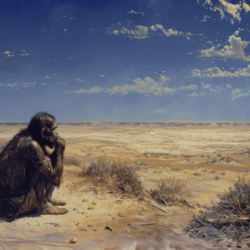
The recent study “does not set up new evolutionary theories, per se,” explains Petraglia.

Rather, Petraglia says the research provides hypothetical models about where humans and their predecessors — such as Homo erectus and Homo heidelbergensis — may have settled and how environments impacted species transition, including the evolution of Homo sapiens.

The research provides clues about the kinds of adaptations humans would have needed to develop in order to cope with climate shifts, such as fire or sophisticated weaponry.


This is an excerpt. Read the original post here

Related Articles

Infographic: Global regulatory and health research agencies on whether glyphosate causes cancer

Infographic: Global regulatory and health research agencies on whether glyphosate causes cancer

Does glyphosate—the world's most heavily-used herbicide—pose serious harm to humans? Is it carcinogenic? Those issues are of both legal and ...

Most Popular

ChatGPT-Image-Mar-10-2026-01_39_01-PM
Viewpoint—“Miracle molecule” debunked: Why acemannan supplements don’t work
Supplement Rain Wellness Illustration
Viewpoint: Bedeviled by “toxic inflammation”? How wellness grifters turn this scientific gray zone into a supplement jackpot
Teal Hexagon Technology Icons
4 key ways the Blue Wave will upend science policy
Aerial Sprayer Over Gradient Fields
Farming, food, and chemicals: Post-midterms, the MAHA alliance between Democrats and MAGA Republicans is bruised but not cowed. What comes next?
Confident Doctor in Clinical Setting
More than 80% of ‘pro-science’ candidates were swept into office. Will they have a policy impact?
Stacked Protest Signs on Concrete Ledge
Voters hate AI data centers, yet they are crucial to establishing a critical technology. So what’s next?
Wave Crest Over Red Cross
Viewpoint: Here are the election-inspired Trump administration healthcare policy reversals expected in the coming months
Protect-Womens-Sports-at-the-Capitol
Blue, purple and red states passed or reaffirmed bans on trans females competing in women’s sports
Microscopic IVF Egg Injection
With technical barriers to human embryo editing falling, ethical concerns escalate
Democratic Donkey Plowing at Sunset
Viewpoint: Democratic tsunami: As the red tide recedes, here are the most likely shifts in food and agricultural policy
Screenshot-2026-11-05-at-1.20.54-PM
$7.35 billion PFAS settlement: 3M to pay people who blame health problems on ‘forever chemicals’ phased out of firefighting foam for more than 20 years
glp menu logo outlined

Get news on human & agricultural genetics and biotechnology delivered to your inbox.