


Science Literacy Project Daily Digest

What’s the timeline for gene edited babies? 25 years, says CRISPR pioneer Jennifer Doudna
It’s been 10 years since Crispr gene-editing pioneer Jennifer Doudna published the landmark paper that landed a Nobel Prize for ...

Anguish factor: Here’s why some people are more anxious than others — and what can be done about it
Anxiety disorders are the most common type of mental disorders in the U.S. But a simple diagnosis of generalized anxiety ...

Gene study begins unraveling the mystery of why humans live longer than most animals
In a major study, scientists have revealed that the slower a genetic code mutates, the longer the individual lives. The ...
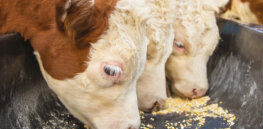
Farms that use non-GMO feed generate more greenhouse gasses, study shows
New research shows that if more U.S. food companies require feed for the livestock and poultry that they source their ...

Viewpoint: Is cell-based meat oversold as a sustainability solution?
A new report by the International Panel of Experts on Sustainable Food Systems critiques the growing trend of alternative proteins. By promising a more ...

Russia has long used social media to undermine consensus science behind GMOs, vaccines and other Western-based technologies
Hoaxlines found accounts that had pushed false claims about the 2009 Swine Flu and the vaccine against it had also promoted Russian state media and ...
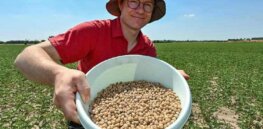
Ukraine crisis prompts anti-GMO German farmers to consider embracing CRISPR gene edited crops
[Joachim Rukwied, President of the German Farmers' Association:] The yields in organic farming on the same area are roughly a ...

How might geoengineering the climate impact infectious disease control?
Geoengineering the climate would have massive repercussions for the health of billions of people at risk of malaria who live ...

Most of us are more likely to trust AI-generated faces than actual humans
A new study published in the Proceedings of the National Academy of Sciences USA provides a measure of how far ...

Some early hominins beat Homo sapiens out of Africa. Who were they?
Hominins, the branch of our family tree that separated itself from the other great apes, are believed to have ventured ...
Ghana farmers optimistic about GMO crops, survey finds
As Ghana considers approving its first genetically modified crop, a new report finds the country’s smallholder farmers are increasingly optimistic ...

How agriculture and climate change are shrinking the global insect population
The combination of climate change and heavy agriculture is having a profound impact on the abundance and diversity of insects, ...

The perfect wine? Biotechnology poised to upend ancient craft of winemaking
Winemakers have come to realize that there are many different strains of yeast (and even bacteria) at play that enhance ...

‘Mate choice hypothesis’: Unraveling the evolutionary importance of female orgasms
The female orgasm may be a means for selecting mates for committed long-term relationships, according to a new study published ...

30 years younger? How scientists are getting human cells to ‘time-jump’
Scientists at the Babraham Institute have developed a method to “time jump” human skin cells by 30 years, turning back ...

Do you believe in human evolution? Rejectionism linked to racism and anti-LGBTQ attitudes
A disbelief in human evolution was associated with higher levels of prejudice, racist attitudes and support of discriminatory behavior against ...

Saving forests: How genetic engineering can play key role
Emerald ash borer, sudden oak death, Dutch elm disease, oak wilt disease, walnut canker, hemlock woolly adelgid—in a globalizing world, ...

Creating self-fertilizing crops to help address climate change
Roughly a quarter of greenhouse gas (GHG) emissions in the United States are a product of agriculture. Fertilizer production and ...

‘It will be hard to find a farmer left’: Sri Lanka’s organic-only experiment collapses harvest and economy
There is barely a citizen of [Sri Lanka] who hasn’t felt the bite of catastrophic inflation and fuel, food and ...

Genetic factors can drive how we choose friendship bonds – in mice. Does it work the same way in humans?
A study published in Molecular Psychiatry suggests that certain enzymes in the brain may have a previously unrecognized link to ...

Biogas from human waste could be key to promoting African energy independence
While not necessarily a topic to discuss in polite company, many experts believe that the future of sustainable energy lies ...

Viewpoint: Politics and scientifically outdated anti-GMO sentiment undermines Europe’s regulatory lab-grown food embrace
The precision fermentation landscape is somewhat unbalanced. While the US and Europe both boast a growing number of start-ups working ...

Viewpoint: If the EPA sharply curtails herbicide atrazine, what are the environmental and economic trade-off?
Atrazine is a triazine herbicide used by American farmers to control broadleaf and grassy weeds. It’s largely used by corn ...

Viewpoint: Why we should trust farmers when it comes to herbicide application
Weed-killers have come under fire by activist groups opposing the use of crop protection, accusing it of harming endangered species ...

How COVID steals sense of smell
Few of Covid-19’s peculiarities have piqued as much interest as anosmia, the abrupt loss of smell that has become a ...

Some heavy smokers will never get cancer. Here’s why
Cigarette smoking is overwhelmingly the main cause of lung cancer, yet only a minority of smokers develop the disease. A ...

Can we ‘reverse’ aging? ‘Reprogrammed’ skin cells offer promise — but we don’t know why
People could eventually be able to turn the clock back on the cell-aging process by 30 years, according to researchers ...
