


Science Literacy Project Daily Digest
South African anti-GMO activists hide fact drought-tolerant maize would be royalty-free
The narrative of a poor hungry Africa makes good TV (does it?). The paradox is that for many Africans, drought ...

Will genetic cyber-athletes come to dominate sports?
The era of the über-athlete may be nearer than most people think, and it will spark fierce ethical debates. The ...
Trials halted for Ebola drug after no results seen in human patients
One of the highly anticipated trials of an Ebola drug that showed promising results in monkeys has been stopped early ...
Neanderthal ancestors closer than previously thought, new fossil evidence shows
Modern humans and Neanderthals interbred in Europe, an analysis of 40,000-year-old DNA suggests. The study suggests an early Homo sapiens ...

Biotech-enriched omega-3 soybeans could promote ocean sustainability
Omega-3 fatty oils, mainly derived from fish, are essential for nutrition. The problem is that there’s not enough fish to ...
Frederick P. Li, scientist who helped prove genetic link to cancer risk, dies
Dr. Frederick P. Li, who helped prove to a doubting medical establishment that heredity and genetics play a major role in some ...
Virus-resistant cassava could join other GMO crops in battling food insecurity and climate change
Nigel Taylor spreads apart the wilted and discolored leaves of a cassava plant. He wants us to see its sickness ...

Survivors of WWII Leningrad siege had superior metabolism, genetic analysis suggests
Analysis of the genome structure of Leningrad siege survivors and their contemporaries has allowed Russian scientists to spot specific DNA ...
Regulators unreasonably stifling ‘biopharmed’ life-saving drug development from genetically engineered plants
Obtaining medicines from plants is not new. Aspirin was first isolated from the bark of the willow tree in the ...
Epigenetics can help humans understand our ancient past
Some types of epigenetic modifications are directly influenced by environmental factors. Thus, characterizing and understanding the "epigenome" can help us ...
Debate over GMOs and other science controversies should center more in values and politics
Looking upon all the polarized rhetoric concerning vaccines, GMO crops, climate change, and processed foods one might be tempted to ...
Is the infinite universe of Internet pornography a danger, or an asset to sexuality?
‘The widespread use of internet porn is one of the fastest-moving global experiments ever unconsciously conducted,’ the U.S. science writer ...
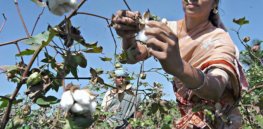
GMO Bt cotton can increase Indian farmer bankruptcy, suicide risk, claims study
The cultivation of Bt cotton, a genetically modified, insect-resistant cotton variety, is a risky affair for Indian farmers practising rain-fed ...
Transhumanist dilemma: Should we be allowed unlimited access to our own genetic information?
Up until recently, those in the technology industry and those conducting genomic research would have been considered strange bedfellows. But ...

Seed business may radically reorganize if Monsanto-Syngenta merger goes forward
A successful attempt by Monsanto Co. to buy Syngenta AG and form an agrochemical powerhouse would prompt major rivals to ...
Ancient wheat relative Kernza resists diseases and pests without gene manipulation
Kernza’s arrival has been a long time coming. The new grain variety from the Land Institute is derived from an ...
Growing assisted reproduction industry raises questions about unused embryos
In storage facilities across the nation, hundreds of thousands of frozen embryos — perhaps a million — are preserved in ...
Modern genetics could bring back mouth-watering strawberries
Think about the best strawberry you ever tasted. Sweet, with a flavor that’s a greater-than-the-sum mix of overripe peach, underripe ...
MERS arrival in yet another country raises concerns about global preparedness
A respiratory virus that originates in the Middle East and has been hopscotching the globe for three years has landed in ...

Plant geneticist Pamela Ronald on why organic farming can benefit from advanced genetics
Pamela Ronald is a professor at the Department of Plant Pathology and the Genome Center at UC Davis. Ronald is also the ...

Diet must change to put end to factory farming
From the look of things, you’d be correct in thinking that a revolution in food production was underway. Calls for ...
What would humans do if we never had to sleep again?
If there was a drug that meant you never had to sleep again, would you take it? Would those who ...

Nanotechnology could lead to revolution in drug development
Monoclonal antibody research skyrocketed in the 1980s. By the next decade, they hit the market and today, some of the ...
Jumping genes make your genome not quite human
What if a gene from an insect insinuated itself straight into your DNA? What if more than a hundred genes ...
What Brazil can teach Uganda about GMO crops
Brazil presents a suitable example to learn from in adoption, processing and export of Genetically Modified (GM) crops and products, ...

DNA forensics could help fight illegal elephant poaching
Every year criminals around the world trade billions of dollars in products derived from wildlife. The elephant trade in particular ...
Ongoing lack of MERS vaccine inexcusable as virus spreads in South Korea
Three years after the mysterious MERS virus first emerged in humans, scientists and drugmakers say there is no excuse for ...
