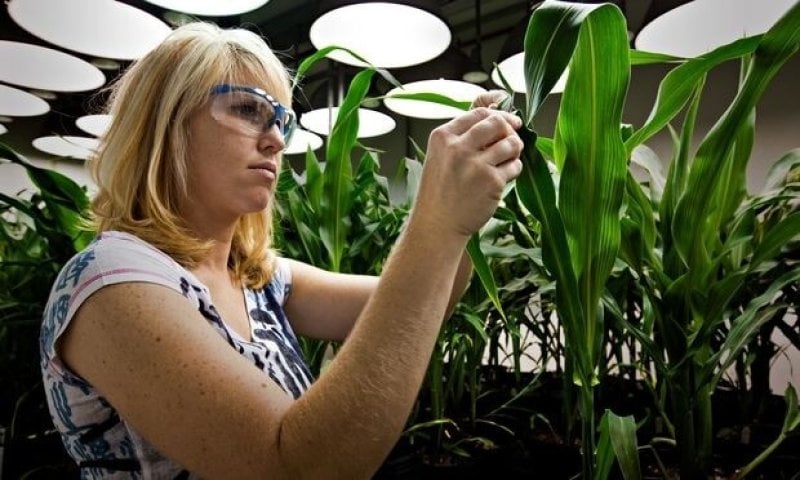
Since the 1970s we’ve been ushering in the next era of breeding by physically lifting individual genes from one species and inserting them into another.
And another, not insignificant, step forward was taken when two teams led by Harvard University’s George Church published new ways to exert control of bacteria by tweaking their DNA in unnatural ways. It’s controlling what geneticists call “gene leakage”–the remote possibility played up by anti-GMO campaigners that genetically engineered genes might leak out into the wild with unforeseen consequences. Plants do this naturally, with no serious consequences because of the adaptability of nature. But the remote possibility of genetic jailbreak is precisely what these studies are trying to contain. The technical achievement here is quite something – as we would expect from the Harvard lab of one of the lead scientists, George Church, among the best in the world at redesigning nature.
I asked Church if he was trying to mollify campaigners. I was surprised by his answer. He said: “That is certainly one of our goals and if they don’t like this, we’ll ask what they would prefer, and keep going. We want to get this right.”

I was bewildered. We don’t do science in response to public opinion, especially to placate opponents. But, on reflection, this inclusive way might avoid the historical ideological deadlock and placate the general fuzzy sense that messing with nature just doesn’t feel right. It might not be the quickest route but science is part of society and, as long as the science is well understood, all voices are welcome. Society decides.
Read full, original article: Why GM is the natural solution for future farming