Search for Parkinson’s genes turns to online social networking

b tting b cb b f f da f c e d a d a

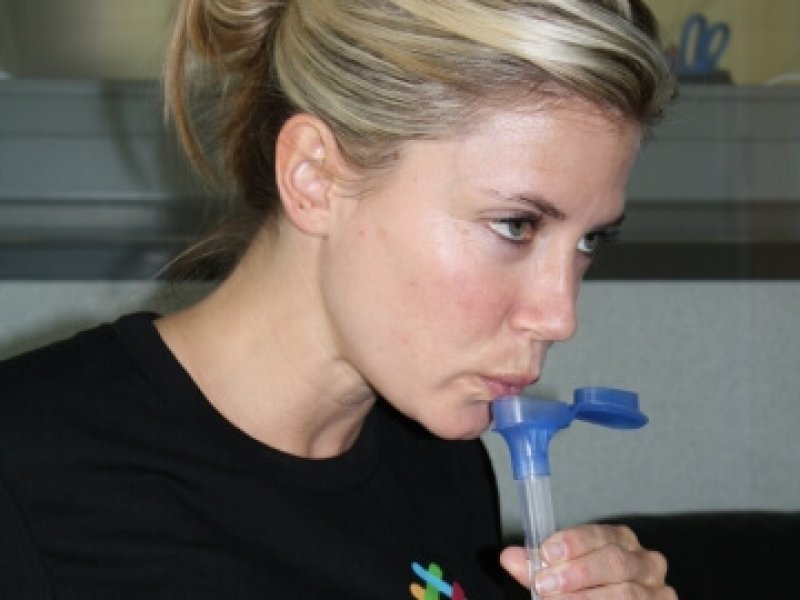
There’s a growing interest in what our genes say about our health. And in recent years, quite a few companies have sprung up to help us listen with the help of personalized DNA tests. For a few hundred dollars and a vial of spit, these companies will search your DNA for sequences that predict your physical traits, your response to certain drugs and your risk for any number of diseases.

Most customers likely wanted to find out more about their personal genetic risks not to contribute to medical science. But in 2009, the company decided to do genetic research, and it invited anyone diagnosed with Parkinson’s disease to donate their DNA sample. 23andMe recruited people online using social media, and at Parkinson’s research conferences. In exchange for participating, they’re offered the company’s personalized genetics services free. Participants provided a DNA sample and answered questions about their diagnosis, symptoms and lifestyle habits in online surveys.

“They may in theory be able to involve 10,000 people with Parkinson’s disease, and do it cheaply and easily,” explains Hank Greely, a Stanford Law School professor who follows genetics companies. “Now that’s something that academic researchers would love to be able to do.”
View the original article here: Search For Parkinson’s Genes Turns To Online Social Networking

{{ reviewsTotal }}{{ options.labels.singularReviewCountLabel }}
{{ reviewsTotal }}{{ options.labels.pluralReviewCountLabel }}
{{ options.labels.newReviewButton }}
{{ userData.canReview.message }}

Related Articles

Infographic: Global regulatory and health research agencies on whether glyphosate causes cancer

Infographic: Global regulatory and health research agencies on whether glyphosate causes cancer

Does glyphosateโ€”the world's most heavily-used herbicideโ€”pose serious harm to humans? Is it carcinogenic? Those issues are of both legal and ...

Most Popular

Screenshot 2026-05-06 at 2.56
Singularity crisis ahead? Can super babies save us from rogue AI geniuses?
Screenshot-2026-05-01-at-1.29.41-PM
Viewpoint: What happens when whole grains meet modern food manufacturing? Labels donโ€™t tell the whole story.
Screenshot-2026-03-13-at-12.14.04-PM
The FDA wants to make many popular prescription drugs OTCโ€”a great idea. Hereโ€™s why itโ€™s unlikely to happen
S
As vaccine rejectionism spreads, measles may be taking a more dangerous turn
Screenshot-2026-05-01-at-11.56.24-AM
โ€˜Science moves forward when people are willing to think differentlyโ€™: Memories of DNA maverick Craig Venter
Screenshot-2026-04-20-at-2.26.27-PM
Viewpoint โ€” Food-fear world: The latest activist scientists campaign: Cancer-causing additives
Screenshot-2026-04-03-at-11.15.51-AM
Paraben panic: How a flawed study, media hype, and chemophobia convinced the public of the danger of one of the safest classes of preservatives
images
The never-ending GMO debate: Pros and cons
Screenshot-2026-04-30-at-2.19.37-PM
5 myths about summer dehydration that could damage your health โ€” or even kill you
Screenshot-2026-05-06-at-2.07.43-PM
Manufacturing a conspiracy: The timeline of howย  the White House embraced the fringe claim that scientists are being mysteriously murdered
Screenshot-2026-04-12-135256
Bixonimania: The fake disease scam that AI swallowed whole
glp menu logo outlined

Get news on human & agricultural genetics and biotechnology delivered to your inbox.