The (epi)genetics of homosexuality

gay cake topper

Although scientists have spent the last few decades scouring our genome for a “gay gene,” William Rice, Urban Friberg, and Sergey Gavrilets suggest in The Quarterly Review of Biology that homosexuality may have its roots in epigenetics, rather than in genetics.

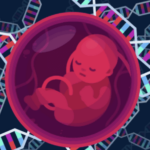
Much of we know about homosexuality suggests that it is not simply a result of direct genetic inheritance. Instead, the researchers suggest, epigenetic inheritance via “epi-marks” might be responsible for sexual orientation. Epi-marks are physical changes in our genetic material (such as chemical modification or changes in DNA packaging proteins) that regulate gene activity without actually changing the sequence of bases.

As Rice, Friberg, and Gavrilets note, the inheritance of homosexuality doesn’t appear to be as simple as a “gay gene.” But for now, we simply don’t know what factors contribute to homosexuality in humans or in most other species. While epigenetics may help us understand homosexuality one day, we’re not there yet.

Additional Resources: 

View the original article here: What we know—and don’t know—about the biology of homosexuality

{{ reviewsTotal }}{{ options.labels.singularReviewCountLabel }}
{{ reviewsTotal }}{{ options.labels.pluralReviewCountLabel }}
{{ options.labels.newReviewButton }}
{{ userData.canReview.message }}

Related Articles

Infographic: Global regulatory and health research agencies on whether glyphosate causes cancer

Infographic: Global regulatory and health research agencies on whether glyphosate causes cancer

Does glyphosate—the world's most heavily-used herbicide—pose serious harm to humans? Is it carcinogenic? Those issues are of both legal and ...

Most Popular

Screenshot-2026-05-01-at-1.29.41-PM
Viewpoint: What happens when whole grains meet modern food manufacturing? Labels don’t tell the whole story.
S
As vaccine rejectionism spreads, measles may be taking a more dangerous turn
ChatGPT-Image-Apr-13-2026-02_20_22-PM
Viewpoint: Misinformation infodemic? Why assessing evidence is so challenging 
Screenshot-2026-04-20-at-2.26.27-PM
Viewpoint — Food-fear world: The latest activist scientists campaign: Cancer-causing additives
ChatGPT-Image-Mar-27-2026-11_47_30-AM-2
FDA’s expedited drug reviews are hailed in some quarters but other approval practices are problematic
Screenshot-2026-03-13-at-12.14.04-PM
The FDA wants to make many popular prescription drugs OTC—a great idea. Here’s why it’s unlikely to happen
bigstock opioids on chalkboard with rol
GLP podcast: 'Safe injection sites': enabling drug addiction or saving lives?
circular-bioeconomy-should-focus-on-sustainable-wellbeing
GLP podcast: What's wrong with 'doomsday' environmentalism? It's false.
Screenshot-2026-04-12-135256
Bixonimania: The fake disease scam that AI swallowed whole

Sorry. No data so far.

glp menu logo outlined

Get news on human & agricultural genetics and biotechnology delivered to your inbox.