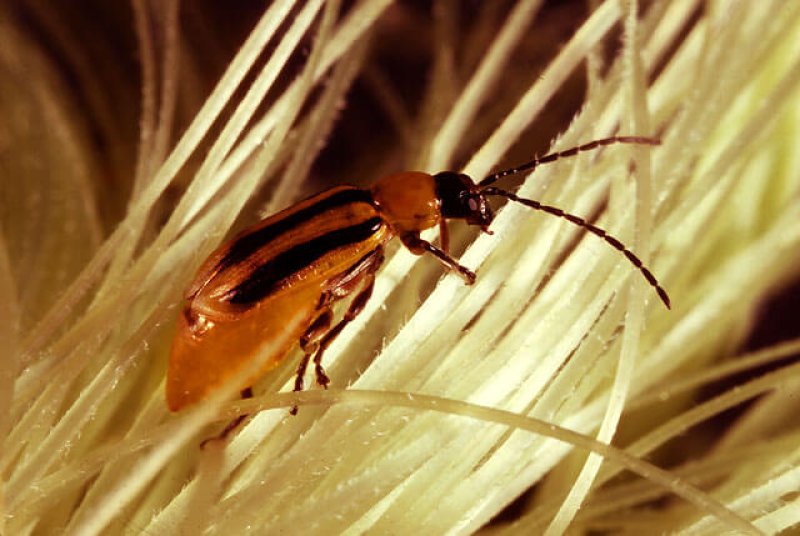
A recent report in the Wall Street Journal points to an overall increase pesticides and lays the blame for this increase at the feet of Monsanto’s pest-resistant Bt corn. The easy, appealingly David-versus-Goliath implication? Bt crops are backfiring now that nature has outsmarted them.
This isn’t exactly news, though. The first Bt-resistant rootworms were found in 2011, and “just to be safe” many farmers have since been spraying their fields with soil pesticides to eliminate any resistant hookworms their Bt corn might not deter. To point to the “failure” of Bt corn as the driver of increased pesticide use is to neglect the influence of farmer behavior. Corn’s worth more than ever, the amount of land devoted to corn is increasing, and as a result the amount of farmers resistant to crop rotation and devoted to preemptively spraying their crops with pesticide to hold on to their money-making corn is likely driving the increase as much as a the development of resistance in pests like the hookworm. (To be fair, the WSJ covers these points in its article, even if its headline succumbs to the “pests outwit Monsanto” narrative.)
Versions of this story seem to have appeared every few months since the first study identifying resistant hookworms in 2011, usually with the subtext of “Aha! Now we’ve got you, GM crops!”

Nobody with a basic knowledge of biology and evolution—at Monsanto or Ma and Pa’s Corn Farm—would expect any one anti-pest solution to be a permanent success of failure. The arms race between crop pests and pesticides doesn’t move at quite the same pace, say, as the blistering give-and-take of our war against bacteria, but it is the norm in agriculture. Doesn’t matter if we’re talking biotech or simple crop rotation techniques: farmers are always developing new tricks and pests are always trying to find ways around them. Rootworm beetles want to eat.
So far, this particular report from the WSJ doesn’t seem to have been picked up by the anti-GM crowd, but if (or when) it does, remember that the idea of “failure” or “backfire” in terms of a genetically modified pest-resistant crop has more to do with the overall impact it has on pesticide use and crop productivity, not on whether or not nature eventually finds a work-around. We’ve all seen Jurassic Park—we know that life finds a way. That much, as Ian Malcolm would happily tell you, is inevitable.