New patterns recognized in genetic profiles of 12 cancers

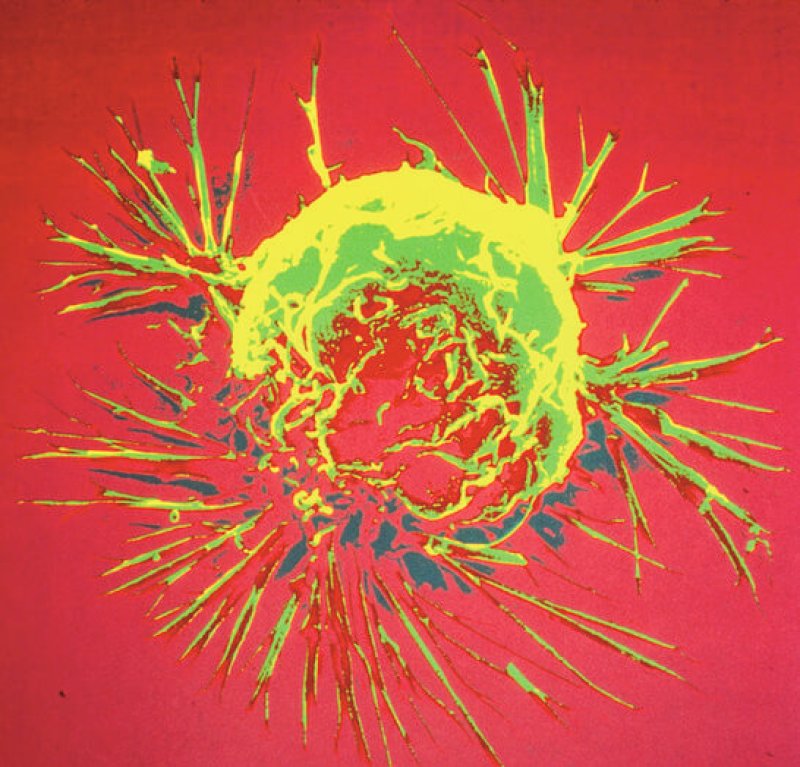
NIH cancer cell
Cancer cell. Credit: National Cancer Institute, NIH

Examining the molecular profiles of tumors from 12 different types of cancers, scientists working with the National Institutes of Health-backed Cancer Genome Atlas said they had found striking similarities between tumors originating in different organs.

Their discoveries, made possible by improvements in sequencing technologies and computing methods, could herald a day when cancers are treated based on their genetic profiles, rather than on their tissue of origin, said UC Santa Cruz biomolecular engineer Josh Stuart.

If scientists can find molecular similarities, say, between a rare form of breast cancer and a form of ovarian cancer, they might be able to use a drug known to target the ovarian tumor to treat the unusual subtype of breast cancer.

Read the full, original story here: New hope for treating cancer? Patterns seen in 12 types of tumors

 Additional Resources:

{{ reviewsTotal }}{{ options.labels.singularReviewCountLabel }}
{{ reviewsTotal }}{{ options.labels.pluralReviewCountLabel }}
{{ options.labels.newReviewButton }}
{{ userData.canReview.message }}

Related Articles

Infographic: Global regulatory and health research agencies on whether glyphosate causes cancer

Infographic: Global regulatory and health research agencies on whether glyphosate causes cancer

Does glyphosate—the world's most heavily-used herbicide—pose serious harm to humans? Is it carcinogenic? Those issues are of both legal and ...

Most Popular

Screenshot-2026-05-01-at-1.29.41-PM
Viewpoint: What happens when whole grains meet modern food manufacturing? Labels don’t tell the whole story.
ChatGPT-Image-Apr-13-2026-02_20_22-PM
Viewpoint: Misinformation infodemic? Why assessing evidence is so challenging 
ChatGPT-Image-Mar-27-2026-11_47_30-AM-2
FDA’s expedited drug reviews are hailed in some quarters but other approval practices are problematic
Farmers can talk to plants
Farmers are a major source of misinformation—about farming
S
As vaccine rejectionism spreads, measles may be taking a more dangerous turn
bigstock opioids on chalkboard with rol
GLP podcast: 'Safe injection sites': enabling drug addiction or saving lives?
Screenshot-2026-04-20-at-2.26.27-PM
Viewpoint — Food-fear world: The latest activist scientists campaign: Cancer-causing additives
What explains Homo sapiens’ huge brains? Ancient climate change played a role
Viewpoint: Internal White House documents detail administration’s strategy to undermine climate science
ChatGPT-Image-May-7-2026-11_28_04-AM-2
‘Conflict entrepreneurs’ are driving disinformation and shaping public opinion
Screenshot-2026-05-06-at-2.07.43-PM
Manufacturing a conspiracy: The timeline of how  the White House embraced the fringe claim that scientists are being mysteriously murdered
circular-bioeconomy-should-focus-on-sustainable-wellbeing
GLP podcast: What's wrong with 'doomsday' environmentalism? It's false.
ChatGPT-Image-May-6-2026-03_41_05-PM
‘Protecting the integrity of science’: Kennedy’s FDA blocks release of taxpayer-funded studies finding COVID and shingles vaccines safe
Screenshot 2026-05-06 at 12.49
Immortal dragons: The quest to ‘make death optional’

Sorry. No data so far.

glp menu logo outlined

Get news on human & agricultural genetics and biotechnology delivered to your inbox.