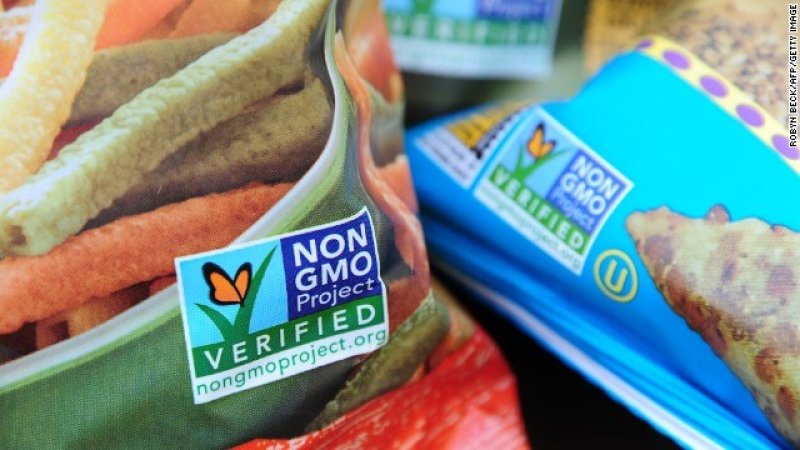
GMO labeling advocates gearing up for several state initiatives, national legislation in 2014

non gmo label story top
Image via CNN.

Recent losses in California and Washington are not deterring advocates for the labeling of genetically modified foods. Oregon and Colorado appear likely to be the next states to vote on the issue. Advocates in those states are preparing ballot initiatives for the 2014 elections.

Initiative 27, a ballot initiative in Oregon that would require the labeling of GMO food, recently cleared a big legal hurdle.  On December 2, 2013, the Oregon Supreme Court affirmed that Initiative 27 complied with the Oregon Constitution’s procedural requirements, allowing supporters to begin gathering the 87,213 signatures required by July 3, 2014, to place Initiative 27 on the 2014 General Election ballot. As currently written, the initiative would require food offered for retail sale that is entirely or partially produced with genetic engineering to disclose that information on a label.

Colorado and Arizona have similar initiatives that will likely be on the ballot later this year.  But anti-GMO groups are also pressuring federal lawmakers to pass national legislation that would require labeling of GMOs. Senator Boxer and Representative DeFazio have introduced identical bills in the Senate (Bill 809) and House (Bill 1699) that would amend the Federal Food, Drug, and Cosmetic Act to deem misbranded any food that has been genetically engineered or contains one or more genetically engineered ingredients, unless such information appears on a label. Such federal GMO labeling legislation would preempt state labeling laws. The federal labeling initiatives are still in their infancy, however, and neither has passed through the relevant Committee.

Read the full, original article: More GMO Labeling Ballot Initiatives Coming In November; Federal Labeling Initiatives In Congress

Additional Resources:

{{ reviewsTotal }}{{ options.labels.singularReviewCountLabel }}
{{ reviewsTotal }}{{ options.labels.pluralReviewCountLabel }}
{{ options.labels.newReviewButton }}
{{ userData.canReview.message }}

Related Articles

Infographic: Global regulatory and health research agencies on whether glyphosate causes cancer

Infographic: Global regulatory and health research agencies on whether glyphosate causes cancer

Does glyphosate—the world's most heavily-used herbicide—pose serious harm to humans? Is it carcinogenic? Those issues are of both legal and ...

Most Popular

Credit: ACSH
Viewpoint: Who and what’s to blame for the surge in vaccine-preventable diseases?
ChatGPT-Image-May-28-2026-12_56_54-PM
Viewpoint: Vaccines' non-specific effects? The ‘shoddy’ Danish couple whose 'research’ inspires RFK, Jr.’s health delusion
ChatGPT Image Jun 3, 2026, 03_14_43 PM
Viewpoint: How Earthjustice became the poster child for the abuse of special interest activist funding
Organic-Produce
Viewpoint: Why you should ignore organic food advocates’ advice to avoid ‘pesticide soaked’ conventional fruits and vegetables
Screenshot-2026-06-08-at-11.05.51-AM
Can vaping lead to cancer? New ‘association study’ raises questions of “links"
Screenshot-2026-06-08-at-10.19.30-AM
‘Natural’ wellness supplements linked to liver injury
Screenshot-2026-06-05-at-3.30.20-PM
Republican lawmakers spread misinformation claiming solar farms permanently destroy potato farms
Screenshot-2026-06-05-at-2.12.30-PM
Some plants can poison you. So how did humans figure out what is safe to eat?
Screenshot 2025-07-30 at 10.48
Can gene editing eliminate Down syndrome? Scientists have done it in lab-grown cells
edb7f6d7-2370-418f-9578-74e29678e35c
Facts & Fallacies Podcast: Nicotine vaping—public health miracle, or risk to children? Professor Cliff Douglas
ChatGPT-Image-Jun-5-2026-01_17_48-PM
GLP-1 weight-loss drugs may reshape our desires and emotions
glp menu logo outlined

Get news on human & agricultural genetics and biotechnology delivered to your inbox.