
While people in the East and Midwest have been suffering through an intense cold system drifting in from the Arctic, those in the Southwest have been enjoying beautiful, warm weather – and rubbing it in to family and friends in cooler climates by boasting about it on social media.
But much like living in sub-zero temperatures, living in extreme heat presents some of its own challenges. And your ability to cope has much more to do with just an emotional response to temperatures.
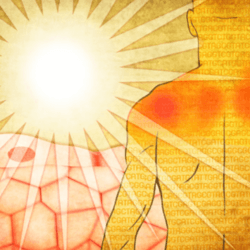
University of Arizona experts involved in weather-related research say other factors, such as genetics, play an important role in human climate adaptability. For example, a person’s ability to sweat, one’s skin pigmentation, the strength of one’s heart and even how close one’s blood vessels are to the surface of his or her skin are among the factors that determine a person’s adaptability.
“If you put two people in an environment with the same stimulus, over time, they will still carry a genetic predisposition. One person’s body may change to adapt, but it won’t change as much as someone of a different predisposition who does better in that climate,” said Dr. Brian S. Drummond, a clinical assistant professor and medical director for the University of Arizona Medical Center-South Campus.
So, in the midst of variable weather conditions across the nation, a question comes to mind: Can humans actively and naturally become more adaptable to extreme temperatures?




The answer: yes and no. Indeed, it’s complicated.
Read the full, original article: Prefer dry heat to arctic chill? Genetics might be the reason
Additional Resources:
- 21st century will be the age of precision genetics, Independent
- Synthetic genetic clock tracks temperature changes, HealthCanal