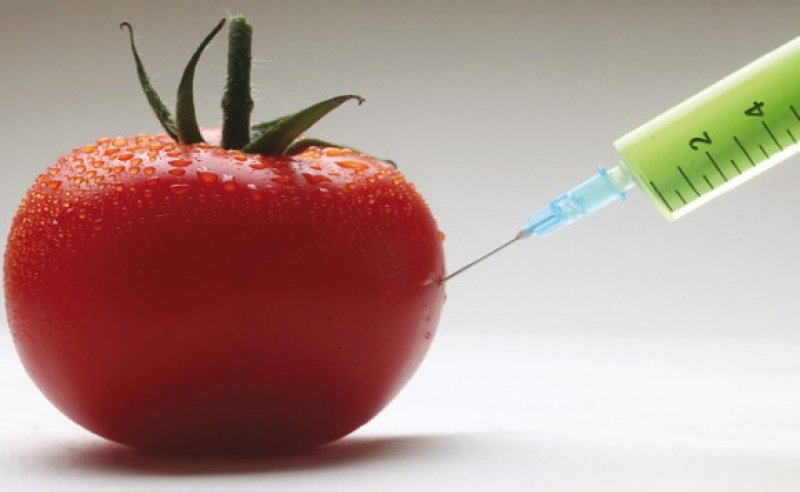
The battle being waged between genetically modified crops and traditional farming techniques in China has escalated, seemingly, from a scientific and policy debate to an all out war complete with terror elements.
Peng Guangqian, the major-general of the People’s Liberation Army, claims that the West is trying to drive up the cost of seeds and grain by making China dependent on patented genetically modified (GM) seeds. Railing against this “ultimate battle strategy” in an editorial in state-run newspaper The Global Times in August, the high-ranking military officer’s opposition help stymie the momentum behind China’s investment in GM and biotechnology research that dwarfed efforts in other countries. In 2008, China invested $3 billion for a single project alone.
China at one point looked like it was on the path to becoming a major GM food producer in the world market. Beijing has outspent all other countries on research into genetic modification, genomics and bioengineering over the past 20 years, according to Scott Rozelle, an agriculture professor at Yale and a former researcher at the Chinese Academy of Sciences.
Now, some 80 Chinese organizations, including private companies, research labs and universities are working on GM products that could potentially compete with the larger firms in the world.
But the opposition to GM foods isn’t all political and economical. Genetically modified products face considerable push back globaly due to alleged safety concerns voiced by anti-GMO activists. Chen Yiwen, an advisor for the Committee on Natural Disaster at China’s Geophysics Society, has led a loosely organized campaign since 2009 to try and keep GM foods out of public schools. A sentiment against GM rice that flared in August 2012 after a US-China research team was found testing a product on primary school students in Hunan province without the consent of parents, state media reported. Parents expressed worry over the lasting effect of the beta carotene-enriched rice.
The activists cited on e study performed at the Northeastern Agricultural University that supposedly showed that genes from Monsantoʼs Roundup Ready herbicide entered the surrounding soil, disrupting the balance of bacteria.

In China, public opinion is highly divided on the use of GM products. Opponents rant on the dangers posed by GM crops and Monsanto’s dominance in the field in particular, while others are less concerned.
“The government supports [GM]. It’s a necessary development not just for China but for the world,” says a retired professor, surnamed Yao, at a restaurant in downtown Shanghai. “I’m not afraid to eat it.”
Companies, domestic and foreign, will continue to wait for the market to open. China has spent far too much time and money to abandon genetically modified crops. But as time passes without approvals for the new products, industry watchers are increasingly pessimistic.
“I’m a scientist. From a scientific angle, commercialization could start tomorrow,” says Huang Dafang, the former director of the Biotechnology Research Institute in Beijing. “Politically, there are many more things to think about. I believe that [GM] will be approved sooner or later. That’s because without new technology, agriculture in China will not develop.”
Read the full, original article: Genetically modified food: A clockwork tomato