EU rules that honey containing GM pollen will not require a label

PHT original

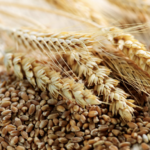
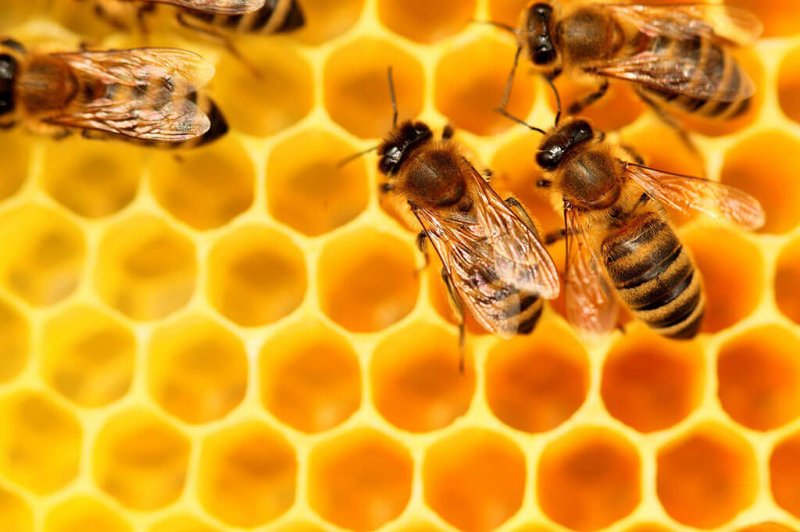
The European Parliament has endorsed draft rules defining pollen as a natural constituent of honey, rather than an ingredient. This means that GM pollen does not have to be labeled unless it makes up more than 0.9% of the honey. The full Parliament rejected a proposal by the environment committee to consider GM pollen as an ingredient rather than a natural constituent of honey, in line with a Court of Justice ruling in 2011. According to EU legislation, there is a huge difference between an ingredient and a constituent. An ingredient is part of a mixture and, as far as GMOs are concerned, would be subject to GMO labeling regulations. Pollen is naturally part of honey and comprises between 0.005 and 0.05% of honey and thus labeling would never be required.

Despite the clarification that, in the EU, pollen is a constituent of honey, not an ingredient, there are several issues that remain unresolved about honey and pollen. This article identifies and discusses these unresolved issues

Issue 1: What authorization is required for pollen from GM-crop sources?

Issue 2: What is the measurement for GM-pollen, from approved GM-crops, in honey?

Issue 3: Impact of the EU pollen in honey dispute and clarification on EU international legal obligations?

Issue 4: What does “natural” mean?

As one can anticipate, those who adamantly oppose GM content are unlikely to accept a “natural” label on honey whenever the honey contains GM pollen content, no matter how minuscule the percentage; to those opponents, “GM” and “natural” are mutually exclusive categories. Assuredly this dispute about the purity of honey is a dispute that is forthcoming in the EU.

While the present authors likely have not thought of all the unresolved issues about pollen and honey in the EU, we have raised four of them which we consider significant.

Read the full, original article: Honey containing GM-pollen in Europe

{{ reviewsTotal }}{{ options.labels.singularReviewCountLabel }}
{{ reviewsTotal }}{{ options.labels.pluralReviewCountLabel }}
{{ options.labels.newReviewButton }}
{{ userData.canReview.message }}

Related Articles

Infographic: Global regulatory and health research agencies on whether glyphosate causes cancer

Infographic: Global regulatory and health research agencies on whether glyphosate causes cancer

Does glyphosate—the world's most heavily-used herbicide—pose serious harm to humans? Is it carcinogenic? Those issues are of both legal and ...

Most Popular

Screenshot-2026-04-23-at-11.00.36-AM
Regulators' dilemma: Thalidomide, Metformin, and the cost of getting drug approvals wrong
Picture1-5
Science Disinformation Gap: The transatlantic battle over social media and censorship
ChatGPT-Image-May-13-2026-11_56_08-AM
After slashing global health aid by $19 Billion, Trump moves to tap $2.1 billion more—to cover shutdown costs
ChatGPT-Image-May-12-2026-08_39_41-PM
GLP podcast: Big Pharma, Big Ag, Big Food—health harming industries or life-saving innovators?
Screenshot-2026-05-12-at-9.58.31-PM
'He seems fine': Marty Makary out as FDA commissioner
ChatGPT Image May 10, 2026, 08_16_59 PM 2
Overmedicalization? RFK Jr.’s antidepressant crackdown raises conflict questions over his fee stake in Wisner Baum, the tort firm built on suing drug makers
Screenshot-2026-05-12-at-10.05.11-AM
Pro-vaccine “hero” vs. an anti-vax “villain”: ‘Bad Vaxx’ video stirs MAHA backlash
Screenshot-2026-05-01-at-1.29.41-PM
Viewpoint: What happens when whole grains meet modern food manufacturing? Labels don’t tell the whole story.
ChatGPT-Image-Apr-13-2026-02_20_22-PM
Viewpoint: Misinformation infodemic? Why assessing evidence is so challenging 
Picture1-1
Cooling the planet with balloons: Could a geoengineering gamble slow global warming?
S
As vaccine rejectionism spreads, measles may be taking a more dangerous turn
Screenshot-2026-05-11-104424
Hantavirus outbreak research: Trump administration shut down study last year on rodent-to-human transmission
glp menu logo outlined

Get news on human & agricultural genetics and biotechnology delivered to your inbox.