Teeth of the very old may provide more easily accessible stem cells than blood

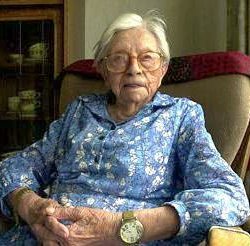
Normally, I wouldn’t post about a report that’s already reverberated through the blogosphere, but the finding of hundreds of mutations in the blood of a 115-year-old woman reminded me of something I’d published a few years ago. In an actual journal. And at least in the accounts I read, no one linked the finding to mutation detection in clinical genome sequencing.

In 2008, Renad I. Zhdanov, a researcher at the Institute of Fundamental Medicine and Biology at the Russian Academy of Sciences, started emailing me, about stem cells. I’d just published a tome for Insight Pharma Reports and a highly forgettable novel on the topic.

Dr. Zhdanov had the idea to use stem cells from the teeth of the oldest old to create spare parts for others. Presumably the cells, having hung around for more than a century, would have exceptional potential. When our discussion veered toward the concept of informed consent — yanking teeth from unsuspecting elders — I realized we could write an editorial for the American Journal of Bioethics, where I had a contact. And so “Centenarians as Stem Cell Donors” appeared in the November 2009 issue.
Read the full, original story: Mutations in 115-Year-Old Provide Perspective for Personal Genome Sequencing


Related Articles

Infographic: Global regulatory and health research agencies on whether glyphosate causes cancer

Infographic: Global regulatory and health research agencies on whether glyphosate causes cancer

Does glyphosate—the world's most heavily-used herbicide—pose serious harm to humans? Is it carcinogenic? Those issues are of both legal and ...

Most Popular

ChatGPT-Image-Mar-10-2026-01_39_01-PM
Viewpoint—“Miracle molecule” debunked: Why acemannan supplements don’t work
ChatGPT-Image-Sep-10-2026-10_36_07-AM
Viewpoint: Even lousy scientific articles can shield authors when they hype dubious health claims and products
sorghum farmers in kenya FARMERS TREND
Here are all the ways CRISPR gene editing is transforming Africa’s staple crops—and there’s a lot more innovation to come
Screenshot-2026-10-01-at-11.21.27-AM
Vaccine hesitancy, like malaria, surges globally, topping 35% in some countries
ChatGPT-Image-Sep-30-2026-01_25_34-PM
Blood tests for Alzheimer’s? The latest grifter, social media scam.
ChatGPT-Image-Sep-30-2026-01_11_07-PM
How U.S. teamed with Russia to block global human AI weapons oversight
ChatGPT-Image-Sep-30-2026-01_38_36-PM
Viewpoint: Died “with measles” vs. died “from measles”: RFK, Jr.’s dangerously subversive word games
ChatGPT-Image-Sep-21-2026-03_15_09-PM
Viewpoint: Chipotle-inspired lesson: 10,000 sick customers suggest that processed foods can be safer than fresh ones
ChatGPT-Image-Sep-29-2026-12_16_42-PM
Social media influencers are driving food misinformation across Europe
Screenshot-2026-09-28-at-1.16.38-PM
Defying public perceptions, U.S. cancer deaths plunged 35% since 1991
glp menu logo outlined

Get news on human & agricultural genetics and biotechnology delivered to your inbox.