Oregon maps GM crop fields to establish system for coexistence

Before residents in southern Oregon overwhelmingly voted to ban genetically modified crops last month, farmers negotiated for months with a biotech company that grows engineered sugar beets near their fields.

Their goal was to set up a system to peacefully coexist, an online mapping database of fields to help growers minimize cross-pollination between engineered and non-engineered crops. But the effort between farmers and Swiss company Syngenta failed, leading to the ban.

Last October, Oregon Gov. John Kitzhaber directed the state’s Department of Agriculture to undertake something far more ambitious than that failed mapping effort — map GMO field locations across the entire state and establish buffer zones and exclusion areas for GE crops. The move was spurred by several instances of genetic contamination in the region that rendered non-engineered crops unsellable on the export market.
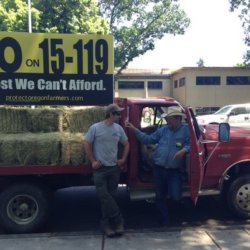

If the mapping goes ahead, Oregon would be the first state to map fields and mandate preventive measures for modified crops. Advocates say Oregon could become a model for the rest of the nation. Already, dozens of seed associations across the nation — organizations for farmers who grow crops for seed — do mapping, also called pinning, and set isolation distances among crops to limit cross-pollination.

Read the full, original article: Oregon hopes to be first state to map GMO fields

Related Articles

Infographic: Global regulatory and health research agencies on whether glyphosate causes cancer

Infographic: Global regulatory and health research agencies on whether glyphosate causes cancer

Does glyphosate—the world's most heavily-used herbicide—pose serious harm to humans? Is it carcinogenic? Those issues are of both legal and ...

Most Popular

ChatGPT-Image-Sep-10-2026-10_36_07-AM
Viewpoint: Even lousy scientific articles can shield authors when they hype dubious health claims and products
ChatGPT-Image-Mar-10-2026-01_39_01-PM
Viewpoint—“Miracle molecule” debunked: Why acemannan supplements don’t work
sorghum farmers in kenya FARMERS TREND
Here are all the ways CRISPR gene editing is transforming Africa’s staple crops—and there’s a lot more innovation to come
Screenshot-2026-10-01-at-11.21.27-AM
Vaccine hesitancy, like malaria, surges globally, topping 35% in some countries
ChatGPT-Image-Sep-30-2026-01_25_34-PM
Blood tests for Alzheimer’s? The latest grifter, social media scam.
ChatGPT-Image-Sep-30-2026-01_38_36-PM
Viewpoint: Died “with measles” vs. died “from measles”: RFK, Jr.’s dangerously subversive word games
ChatGPT-Image-Sep-30-2026-01_11_07-PM
How U.S. teamed with Russia to block global human AI weapons oversight
ChatGPT-Image-Sep-21-2026-03_15_09-PM
Viewpoint: Chipotle-inspired lesson: 10,000 sick customers suggest that processed foods can be safer than fresh ones
Screenshot-2026-09-28-at-1.16.38-PM
Defying public perceptions, U.S. cancer deaths plunged 35% since 1991
ChatGPT-Image-Sep-2-2026-02_03_32-PM
How much of a problem is AI’s water use?
glp menu logo outlined

Get news on human & agricultural genetics and biotechnology delivered to your inbox.