Indonesian state won’t release GE mosquitos to fight disease

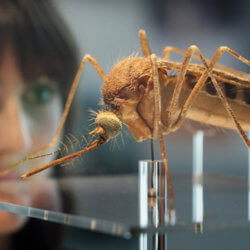
The Malacca government does not intend to release “genetically modified organism” (GMO) mosquitoes to control Aedes although the state recorded a significant increase in dengue cases.

Malacca Chief Minister Datuk Seri Idris Haron said the effectiveness of the method had yet to be fully tested and in addition, it was feared the new method could have a negative effect if implemented.

“We have no problem regarding the cost of its implementation. It’s just that we fear if the mosquitoes are released, the situation may not improve, but instead worsen,” he told reporters after opening a briefing on the introduction of the green technology to school heads in the state here today.

He said this when asked to comment if the Malacca government was prepared to implement the project to release the GMO mosquitoes although the federal government had postponed the implementation due to the high cost involved and the fact that its effectiveness had yet to be tested.

Yesterday, Deputy Health Minister Datuk Seri Dr Hilmi Yahaya said the proposal to release the GMO mosquitoes in four selected states involved a total cost of RM100 million.

Read the full, original story: Malacca won’t release GMO mosquitoes

Related Articles

Infographic: Global regulatory and health research agencies on whether glyphosate causes cancer

Infographic: Global regulatory and health research agencies on whether glyphosate causes cancer

Does glyphosate—the world's most heavily-used herbicide—pose serious harm to humans? Is it carcinogenic? Those issues are of both legal and ...

Most Popular

DOJ Emblem with Transgender Symbol
‘They’ve already decided what they want studies to say’: Questioning Trump’s plan to study whether people distressed about their sex are prone to violence
ChatGPT-Image-Mar-10-2026-01_39_01-PM
Viewpoint—“Miracle molecule” debunked: Why acemannan supplements don’t work
ChatGPT Image Jul 31, 2026, 08_05_37 AM
26% and far worse than during COVID: Under RFK Jr., Americans’ opinion of ‘revamped’ CDC hits an all-time low
d a f b
Genetics of IQ: At what age do various forms of intelligence peak?
Screenshot-2026-10-24-124559
Healthier, stronger, better sniffers? Warhound’s genetically-engineered solution to the war dog shortage
Screenshot 2026-10-20 at 1.37
Race against food rot: How AI and gene editing could slash fruit and vegetable waste
Screenshot-2026-10-24-121036
Many hospitals embrace longevity medicine. Are they separating science from hype?
Picture1
Viewpoint: How badly is the U.S. food-safety net fraying? FDA’s bungled handling of the tainted lettuce crisis deepens concerns over cuts to disease tracking and response
Screenshot-2026-10-23-at-10.37.12-AM
Viewpoint: Drones, dollars and baby food: Critical innovations that anti-plastic ideologues willfully ignore
Screenshot-2026-10-26-at-11.06.10-AM
Viewpoint: The organic, good-food, small-farm movement is seductive but wrongheaded. Here’s the sustainability and environmental case for industrial farming
China Innovation Lightbulb 2
China’s 5-year plan to accelerate science innovation is putting the U.S. and Europe in the rearview mirror
Salt Shower Umbrella Girl
Himalayan and other specialty salts are cool, but they contribute to dangerous iodine deficiency. Here’s how iodized table salt helped raise America’s IQ—and why it still matters for your health
glp menu logo outlined

Get news on human & agricultural genetics and biotechnology delivered to your inbox.