Measuring change in adult brains

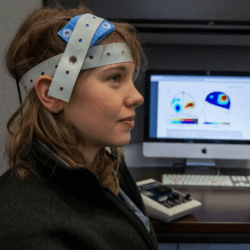
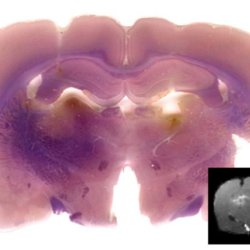
Popular neuroscience books have made much in recent years of the possibility that the adult brain is capable of restoring lost function or even enhancing cognition through sustained mental or physical activities. One piece of evidence often cited is a 14-year-old study that that shows that London taxi drivers have enlarged hippocampi, brain areas that store a mental map of one’s surroundings. Taxi drivers, it is assumed, have better spatial memory because they must constantly distinguish the streets and landmarks of Shepherd’s Bush from those of Brixton.

A mini-industry now peddles books with titles like The Brain that Changes Itself or Rewire Your Brain: Think Your Way to a Better Life.  Along with self-help guides, the  value of games intended to enhance what is known as neuroplasticity are still a topic of heated debate because no one knows for sure whether or not they improve intelligence, memory, reaction times or any other facet of cognition.

Beyond the controversy, however, scientists have taken a number of steps in recent years to start to answer the basic biological questions that may ultimately lead to a deeper understanding of neuroplasticity. This type of research does not look at whether psychological tests used to assess cognitive deficits can be refashioned with cartoonlike graphics and marketed as games intended to improve mental skills. Rather, these studies attempt to provide a simple definition of how mutable the brain really is at all life stages, from infancy onward into adulthood.
Read the full, original story: Neuroplasticity: New Clues to Just How Much the Adult Brain Can Change


Related Articles

Infographic: Global regulatory and health research agencies on whether glyphosate causes cancer

Infographic: Global regulatory and health research agencies on whether glyphosate causes cancer

Does glyphosate—the world's most heavily-used herbicide—pose serious harm to humans? Is it carcinogenic? Those issues are of both legal and ...

Most Popular

ChatGPT-Image-Mar-10-2026-01_39_01-PM
Viewpoint—“Miracle molecule” debunked: Why acemannan supplements don’t work
Screenshot-2026-10-06-at-11.13.59-AM
RFK Jr.’s plan to curb America’s appetite for ultra-processed foods and artificial dyes blocked by the White House
Screenshot-2026-09-22-at-12.26.15-PM
‘Forever chemical’ concerns: Separating hysteria from reasonable concern in the debate over PFAS danger
Screenshot 2026-10-08 at 1.34
Hooked on kratom: The unregulated, natural, alcohol-free “social tonic” that is destroying lives 
Screenshot-2026-10-06-at-2.36.47-PM
Is organic farming really more sustainable? 100 recent studies say ‘no’
Screenshot-2026-09-28-at-11.26.17-AM
Viewpoint: Wellness movement activists reposition nicotine from a killer addictive drug into a cure-all for brain ills
AI-Force-Uniform-Insignia-Close-Up
Trump wants an AI Force like Space Force, but that could make AI’s risks harder to manage
Resolute-Portrait-with-Injured-Teddy-Bear
Anti-vax Texas Senate candidate Ken Paxton alleges conspiracy by doctors, drugmakers, and insurers to push childhood vaccination for profit
Radioactive-Americana-Collage-2
The kooky logic behind the raft of spurious cancer claims from Harvard’s T.H. Chan School of Public Health
ChatGPT-Image-Sep-21-2026-11_21_39-AM
Viewpoint: Food cults: Online ‘nutrition communities’ can pose unique dangers
AI Doctor with a Digital Neural Head
Utah becomes first state to empower AI to bypass doctors and prescribe certain drugs
No-Data-Center-Farm-Protest-Sign-2
Rural revival or corporate windfall? Trump’s One Big Beautiful Bill tax law opens the door to big breaks for data centers—but tech giants aren’t cashing in
Supreme-Court-Amid-Climate-Crisis
Should fossil fuel companies be shielded from lawsuits over climate change damage? The Supreme Court takes up the question
glp menu logo outlined

Get news on human & agricultural genetics and biotechnology delivered to your inbox.