Vermont raised over $160,000 in private donations to defend GMO labeling law

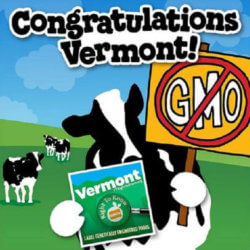
Vermont has raised more than $160,000 in private donations to help defend what would be the nation’s first GMO labeling law. While the majority of these private donations have come from individuals, national advocacy groups are also lending their support. And last week, two consumer advocacy groups filed a motion to intervene on behalf of Vermont to defend the law in court.

Vermont’s law requires food manufacturers and retailers to label certain products containing genetically modified ingredients starting in 2016. The Grocery Manufacturers Association and other national trade groups are suing Vermont, claiming the law is unconstitutional.

State officials estimate spending as much as $8 million to defend the law. The state is accepting donations to a special fund at foodfightfundvt.org. Vermont has hired a Washington, D.C., law firm to help defend the law. Russell, Englert, Orseck, Untereiner & Sauber was awarded a $1.465 million contract this month. The private donations to date equal about 9 percent of that contract.

Sarah Clark, deputy commissioner of the Department of Finance and Management, said even with minimal marketing of the GMO fund, “we’ve really seen a significant increase in the last few weeks.”
The state’s response to the lawsuit is due Aug. 8.

Read the full, original article: Private donations boost GMO legal defense kitty to $160,000

{{ reviewsTotal }}{{ options.labels.singularReviewCountLabel }}
{{ reviewsTotal }}{{ options.labels.pluralReviewCountLabel }}
{{ options.labels.newReviewButton }}
{{ userData.canReview.message }}

Related Articles

Infographic: Global regulatory and health research agencies on whether glyphosate causes cancer

Infographic: Global regulatory and health research agencies on whether glyphosate causes cancer

Does glyphosate—the world's most heavily-used herbicide—pose serious harm to humans? Is it carcinogenic? Those issues are of both legal and ...

Most Popular

Picture1
The Orange Bowl without oranges: Can CRISPR save Florida citrus?
global warming
‘Implausible’: Top climate scientists reject worst-case scenario—soaring temperatures and fast-rising sea levels
ChatGPT-Image-May-1-2026-11_42_59-AM-2
Viewpoint: NAD is the wellness grifters latest evidence-lite longevity fad. At least the mice are impressed.
Screenshot 2026-05-22 at 11.31
‘Realistic and durable’: EPA proposes loosening restrictions on some PFAS ‘forever chemicals.’
vax-misinformation-main
Facts & Fallacies Podcast: Limit free speech to blunt social media misinfo?
ChatGPT Image May 26, 2026, 12_06_53 PM
Fake Ebola cure promoters already cashing in as disinformation videos flood social media
Screenshot-2026-04-22-at-12.21.32-PM
Viewpoint: Why the retracted Monsanto glyphosate study doesn’t change the science—the world’s most popular herbicide is safe 
ChatGPT Image May 24, 2026, 03_16_36 PM
Here come the biohackers' Enhanced Games—The Olympics for athletes doping up on steroids, hormones and peptides. What’s wrong with that?
Screenshot-2026-05-21-at-12.15.17-PM
UK gene-editing milestone: Livestock barley that increases ruminant value and reduces methane emissions is first-approved CRISPR crop
Picture1
The FDA couldn’t find a vaccine safety crisis, so it buried its own research
glp menu logo outlined

Get news on human & agricultural genetics and biotechnology delivered to your inbox.