GMO ice cream war: Ben & Jerry’s and parent Unilever at at odds over GMO labeling

gmo statement blog

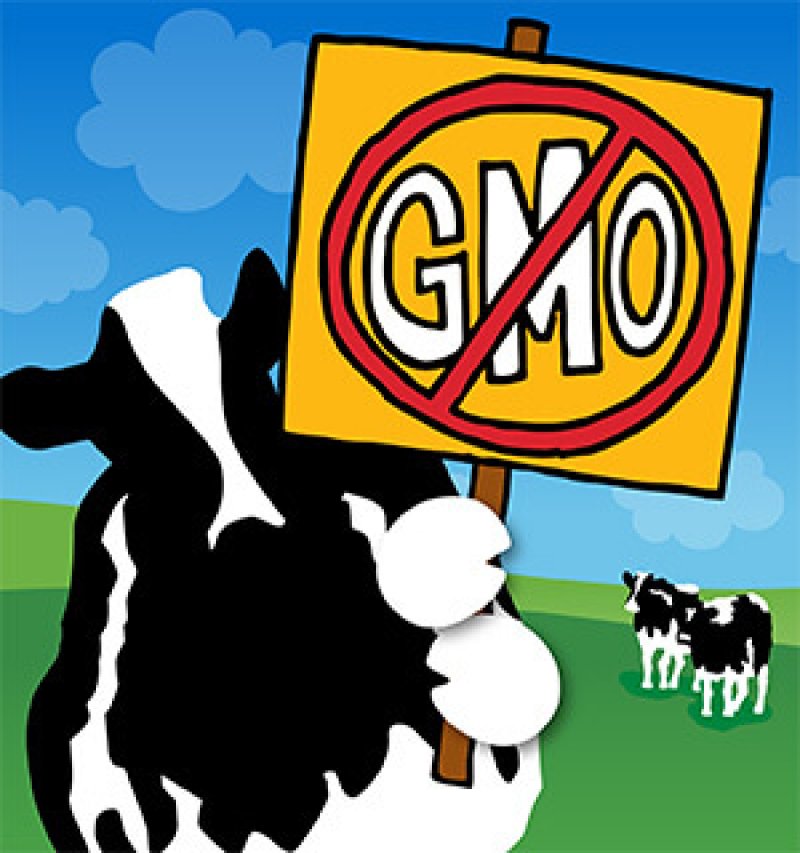
With Ben & Jerry’s CEO Jostein Solheim at his side, Vermont Governor Peter Shumlin signed the nation’s first law requiring labeling of foods made with GMO ingredients. Ben & Jerry’s support of the law — a swirl of savvy public relations, financial backing, and grassroots activism — pits the ice cream maker against the world’s biggest food companies, including its own corporate parent. Unilever has openly opposed state efforts to legislate GMO labeling, throwing money into campaigns to defeat an initiative in California. But it has quietly allowed Ben & Jerry’s to assert itself as a vocal proponent of such laws, especially in Vermont.

“I don’t think they will ever want the potentially massive negative PR of trying to silence B&J,” said Andrew Wood, an analyst at Sanford C. Bernstein.

If Unilever tries to play both sides of the issue, it may wind up hurting itself and Ben & Jerry’s. “In the short run, they might get away with ignoring what B&J is doing, but sooner or later it will catch up with them,” said Marion Nestle, a professor of nutrition and public health at New York University and the author of “Food Politics,” a book about how the food industry influences nutrition policy.

Ben & Jerry’s has never shied away from speaking out on social issues, and Unilever, since acquiring the company in 2000, has not interfered. Since 1985, Ben & Jerry’s has donated a portion of its profits to community projects across the U.S. In 1996, the company sued the city of Chicago and the state of Illinois for the right to label its products as free of recombinant bovine growth hormone, which is given to cows to boost milk production. A condition of Unilever’s acquisition was that Ben & Jerry’s would have a separate board of directors not chosen by its owner.

Rad the full, original article: Ben & Jerry’s throws fudge brownie into GMO food fight

{{ reviewsTotal }}{{ options.labels.singularReviewCountLabel }}
{{ reviewsTotal }}{{ options.labels.pluralReviewCountLabel }}
{{ options.labels.newReviewButton }}
{{ userData.canReview.message }}

Related Articles

Infographic: Global regulatory and health research agencies on whether glyphosate causes cancer

Infographic: Global regulatory and health research agencies on whether glyphosate causes cancer

Does glyphosate—the world's most heavily-used herbicide—pose serious harm to humans? Is it carcinogenic? Those issues are of both legal and ...

Most Popular

Screenshot-2026-05-01-at-1.29.41-PM
Viewpoint: What happens when whole grains meet modern food manufacturing? Labels don’t tell the whole story.
S
As vaccine rejectionism spreads, measles may be taking a more dangerous turn
Screenshot 2026-05-06 at 2.56
Singularity crisis ahead? Can super babies save us from rogue AI geniuses?
Screenshot-2026-03-13-at-12.14.04-PM
The FDA wants to make many popular prescription drugs OTC—a great idea. Here’s why it’s unlikely to happen
Screenshot-2026-05-06-at-2.07.43-PM
Manufacturing a conspiracy: The timeline of how  the White House embraced the fringe claim that scientists are being mysteriously murdered
Screenshot-2026-05-01-at-11.56.24-AM
‘Science moves forward when people are willing to think differently’: Memories of DNA maverick Craig Venter
Screenshot-2026-04-30-at-2.19.37-PM
5 myths about summer dehydration that could damage your health — or even kill you
Screenshot-2026-04-20-at-2.26.27-PM
Viewpoint — Food-fear world: The latest activist scientists campaign: Cancer-causing additives
Screenshot-2026-04-03-at-11.15.51-AM
Paraben panic: How a flawed study, media hype, and chemophobia convinced the public of the danger of one of the safest classes of preservatives
images
The never-ending GMO debate: Pros and cons
glp menu logo outlined

Get news on human & agricultural genetics and biotechnology delivered to your inbox.